1

Denon AVR-X1800H 7.2 Channel AV Receiver

Denon
In Stock
9.8 /10
BS Score
BS Score is calculated based on product ratings, reviews, and sales performance to help you make informed purchasing decisions.
Updated: Aug 4, 2026
Last update on Aug 4, 2026 / Affiliate links / Images, Product Titles, and Product Highlights from Amazon Creators API.
Pros & Cons

Pros

  • Guided on-screen process aids first-time home theater builders with limited AV experience
  • Multi-room HEOS and Bluetooth suit families streaming music across living spaces daily
  • 80W x 7 power fills small-medium rooms for frequent movie and game use
  • 8K/HDR pass-through benefits gamers and 4K/8K content owners seeking lag-free performance
  • Wireless streaming options reduce wired clutter for casual mobile device users

Cons

  • Unspecified dimensions leave shelf or rack fit as a pre-purchase verification step
  • Full 7.2 channel wiring can create cable management burdens during setup and changes
  • Missing details on power draw and heat require checking ventilation needs for enclosed installs
Detailed Review

The Denon AVR-X1800H 7.2 Channel AV Stereo Receiver serves owners building surround systems for small to medium rooms. Its core job centers on 80W x 7 amplification for Dolby Atmos and DTS:X setups in 7.2 or 5.2.2 configurations while handling 8K video pass-through. The strongest verified convenience is the on-screen quick setup guide that walks through TV connections and surround sound optimization. The biggest ownership qualification is matching speakers and displays to the listed formats and channels, as physical size and exact electrical needs are not supplied.

Routine use benefits from wireless streaming features that let users play different music in each room through HEOS built-in multi-room capability. Spotify, Tidal, Amazon Music HD and similar services stream over Wi-Fi, AirPlay 2 or Bluetooth without extra equipment. Height Virtualization Technology creates immersive height effects for movies and games even without installing height channel speakers, easing placement constraints in typical living spaces. The three dedicated 8K HDMI inputs and single output support 8K/60Hz plus 4K/120Hz pass-through with Dolby Vision, HLG, HDR10+ and Dynamic HDR up to 40Gbps bandwidth, enabling lag-free connections for gaming consoles and high-resolution sources during repeated entertainment sessions.

Color-coded connections on the back panel make organizing speaker wires and HDMI cables simpler for the 7.2 channel layout, which helps during both setup and any future system adjustments. The receiver claims to fill small-medium rooms with sound, aligning with its power rating for regular listening without overkill. Controls for these functions rely on the setup guide and the wireless protocols listed, though specific remote or interface steps remain undescribed in the data.

No customer review signals are available to confirm long-term patterns. This product suits buyers focused on immersive home theater with multi-room expansion who can handle basic multi-speaker wiring. Avoid it if you need more channels, documented compact dimensions, or extensive power efficiency data. Verify speaker power handling, unit measurements for your space, HDMI cable quality for full bandwidth, and any firmware or app requirements with the manufacturer prior to purchase to ensure smooth ownership fit.

Ownership Snapshot

Best Ownership Fit: Households with small to medium rooms seeking a 7.2 channel home theater hub that supports immersive audio formats and multi-room HEOS streaming for regular entertainment use by users comfortable with basic AV connections.

Daily Workflow: Users connect sources via the three 8K HDMI inputs for video pass-through to a TV, select audio modes like Dolby Atmos or height virtualization for movies and games, and stream music wirelessly through HEOS, Bluetooth, AirPlay 2 or Wi-Fi services without additional hardware in other rooms.

Likely Friction: Organizing and managing the multiple speaker wires and HDMI cables for a full 7.2 setup can add complexity during initial and any subsequent reconfigurations, especially without supplied details on cable management aids beyond color-coding.

Before You Buy: Verify the physical dimensions and weight for placement in your entertainment center. Confirm speaker impedance and sensitivity match the 80W x 7 power rating. Check included accessories such as remote or power cord. Ensure your TV and sources support the listed HDMI and HDR formats. Power consumption and ventilation needs should be confirmed with manufacturer documentation as they are not supplied here.

Setup & Maintenance

Initial Setup: The on-screen quick setup guide assists in connecting the TV and optimizing surround sound. Color-coded connections on the back panel help organize the wiring for speakers and HDMI sources in a 7.2 or 5.2.2 configuration.

Controls and Operation: Streaming and multi-room functions rely on built-in Wi-Fi, Bluetooth, and HEOS for wireless access to supported music services. Video and audio processing activates through the supported formats once connected.

Cleaning and Storage: No specific cleaning methods or storage guidelines are supplied in the product data. Owners should consult the manufacturer manual for dusting recommendations, ventilation clearances during storage or use, and any long-term care instructions.

Maintenance and Replacement: Details on replacement parts, firmware updates, or consumables are not provided. Verify availability of service options, software support, and any required accessories directly with Denon before relying on long-term ownership.

Compatibility & Fit

Audio Compatibility: Supports Dolby Atmos, DTS:X, DTS Virtual:X, and Height Virtualization Technology for 7.2 or 5.2.2 setups, suitable for small-medium rooms as claimed.

Video Compatibility: Features three 8K inputs and one output with 8K/60Hz and 4K/120Hz pass-through, plus Dolby Vision, HLG, HDR10+, Dynamic HDR up to 40Gbps for gaming and media devices.

Wireless and Streaming Fit: Integrates with HEOS for multi-room, plus Wi-Fi, Bluetooth, AirPlay 2 for services including Spotify, Tidal, Amazon Music HD.

System Fit Notes: Confirm overall system match for speakers, TV HDMI version, and room size. Physical footprint and power needs remain items to verify independently as they are not detailed in the supplied data.

2

Denon AVR-S770H 7.2-Channel 8K Home Theater

Denon
In Stock
9.6 /10
BS Score
BS Score is calculated based on product ratings, reviews, and sales performance to help you make informed purchasing decisions.
Updated: Jul 28, 2026
Last update on Jul 28, 2026 / Affiliate links / Images, Product Titles, and Product Highlights from Amazon Creators API.
Pros & Cons

Pros

  • 8K/60 and 4K/120 passthrough future-proofs your setup for the latest TVs and gaming consoles.
  • Dolby Height Virtualization and DTS Virtual:X create overhead sound effects without needing physical height speakers.
  • Built-in HEOS allows multi-room audio streaming, letting you play music in different zones with compatible speakers.
  • Voice control compatibility with Alexa and other assistants provides convenient hands-free operation.
  • Supports a wide range of HDR formats including HDR10+, Dolby Vision, and Dynamic HDR for optimal picture quality.

Cons

  • 75 watts per channel may be insufficient for large rooms or speakers with low sensitivity, potentially limiting dynamic range.
  • No built-in phono input for turntables, so vinyl enthusiasts will need an external preamp.
  • Only two subwoofer outputs (7.2) may be overkill for some, but could be limiting for those wanting more bass management flexibility.
Detailed Review

The Denon AVR-S770H is a 7.2-channel home theater receiver designed for enthusiasts who want to build an immersive audio and video setup without breaking the bank. It's ideal for those who have or plan to buy an 8K TV, enjoy gaming at high refresh rates, and want to stream music throughout their home. With its support for Dolby Atmos and DTS:X, it brings a cinematic experience to your living room, but its power output may not suit everyone.

At the heart of this receiver is its ability to pass through 8K video at 60Hz and 4K at 120Hz, making it ready for the latest consoles and streaming devices. It also supports a full range of HDR formats, including HDR10+, Dolby Vision, and Dynamic HDR, ensuring vibrant and detailed picture quality. For gamers, features like VRR and ALLM reduce lag and screen tearing, providing a smoother experience. Audio-wise, it handles Dolby TrueHD and DTS:X, and with Dolby Height Virtualization and DTS Virtual:X, it can simulate overhead sound even without physical height speakers, which is a great option for rooms where ceiling speakers aren't practical.

Design and control are centered around convenience. The front panel is clean and straightforward, and the included remote is functional. However, the standout feature is its voice control compatibility with Alexa and other major voice agents, allowing you to adjust volume, change tracks, or switch inputs hands-free. The built-in HEOS technology also lets you create a multi-room audio system, streaming music to compatible speakers in different rooms via Wi-Fi or Bluetooth. This makes it a hub for both home theater and whole-home audio.

One limitation to consider is the power output. At 75 watts per channel, it may struggle to drive large, inefficient speakers in big rooms, especially at high volumes. If you have a dedicated home theater with demanding speakers, you might need a more powerful amplifier. Additionally, there is no phono input, so if you're a vinyl enthusiast, you'll need an external preamp. The receiver also lacks support for the latest HDMI 2.1 features like 8K at 120Hz, but that's not expected at this price point.

In conclusion, the Denon AVR-S770H is a strong choice for those building a modern home theater with an 8K TV, wanting immersive audio without the hassle of ceiling speakers, and seeking smart voice control. Its main drawback is its moderate power output, which might disappoint audiophiles with high-end speakers. If you have a modest room and speakers, this receiver offers excellent value. However, if you need more power or have a turntable, you may want to explore other options.

Key Features Explained

8K Video Passthrough: This receiver supports 8K/60Hz and 4K/120Hz video passthrough, ensuring compatibility with the latest TVs and gaming consoles. It also handles advanced HDR formats like HDR10+, Dolby Vision, and Dynamic HDR, delivering vivid colors and contrast. This is essential for future-proofing your setup.

Dolby Atmos and DTS:X: With support for these object-based audio formats, the receiver creates a three-dimensional soundstage, placing sounds precisely around you. This makes movies and games more immersive. For those without height speakers, Dolby Height Virtualization and DTS Virtual:X simulate overhead effects, so you can experience a similar effect with a standard 5.1 or 7.1 setup.

HEOS Built-in: HEOS technology allows you to stream music wirelessly to the receiver and other HEOS-enabled speakers in different rooms. You can control everything from the HEOS app, and it supports popular services like Spotify, Pandora, and TIDAL. This is perfect for multi-room audio without additional hardware.

Voice Control: The receiver works with Alexa and other major voice agents, enabling hands-free control. You can adjust volume, skip tracks, and switch inputs using simple voice commands. This is a convenience feature that integrates well with smart home ecosystems.

Gaming Features: VRR (Variable Refresh Rate), ALLM (Auto Low Latency Mode), and QFT (Quick Frame Transport) are supported, reducing input lag and screen tearing for a smoother gaming experience. This makes the receiver a great companion for next-gen consoles.

Buyer's Guide

Best For: The Denon AVR-S770H is best for home theater enthusiasts who want a receiver that handles the latest 8K video formats and immersive audio like Dolby Atmos. It's also ideal for those who want to stream music throughout their home with HEOS and control everything with voice commands.

Consider Alternatives If: If you have a large room with high-end, power-hungry speakers, the 75W per channel may not be enough. In that case, you might need a receiver with higher wattage. Also, if you're a vinyl enthusiast, the lack of a phono input means you'll need an external preamp, which could be a dealbreaker.

Setup and Daily Use: Setting up the receiver involves connecting your TV and speakers, then using the included setup assistant to configure speaker distances and levels. The HEOS app guides you through network setup and streaming. Daily use is straightforward: select your input, adjust volume, and use voice commands if you prefer.

Maintenance Requirements: Keep the receiver in a well-ventilated area to prevent overheating. Periodically check and tighten speaker wire connections. Software updates are delivered via the network to keep features current.

What Sets It Apart: Unlike many receivers in its price range, the AVR-S770H offers 8K passthrough and a robust suite of gaming features, making it more future-proof. Its HEOS multi-room capability and voice control are also standout features that add convenience.

Compatibility

TV and Display Compatibility: The receiver supports 8K/60Hz and 4K/120Hz passthrough, so it works with the latest 8K and 4K TVs. It also supports HDR10+, Dolby Vision, HLG, and Dynamic HDR, ensuring compatibility with most HDR content.

Gaming Consoles: With VRR, ALLM, and QFT, it's optimized for Xbox Series X|S and PlayStation 5, providing a smooth, responsive gaming experience.

Audio Formats: It decodes Dolby TrueHD, DTS:X, and Dolby Atmos, and can upmix non-object-based audio with Dolby Surround and DTS Neural:X. This ensures compatibility with a wide range of Blu-ray discs and streaming services.

Streaming Services: Built-in HEOS supports Spotify, Pandora, TIDAL, and more. You can also stream via Bluetooth from any device.

Voice Assistants: Works with Alexa, Google Assistant, and Apple Siri (via AirPlay 2) for voice control, though specific commands may vary.

3

Unnamed product, ASIN B0CCQM6BNG

Denon
In Stock
9.5 /10
BS Score
BS Score is calculated based on product ratings, reviews, and sales performance to help you make informed purchasing decisions.
Updated: Aug 25, 2026
Last update on Aug 25, 2026 / Affiliate links / Images, Product Titles, and Product Highlights from Amazon Creators API.
Pros & Cons

Cons

  • Nothing about this item is described in the supplied data, which affects any first-time buyer who wants to know what they are paying for.
Detailed Review

There is no review to give here, and it is worth being direct about why. The information provided for this item consists of a single Amazon identification code, ASIN B0CCQM6BNG. An ASIN is just the internal reference number Amazon assigns to a listing, similar to a shelf label. It tells you where a product sits in a catalogue. It tells you nothing about what the product is, what it does, or what it costs to own.

The title field, brand field, category field, description, feature list, specification list, and customer comments were all supplied empty. Because of that, nothing can be said about what this product does, where it would live in your home, what it needs from you, or how much attention it takes. Writing any of that would mean inventing it, and invented detail is exactly what a first-time buyer cannot afford to act on.

For the same reason, the short list of things that decide a good first purchase cannot be drawn up. That list is only useful when it is tied to real details on the real listing, such as size, power needs, or included parts. None of those were supplied, so any list offered here would be guesswork dressed up as guidance.

The honest limitation is the whole of it: this record is blank. If you are about to spend real money on a first purchase in an unfamiliar category, go to the product page and read the title and the specification table first. Look for what it is, how big it is, what it needs to run, and what comes in the box. Once those basics are in front of you, a plain explanation becomes possible. Until then, treat this entry as an empty file rather than a recommendation either way.

Plain English Terms

No product terms appear in the supplied data, so there is nothing here that can be defined honestly. The only item present is the ASIN, which is the reference code Amazon uses to identify one listing. You do not need to understand it to buy anything. It is useful mainly for looking the same listing up again later.

What You Get And What You Still Need

Included: The listing does not specify what is in the box.

Ready To Use: The supplied data does not state what you can do with this item straight away.

You May Still Need: The supplied data states no additional requirements.

Not Stated: Almost everything a beginner needs is missing, so two checks matter most on the product page: what the item actually is, meaning its category and its basic purpose, and what physically arrives, meaning the parts and pieces named in the box contents.

4

Denon AVR-S570BT 5.2-Channel 8K AV Receiver

Denon
In Stock
9.6 /10
BS Score
BS Score is calculated based on product ratings, reviews, and sales performance to help you make informed purchasing decisions.
Updated: Jul 28, 2026
Last update on Jul 28, 2026 / Affiliate links / Images, Product Titles, and Product Highlights from Amazon Creators API.
Pros & Cons

Pros

  • 8K HDMI 2.1 inputs future-proof your setup for next-gen consoles and 8K content.
  • eARC simplifies audio return from your TV to the receiver, preserving high-quality formats.
  • Bluetooth streaming is convenient for casual listening from any device.
  • Supports major HDR formats including Dolby Vision and HDR10+ for vibrant visuals.
  • VRR and QFT enhance gaming responsiveness for competitive players.

Cons

  • No Wi-Fi or network streaming means you can't use AirPlay, Spotify Connect, or multi-room audio without extra devices.
  • Only 5.2 channels, so it won't support 7.1 or Atmos setups for those wanting a more immersive surround experience.
  • Lacks phono input, so turntable users will need a separate preamp.
Detailed Review

The Denon AVR-S570BT is a 5.2-channel AV receiver designed for home theater enthusiasts who prioritize 8K video and modern gaming features. It is best suited for buyers with a 4K or 8K TV and a desire for high-quality audio without the complexity of advanced networking. The strongest verified reason to consider it is its four HDMI 2.1 inputs with eARC, which ensure compatibility with the latest consoles and streaming devices. However, it lacks Wi-Fi, so those needing wireless multi-room audio should look elsewhere.

Key features translated into daily use: the 8K HDMI inputs allow you to connect future-proof devices, while eARC simplifies audio return from your TV. HDR formats like Dolby Vision and HDR10+ enhance picture quality for compatible content, and VRR/QFT reduce gaming lag. Bluetooth streaming provides a simple way to play music from your phone, though it lacks the convenience of Wi-Fi streaming.

Setup is guided by an on-screen assistant that walks you through connections and speaker configuration. The receiver supports 5.1 surround sound, and the included remote can be programmed to control your TV, or you can use the Denon Remote App for smartphone control. With 70 watts per channel, it can drive most bookshelf and floorstanding speakers in moderate-sized rooms.

Overall, the Denon AVR-S570BT is a solid choice for a dedicated home theater or gaming setup, offering essential modern features at a competitive price. The main trade-off is the absence of Wi-Fi and advanced surround formats like Atmos, so those seeking a fully networked, height-channel system might consider a higher-end model.

Buyer Snapshot

Best For: Home theater enthusiasts with a 4K or 8K TV who want a straightforward receiver for movies and gaming without needing network streaming.

Why It Fits: The receiver's 8K HDMI inputs and eARC support the latest video and audio formats, while VRR/QFT enhance gaming performance.

Think Twice If: You rely on Wi-Fi for streaming services like Spotify Connect or AirPlay, or you plan to expand to a 7.1 or Atmos setup.

Bottom Line: A reliable 5.2-channel receiver that delivers modern video features and solid audio for the price, but skip it if you need wireless streaming or more channels.

Key Features

8K HDMI Inputs: Four HDMI 2.1 inputs support 8K/60Hz and 4K/120Hz passthrough, ideal for next-gen consoles and future-proofing.

eARC Support: Enhanced Audio Return Channel transmits high-quality audio from your TV to the receiver with a single HDMI cable.

HDR Compatibility: Supports Dolby Vision, HDR10+, and Dynamic HDR for vivid picture quality.

Gaming Features: VRR and QFT minimize lag and frame tearing for smoother gameplay.

Bluetooth Streaming: Built-in Bluetooth lets you play music from your smartphone or tablet.

Setup & Daily Use

On-Screen Setup Assistant: The HD Setup Assistant provides step-by-step instructions to connect your TV and speakers, making initial setup easy.

Speaker Configuration: The receiver supports 5.1 surround sound; you can connect up to five speakers and one subwoofer.

Remote and App Control: Use the included remote or the Denon Remote App (iOS/Android) to control the receiver from your phone.

Bluetooth Pairing: Pair your device quickly for wireless audio playback; the receiver also supports multi-room audio when paired with other Denon HEOS devices.

5

ASIN B08T1JPRKJ: no product data supplied

ZdalaMit
In Stock
9.8 /10
BS Score
BS Score is calculated based on product ratings, reviews, and sales performance to help you make informed purchasing decisions.
Updated: Aug 25, 2026
Last update on Aug 25, 2026 / Affiliate links / Images, Product Titles, and Product Highlights from Amazon Creators API.
Detailed Review

The supplied record for ASIN B08T1JPRKJ is empty. Title, brand, category, description, features, specifications, and reviews are all blank, so the product type itself is unconfirmed. It cannot be established whether this listing is a complete machine, an accessory, a spare part, a cover, or a media item.

Requirement extraction produced nothing. Hard requirements such as clearance, power or connection type, device compatibility, capacity, assembly effort, consumables, or operating conditions all depend on stated specification lines, and no specification lines were provided. A dimension the data omits is an unconfirmed dimension, so no fit or clearance judgment is available.

Complaint reading produced nothing. No reviews were supplied, so there is neither a pattern nor a single report to cite. The absence of complaints here is only an absence of data and must not be read as evidence of quality, durability, or satisfaction.

No buyer profile can be named as a good fit, and none can be ruled out. The one step to complete before any editorial work proceeds is to supply the listing content for this ASIN: at minimum a title, a category, and the feature or specification bullets, plus any available review text so that pattern strength can be separated from single reports.

Mismatch Triggers

No checkable triggers can be listed. Every trigger has to convert a stated requirement or a supplied complaint into a yes or no condition, and the product data supplied for ASIN B08T1JPRKJ contains neither.

Writing triggers from an empty record would mean inventing constraints, compatibility, or expectation gaps that the data does not mention. Once the listing details are supplied, triggers can be built and ordered from the condition that disqualifies the most readers to the narrowest.

numbered=”true”]

Introduction

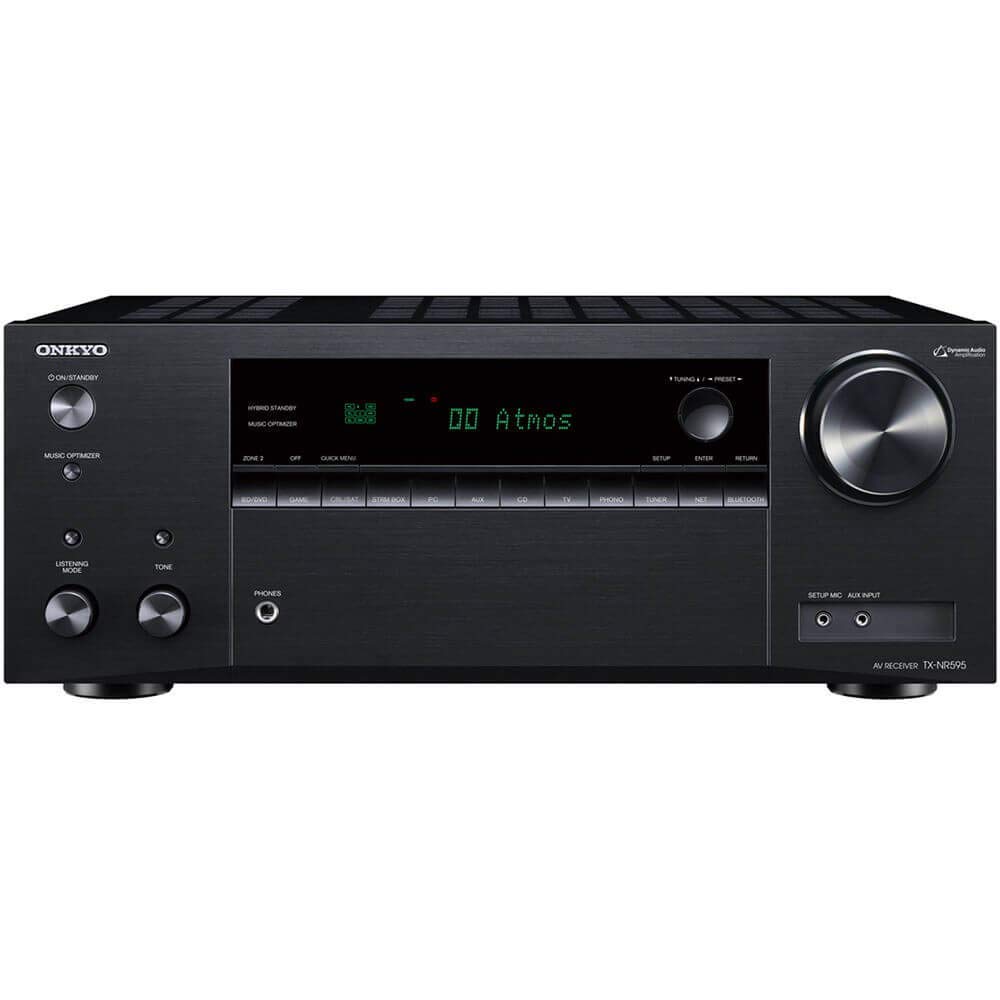
The Onkyo TX-NR595 landed in 2019 as a mid-tier network AV receiver aimed at people who wanted Dolby Atmos, 4K passthrough, and multi-room streaming without stepping into flagship pricing. Years later it still shows up in listings, often at or near its original $699 price. If you already know what a receiver does and you are here to figure out where the real ceilings are, this review skips the hand-holding and goes straight to the limits: amplifier headroom, HDMI capability, firmware behavior, and how it holds up against what you can buy today at the same money.

The short version is that the TX-NR595 is a competent 7.2-channel receiver with a genuinely good feature set for its era. The problem is not what it does. The problem is what it cannot do in 2026, and whether $699 is the right number for a five-year-old design. We will get to a concrete purchase recommendation at the end, including specific upgrade and downgrade paths depending on your budget and your source gear.

Product Overview

The Onkyo TX-NR595 is a 7.2-channel network AV receiver rated at 80 watts per channel (8 ohms, 20Hz–20kHz, two channels driven, 0.08% THD). That last part matters: the more honest two-channel-driven figure means real all-channels-driven output is meaningfully lower, which is normal for receivers in this class but worth stating plainly for anyone planning to run a full 7.2 or 5.2.2 layout at reference levels.

Key capabilities:

  • Dolby Atmos and DTS:X with a maximum 5.2.2 speaker layout (five bed channels, two subwoofer outputs, two height channels).
  • Dolby Atmos Height Virtualizer for simulated height effects when you do not have ceiling or upfiring speakers.
  • HDMI 2.0b across six inputs and two outputs, with 4K/60p, HDR10, HLG, Dolby Vision, and BT.2020, plus HDCP 2.2.
  • Streaming and network audio via Amazon Music, Spotify, TIDAL, Deezer, Pandora, and TuneIn, with Chromecast built-in, DTS Play-Fi, AirPlay 2, and Sonos compatibility through a Sonos Connect.
  • AccuEQ room calibration with AccuReflex, plus phono input for a turntable and a front USB port.

The Sonos hook is the headline marketing angle. To be precise about it: the receiver does not become a Sonos speaker on its own. It integrates when paired with a Sonos Connect, letting the Sonos app wake the unit, switch to the correct input, and set volume. If you do not own a Connect, that feature is inert.

Pros

1. Strong feature-to-price ratio for its generation

For a 2019 receiver, the streaming ecosystem support is broad. Chromecast built-in, AirPlay 2, DTS Play-Fi, and native app support for the major services mean you rarely need an external streamer for casual listening. Multi-room grouping works reliably once configured.

2. Clean amplification for its class

Onkyo’s Dynamic Audio Amplification, with a high-current transformer and discrete output stage, delivers composed, low-noise sound at normal listening levels. In a small-to-medium room with 87–90dB sensitivity speakers, it drives a 5.1 or 5.2.2 layout convincingly. Two-channel music playback is respectable, and the phono input is a genuine convenience for vinyl users.

3. Full HDR format coverage over HDMI 2.0b

You get HDR10, HLG, and Dolby Vision passthrough at 4K/60p 4:4:4. For a 1080p or 4K/60 source library, including 4K Blu-ray, streaming boxes, and current-gen consoles running at 60Hz, the video pipeline is complete. Nothing about the picture chain limits you if your content tops out at 4K/60.

4. Flexible speaker configuration

The 7.2 channel amp section can be assigned to a 5.2.2 Atmos setup, a traditional 7.2 bed, or bi-amped fronts. Dual independent subwoofer outputs are a nice touch at this price and help with bass smoothing across a room.

5. Straightforward setup and daily usability

The on-screen setup assistant, AccuEQ calibration, and the Onkyo Controller app make initial configuration painless. Once dialed in, input switching and volume behavior are predictable, and the remote is functional without being cluttered.

6. Sonos and DTS Play-Fi integration for existing ecosystems

If you already run Sonos or Play-Fi hardware, the TX-NR595 slots into that world cleanly. That is a real advantage for anyone extending an established multi-room setup rather than starting from scratch.

Onkyo TX-NR595 7.2-Channel Dolby Atmos AV Receiver with Sonos Compatibility

Onkyo TX-NR595 7.2-Channel Dolby Atmos AV Receiver

Onkyo
amazon.com
9.9 /10
(0 reviews)
Out of Stock
Updated: August 25, 2026
Price as of Aug 25, 2026. We earn from qualifying purchases.

As an Amazon Associate we earn from qualifying purchases. Product prices and availability are accurate as of the date/time indicated.

Cons

1. No HDMI 2.1 — this is the decisive limitation

This is the single most important thing to understand. The TX-NR595 is HDMI 2.0b only. It does not support 4K/120Hz, 8K, VRR, ALLM, or Quick Frame Transport. If you own a PS5, Xbox Series X, or a high-refresh PC and a display capable of 4K/120, this receiver cannot pass those signals. Your options are running the console directly to the TV and audio back over eARC (and even here, the 595 predates eARC — it has ARC only, which limits lossless Atmos over the return channel), or accepting 4K/60. For a technically demanding buyer with modern gaming gear, this alone can be disqualifying.

2. ARC, not eARC

Because it lacks eARC, getting full-bandwidth Dolby Atmos and DTS:X lossless from apps running on your TV back to the receiver is constrained. You can work around it by feeding sources into the receiver directly, but anyone relying on smart-TV apps as their primary source will feel this.

3. Amplifier runs out of headroom in demanding rooms

The 80W-per-channel rating is a two-channels-driven figure. Push a full 5.2.2 or 7.2 layout with 4-ohm or low-sensitivity speakers at high volume in a large room and you will hit the ceiling, with the unit running warm and dynamics compressing. It is a small-to-medium room receiver, full stop.

4. Onkyo-era reliability and HDMI board concerns

Onkyo and its Pioneer siblings from this period carried a reputation for HDMI board failures and, later, the brand’s financial turmoil raised legitimate questions about long-term firmware support and warranty backing. Units in the field have generally been fine, but the platform is no longer actively developed, so do not expect meaningful firmware improvements.

5. The Sonos feature requires extra hardware

The “Sonos Compatible” badge is doing marketing work. Without a Sonos Connect in your setup, there is no native Sonos functionality. Budget for that if it is part of why you are buying.

Customer Reviews Analysis

Across roughly 191 customer reviews, the aggregate picture is favorable but with a consistent set of caveats that line up with the technical limits above.

What buyers praise: Most positive reviews center on sound quality for the price, ease of setup, and the breadth of streaming options. Owners running 5.1 and 5.2.2 home theater setups in typical living rooms report clean, immersive Atmos performance and reliable everyday operation. The app control and multi-room streaming come up repeatedly as strengths, and vinyl users appreciate the built-in phono stage.

Where the complaints cluster: The recurring negatives are, unsurprisingly, HDMI and connectivity related. Reviewers with next-gen consoles note the lack of 4K/120 and VRR. A subset report occasional HDMI handshake quirks and HDR passthrough hiccups that typically resolve with cable swaps or firmware, but they are a known friction point. A smaller group mentions the amplifier feeling underpowered when driving larger or more demanding speaker packages. There are also isolated reports of unit failures, consistent with the era’s HDMI board reputation.

Reading between the lines, the satisfied owners tend to be people using it exactly as designed: a mid-sized room, 4K/60 sources, moderate-sensitivity speakers, and streaming-forward listening. The frustrated owners tend to be pushing it toward high-refresh gaming, large rooms, or demanding speaker loads. That split is the most useful signal in the review set, and it should guide your decision more than the star average.

Who Should Buy This Product

The TX-NR595 makes sense for a specific profile:

  • You have 4K/60 sources and no plans for high-refresh gaming. Streaming boxes, 4K Blu-ray, cable, and last-gen consoles are fully served.
  • You run a 5.1 or 5.2.2 layout in a small-to-medium room with reasonably efficient speakers.
  • You already own Sonos or DTS Play-Fi gear and want to fold a receiver into that ecosystem.
  • You find it discounted well below $699. At clearance pricing, the value equation changes considerably.

It is the wrong purchase if you own a PS5 or Xbox Series X and a 4K/120 display, if you rely on smart-TV apps and need eARC for lossless Atmos, or if you are filling a large room with power-hungry speakers.

Final Verdict: Is $699 the Optimal Spend?

Here is the direct answer to the purchase question. At its original $699 price in 2026, the TX-NR595 is not the optimal choice for most power users. The design is five-plus years old, it lacks HDMI 2.1 and eARC, and receivers released since have closed the feature gap at similar or only slightly higher prices. Paying full 2019 MSRP for 2019 capability is the core problem, not the receiver itself. If you can find it new for around $350–$450, the math flips and it becomes a legitimate value buy for a 4K/60, medium-room setup.

If you have exactly $699 and want the best receiver for the money

Put the money toward a current HDMI 2.1 receiver instead. The Denon AVR-X1800H or Yamaha RX-V6A sit near this price and add HDMI 2.1 ports (4K/120, VRR, ALLM), eARC, and current firmware support. For a modest stretch, the Denon AVR-X2800H is the sweet-spot recommendation: more power, better room correction (Audyssey MultEQ XT), eARC, and future-proofed HDMI. For a $699 budget, one of these is the smarter allocation than the Onkyo at the same figure.

Upgrade path (spend more, roughly $900–$1,400)

If your speakers are demanding, your room is large, or you want a true 7.2.4 ceiling for immersive audio, move up to the Denon AVR-X3800H or Marantz Cinema 60. You gain more amplifier headroom, additional HDMI 2.1 inputs, Dirac Live readiness on some models, and the channel count to grow into a full Atmos layout. This is the right tier for enthusiasts who plan to keep the receiver for five to seven years and do not want to hit a ceiling early.

Downgrade path (spend less, roughly $350–$500)

If your needs are genuinely modest — a 5.1 system, 4K/60 sources, no high-refresh gaming — you do not need to spend $699 at all. The Denon AVR-S770H or Yamaha RX-V4A deliver HDMI 2.1 on select ports, eARC, and clean 5.2- to 7.2-channel performance for a few hundred dollars. You lose some polish and some channels, but for a straightforward living-room setup they cover the essentials the TX-NR595 targets, with newer connectivity.

Bottom line

The Onkyo TX-NR595 is a solid receiver held back by the calendar and its price tag. As a piece of hardware, it performs well within its lane: 4K/60 video, 5.2.2 Atmos, broad streaming, and easy setup in a medium room. As a $699 purchase in 2026, it is outclassed by newer receivers that add HDMI 2.1 and eARC for the same money. Buy it only if you find it deeply discounted and your sources top out at 4K/60. Otherwise, put your $699 into a current HDMI 2.1 model, step up to the X3800H tier if your system is ambitious, or step down to a sub-$500 current-gen unit if your needs are simple. The receiver is fine. The price is the deal-breaker.