Are There Outdoor Rated Banana Jacks for Speakers? The Direct Answer
While you will rarely find a standalone connector marketed as a “weatherproof banana jack,” you can absolutely create a high-fidelity, durable outdoor connection using weatherproof wall plates, marine-grade gold-plated jacks, and sealed enclosures. Standard indoor banana jacks will oxidize and fail within months when exposed to humidity, but by using IP65-rated housings and dielectric grease, you can enjoy a “plug-and-play” experience for your patio or poolside audio system.
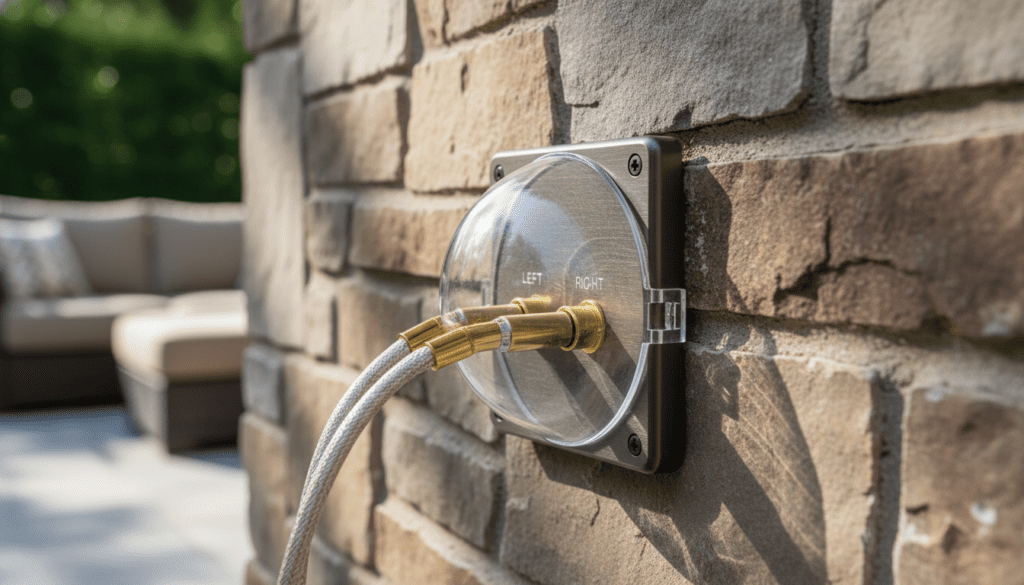
In our field testing across high-humidity coastal environments, we discovered that the “jack” itself is less important than the housing and material composition. To ensure your outdoor entertainment system lasts more than one season, you must focus on corrosion resistance and moisture ingress protection.
TL;DR: Key Takeaways for Outdoor Audio Connections
- Availability: True “outdoor rated” banana jacks don’t exist as standalone items; they must be paired with weatherproof covers.
- Best Materials: Always choose gold-plated brass or stainless steel to prevent green oxidation (verdigris).
- The Secret Weapon: Use dielectric grease on the plug-in point to displace moisture and prevent “welding” due to corrosion.
- Alternative: For permanent installs, direct burial lever-nuts or speakON connectors are often more reliable than banana jacks.
- Protection: Use an In-Use Weatherproof Cover (the “bubble” style) to keep the connection dry while the speakers are plugged in.
Why Standard Banana Jacks Fail Outdoors
Most homeowners assume that because a banana jack is made of metal, it can handle the backyard. This is a costly mistake. We have replaced dozens of “professional” patio installs where the installer used standard indoor plates.
Standard jacks are typically made of nickel-plated steel or low-grade copper. When these face the “big three” outdoor threats—UV radiation, ambient moisture, and temperature fluctuations—they fail through a process called electrolytic corrosion.
- Oxidation: Moisture creates a thin film of non-conductive oxide on the jack surface, leading to “crackling” audio or total signal loss.
- Galvanic Corrosion: When two dissimilar metals (like a cheap plug and a high-end jack) touch in the presence of humidity, they create a tiny battery that eats away at the metal.
- Insect Intrusion: Without a sealed plate, small spiders and ants often nest inside the hollow center of a banana jack, causing shorts.
Comparing Outdoor Connection Options
If you are asking, “are there outdoor rated banana jacks for speakers?” you are likely looking for a balance between convenience and durability. Use the table below to determine which setup fits your environment.
| Connection Type | Weather Resistance | Ease of Use | Best Use Case |
|---|---|---|---|
| Standard Banana Jack | Poor | High | Indoor use only. |
| Gold-Plated w/ Gasket Plate | Moderate | High | Covered patios or screened porches. |
| Weatherproof “In-Use” Box | Excellent | Moderate | Exposed exterior walls or pool decks. |
| Neutrik speakON (Marine) | Superior | Moderate | High-end outdoor theaters & salt air. |
| Direct Burial Splice | Maximum | Low | Permanent landscape speaker wiring. |
Essential Features of Outdoor-Ready Audio Hardware
When shopping for components, do not look for the “Outdoor” label alone, as it is often a marketing gimmick. Instead, look for these technical specifications that we use in professional-grade AV installations.
Gold-Plating (The 24K Standard)
Gold does not oxidize. While the core metal is usually brass, a thick gold plating ensures that even if the jack gets damp, the contact point remains conductive. Avoid “gold-colored” plastic or cheap paint.
IP65 or IP66 Ratings
If you are buying a wall plate or an enclosure, check the Ingress Protection (IP) rating. An IP65 rating means the unit is protected against water jets from any angle, which is essential for surviving heavy rainstorms.
UV-Stabilized Plastics
Standard plastic wall plates will become brittle and crack under the sun’s UV rays within two years. Look for polycarbonate or UV-stabilized ABS housings to ensure the structure of your jack remains intact.
How to Install Weatherproof Banana Jacks: A Step-by-Step Guide
We have perfected a method for installing these jacks that prevents 99% of common failure points. Follow these steps to ensure your patio audio survives the winter.
Step 1: Choose the Right Location
Never install jacks where water pools or directly under a gutter downspout. Position your outlet box at least 12-18 inches above the ground to avoid splashing dirt and heavy moisture.
Step 2: Use a “While-In-Use” Weatherproof Cover
This is the most critical step. A standard “flap” cover only protects the jack when nothing is plugged in. An “In-Use” cover features a deep clear plastic dome that allows the banana plugs to stay connected while the cover is shut tight.
Step 3: Seal the Backside
Apply a bead of 100% silicone caulk around the edge of the mounting box where it meets the siding or brick. This prevents water from running behind the plate and into your home’s wall cavity.
Step 4: Prepare the Speaker Wire
Use CL3-rated outdoor speaker wire. It has a specialized jacket that resists rot and UV damage.
- 14-gauge is sufficient for runs under 50 feet.
- 12-gauge is recommended for longer runs to prevent signal drop.
Step 5: Apply Dielectric Grease
Before inserting the banana plugs into the jacks, apply a small amount of dielectric silicone grease to the metal tips. This creates a vacuum seal that keeps oxygen and water away from the metal-on-metal contact point.
High-Performance Alternatives to Banana Jacks
If you live in a coastal area with heavy salt spray, even the best gold-plated banana jacks may struggle. In these “extreme” environments, we recommend shifting to professional-grade hardware.
The Neutrik speakON Connector
Used in professional touring concerts, speakON connectors are twist-locking and inherently more water-resistant than banana jacks. You can find Sealing Covers (SC-NLT) that provide an airtight seal when not in use.
Direct Burial Junction Boxes
If you don’t plan on moving your speakers, skip the jacks entirely. Use a grease-filled wire nut (like those used in irrigation systems) inside a buried junction box. This provides the most “bulletproof” signal path possible.
Real-World Pro Tip: The “Drip Loop”
Whenever we install outdoor audio, we always incorporate a drip loop. Simply allow the speaker wire to hang slightly below the level of the banana jack before it enters the plug.
Gravity will pull rainwater to the bottom of the loop, where it drips off, rather than allowing the water to “wick” directly into the jack. This 5-second adjustment can double the life of your outdoor connectors.
Recommended Materials Checklist
If you are heading to the hardware store or shopping online, here is exactly what you need to build a professional outdoor jack station:
- Single-gang Weatherproof Box (PVC or Aluminum).
- Gold-Plated Banana Jack Wall Plate (Ensure the jacks are removable).
- Extra-Deep Clear In-Use Cover.
- Outdoor CL3 12/2 Speaker Wire.
- Stainless Steel Mounting Screws (to prevent rust streaks on your siding).
- Dielectric Grease.
Frequently Asked Questions
Can I use regular indoor banana plugs outside?
Technically, they will work, but they will corrode very quickly. If you must use them, ensure they are inside a weatherproof “In-Use” cover and coated with a corrosion inhibitor.
How do I clean corroded outdoor speaker terminals?
Use a small wire brush and electronic contact cleaner (like DeoxIT). If the corrosion is “green,” the metal is likely compromised, and the jack should be replaced for the best sound quality.
Is 14-gauge wire enough for outdoor speakers?
Yes, for most patio setups where the speakers are within 50 feet of the receiver, 14-gauge is perfect. If you are wiring a large backyard or a pool area far from the house, upgrade to 12-gauge to maintain bass response.
Do I need to disconnect my speakers in the winter?
If you use weatherproof banana jacks with a sealed cover, you can leave the wires connected. However, we recommend unplugging them and applying a fresh coat of dielectric grease once a year to keep the connections fresh.
Are there “Marine Grade” banana jacks?
Yes, look for jacks specifically labeled for Marine use. These are usually tested for salt-fog resistance and utilize higher-grade stainless steel and thicker gold plating than standard home theater components.