

Struggling to get great sound in your backyard? Tinny music from a portable speaker just doesn’t cut it for a BBQ, and you’re worried about a sudden rainstorm ruining your gear. Choosing the right outdoor speakers can feel overwhelming with all the talk of IP ratings, watts, and wiring. This guide cuts through the noise. I’ve spent years testing and installing outdoor audio systems, and I’ll walk you through exactly what to look for in outdoor speakers, ensuring you get immersive sound that lasts for years, no matter the weather.
Key Takeaways: Choosing Outdoor Speakers
- Weather Resistance is Non-Negotiable: Look for a minimum IPX5 rating for protection against rain. For poolside or fully exposed areas, an IP67 rating is best, offering complete water and dust protection.
- Sound Quality in Open Air: Prioritize speakers with larger drivers (5.25 inches or more) for better bass, which dissipates quickly outdoors. High sensitivity (88dB or higher) means more volume from less power.
- Wired vs. Wireless: Wired (passive) speakers offer consistent power and potentially better sound but require an amplifier and more complex installation. Wireless (active/Bluetooth) speakers provide portability and ease of use but are limited by battery life.
- Placement Matters: Install speakers under eaves for protection and bass reinforcement. Aim them towards your listening area and place them 8-10 feet apart for a proper stereo soundstage.
- Durable Materials: Choose speakers made from UV-resistant ABS plastic or polypropylene with aluminum or stainless steel grilles to prevent rust and sun damage.
What to Look For in Outdoor Speakers: The Core Features
Finding the perfect outdoor speakers boils down to balancing durability, audio performance, and convenience. Unlike indoor speakers that live in a controlled climate, outdoor models are in a constant battle with the elements. Here’s a breakdown of the essential features.
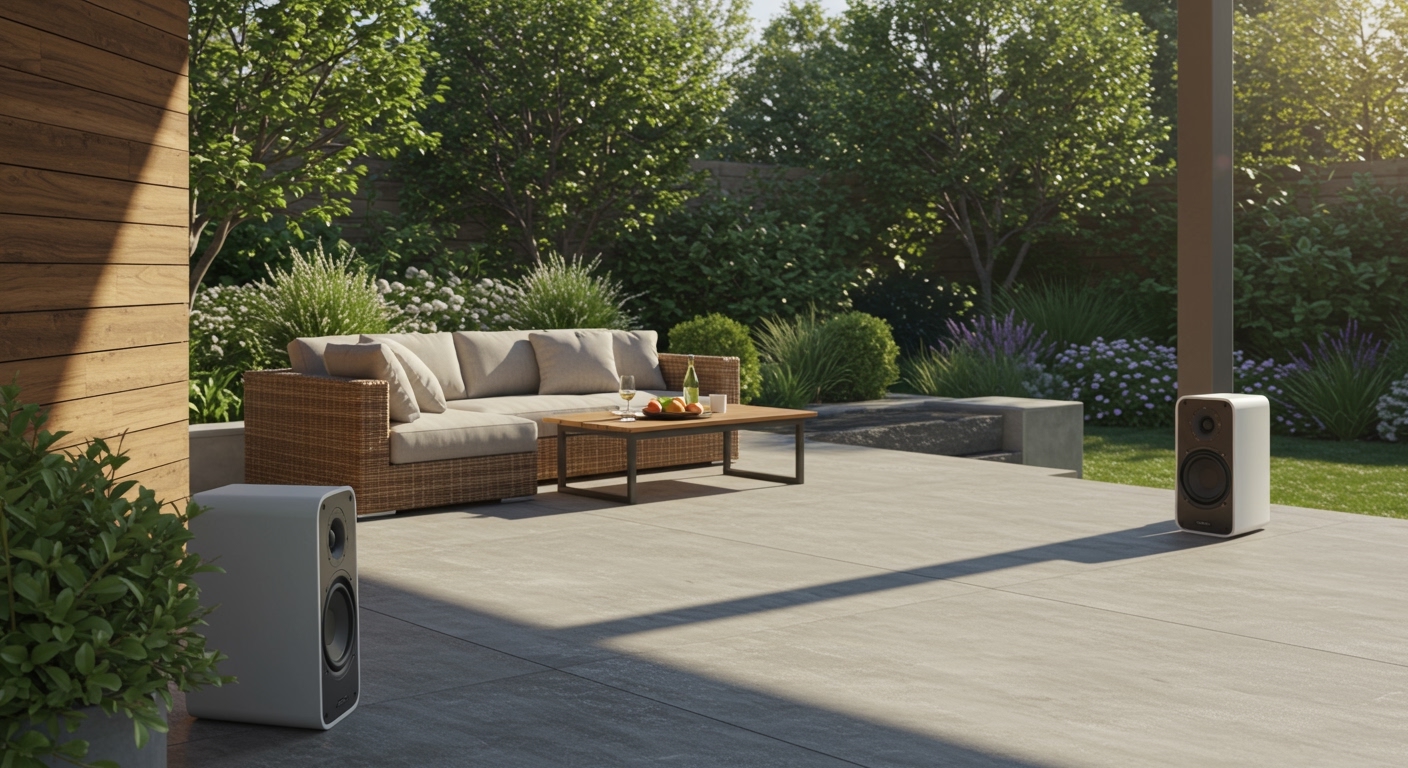
Weather Resistance and Durability: Your First Priority
This is the single most important factor. If a speaker can’t survive outside, its sound quality is irrelevant. From my own experience, I can tell you that using an indoor speaker outside is a recipe for disaster; a single humid day or unexpected drizzle can destroy it.
- Understanding IP Ratings: The Ingress Protection (IP) rating is a universal standard that tells you how well a device is protected against solids (like dust) and liquids (like water).
- What Rating You Need:
- Material Science: Look beyond the IP rating to the materials used.
Sound Quality: How to Get Great Audio Outdoors
Sound behaves differently in open air. Without walls to reflect and contain sound waves, bass frequencies dissipate quickly, and audio can sound thin.
- Driver Size Matters: The “woofer” is the part of the speaker that produces mid-range and bass sounds. In an outdoor setting, bigger is almost always better.
- Dedicated Tweeters: A good outdoor speaker will have a separate tweeter (usually a 0.75-inch or 1-inch dome) for crisp, clear high-frequency sounds. This separation prevents music from sounding muddy.
- Sensitivity (dB): Sensitivity measures how efficiently a speaker converts power (watts) into volume (decibels). A higher sensitivity rating means the speaker will play louder with less amplifier power. For outdoor use, I recommend looking for a sensitivity of at least 88dB.
- Stereo vs. Single-Point Stereo:









