

To experience true Dolby Atmos immersive audio, you need a minimum of 5.1.2 speakers, consisting of five traditional speakers, one subwoofer, and two height channels. However, the “sweet spot” for most home cinema enthusiasts is a 7.1.4 configuration, which utilizes four overhead speakers to create a seamless 3D soundstage.
Key Takeaways: How Many Speakers for Dolby Atmos?
Minimum Entry: A 5.1.2 system is the baseline for Atmos, adding two height channels to a standard surround setup.
Optimal Performance: A 7.1.4 setup (four height speakers) is widely considered the gold standard for residential home theaters.
The “Atmos” Number: The third digit in configurations (e.g., 5.1.2) specifically refers to the number of Dolby Atmos height speakers.
Hardware Limits: Your A/V Receiver (AVR) must have enough channels to process the specific number of speakers you choose.
Placement Matters: Physical placement and ear-level alignment are more critical than just the quantity of speakers.
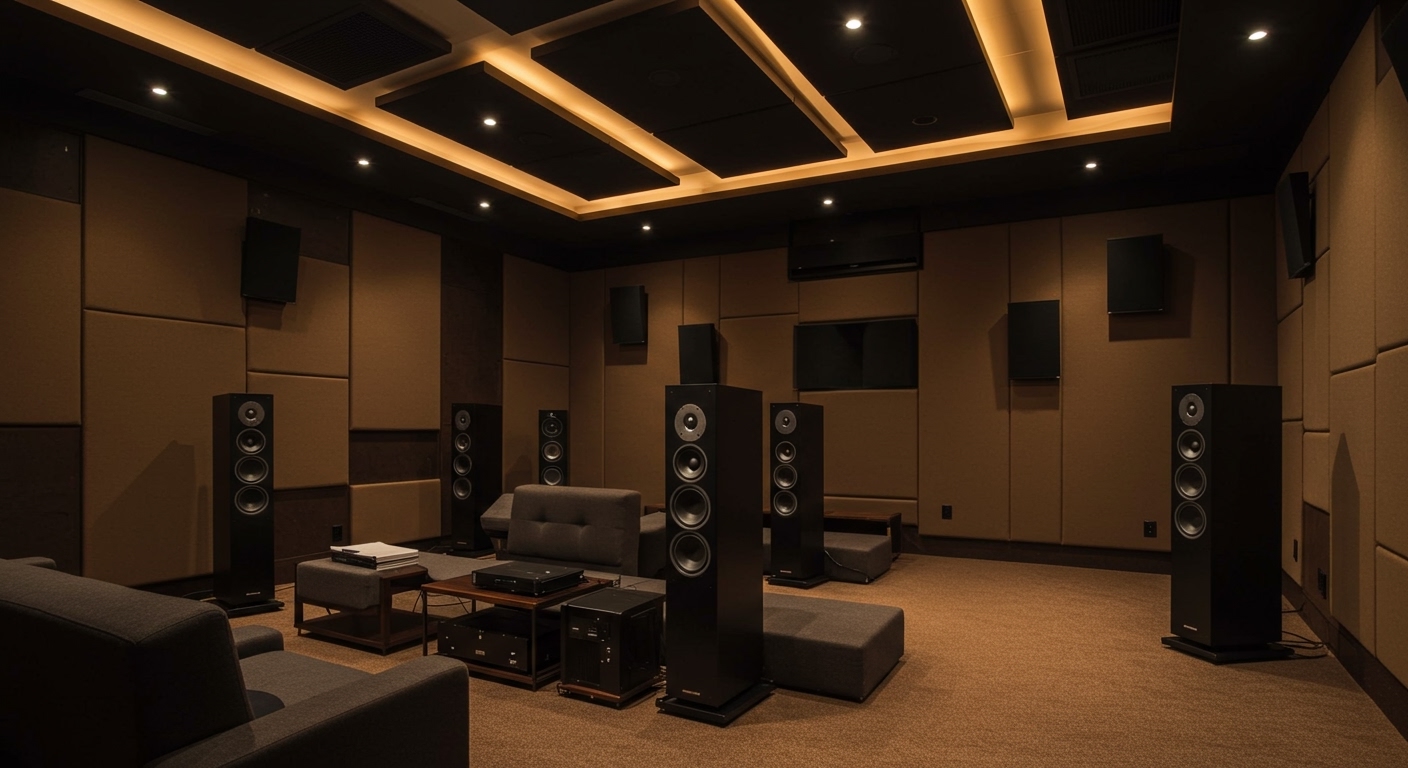
Understanding the Dolby Atmos Speaker Naming Convention
Before diving into the setup, you must understand how to read the three-digit nomenclature used in immersive audio. Unlike traditional surround sound, Dolby Atmos adds a third dimension.
- First Digit (Traditional Surround): Represents the number of speakers at ear level (Front, Center, Surround).
- Second Digit (LFE/Subwoofer): Represents the number of powered subwoofers in the system.
- Third Digit (Height Channels): This is the how many speakers for dolby atmos specific number, representing overhead or up-firing speakers.
For example, in a 7.2.4 setup, you have 7 floor-level speakers, 2 subwoofers, and 4 height speakers.
Step 1: Evaluate Your Room Size and Acoustics
The first step in determining how many speakers for dolby atmos you need is assessing your physical environment. Not every room can—or should—house 11 or more speakers.
Assess the Ceiling Height
For Dolby Atmos to work, the “height” effect relies on either sound coming from above or reflecting off the ceiling. Ideal ceilings are flat and between 8 to 14 feet high. If you have vaulted or cathedral ceilings, up-firing speakers will not work effectively, and you must use in-ceiling speakers.
Calculate the Listening Area
In a small bedroom (10′ x 12′), a 5.1.2 system is often more than enough to saturate the space. In a dedicated basement theater (20′ x 15′ or larger), a 7.1.4 or 9.1.6 system is necessary to prevent “sonic gaps” where the sound transitions between speakers.
Key Takeaways: How Many Speakers for Dolby Atmos?
Minimum Entry: A 5.1.2 system is the baseline for Atmos, adding two height channels to a standard surround setup.
Optimal Performance: A 7.1.4 setup (four height speakers) is widely considered the gold standard for residential home theaters.
The “Atmos” Number: The third digit in configurations (e.g., 5.1.2) specifically refers to the number of Dolby Atmos height speakers.
Hardware Limits: Your A/V Receiver (AVR) must have enough channels to process the specific number of speakers you choose.
Placement Matters: Physical placement and ear-level alignment are more critical than just the quantity of speakers.
Understanding the Dolby Atmos Speaker Naming Convention
Before diving into the setup, you must understand how to read the three-digit nomenclature used in immersive audio. Unlike traditional surround sound, Dolby Atmos adds a third dimension.
- First Digit (Traditional Surround): Represents the number of speakers at ear level (Front, Center, Surround).
- Second Digit (LFE/Subwoofer): Represents the number of powered subwoofers in the system.
- Third Digit (Height Channels): This is the how many speakers for dolby atmos specific number, representing overhead or up-firing speakers.
For example, in a 7.2.4 setup, you have 7 floor-level speakers, 2 subwoofers, and 4 height speakers.
Step 1: Evaluate Your Room Size and Acoustics
The first step in determining how many speakers for dolby atmos you need is assessing your physical environment. Not every room can—or should—house 11 or more speakers.
Assess the Ceiling Height
For Dolby Atmos to work, the “height” effect relies on either sound coming from above or reflecting off the ceiling. Ideal ceilings are flat and between 8 to 14 feet high. If you have vaulted or cathedral ceilings, up-firing speakers will not work effectively, and you must use in-ceiling speakers.
Calculate the Listening Area
In a small bedroom (10′ x 12′), a 5.1.2 system is often more than enough to saturate the space. In a dedicated basement theater (20′ x 15′ or larger), a 7.1.4 or 9.1.6 system is necessary to prevent “sonic gaps” where the sound transitions between speakers.
Step 2: Choose Your Core Configuration
Deciding how many speakers dolby atmos requires for your specific needs depends on your budget and desired level of immersion.
| Configuration | Total Speakers | Best For | Immersion Level |
|---|---|---|---|
| 5.1.2 | 8 | Small rooms / Entry-level | Good (Basic 3D) |
| 7.1.2 | 10 | Medium rooms / Better side-to-rear panning | Great |
| 7.1.4 | 12 | Dedicated Home Theaters / Standard “Pro” setup | Excellent (Full 3D) |
| 9.1.6 | 16 | Large luxury theaters / Maximum precision | Ultimate |
The 5.1.2 Setup: The Entry Point
This is the most common starting point. It uses your existing 5.1 layout and adds two height channels. It provides a clear sense of “above,” but lacks the ability to move sounds from the front-top to the back-top of the room.
The 7.1.4 Setup: The Enthusiast Choice
If your budget allows, this is the configuration I recommend most. Having four height speakers allows sound “objects” to move across the ceiling with pinpoint accuracy. When a helicopter flies overhead in a movie, you can hear it move from the front-left ceiling to the back-right ceiling.
Step 3: Select Your Height Speaker Type
Once you know how many speakers for dolby atmos you want, you must decide how to deliver that height information. There are three primary methods.
In-Ceiling Speakers
These are the gold standard. By physically placing speakers in the ceiling, you get the most direct and accurate overhead effects. Brands like Klipsch, SVS, and KEF offer specialized “aimable” tweeters for this purpose.
Add-On Elevation Modules
These sit on top of your existing floor-standing or bookshelf speakers. They fire sound at an angle toward the ceiling, which then bounces back down to the listener. This is a great “no-drill” solution for renters.
Integrated Atmos Speakers
Some high-end towers have the up-firing drivers built directly into the top of the cabinet. This keeps your setup looking clean and reduces wire clutter.
Step 4: Verify A/V Receiver (AVR) Compatibility
You cannot simply plug 11 speakers into a standard 5-channel receiver. The number of speakers you can run is strictly limited by the processing channels of your AVR.
7-Channel AVR: Supports up to 5.1.2.
9-Channel AVR: Supports 5.1.4 or 7.1.2.
11-Channel AVR: Supports 7.1.4.
13-Channel+ AVR: Supports 9.1.4 or 7.1.6 (Units like the Denon AVR-X8500H).
Expert Tip: Many 9-channel receivers can actually process 11 channels if you add a small external 2-channel amplifier. Always check the “Pre-Out” section on the back of your receiver.
Step 5: Position Speakers for Maximum Impact
Quantity doesn’t matter if the quality of placement is poor. Follow these Dolby guidelines for the best results:
Ear-Level Alignment: Your 5 or 7 base speakers should be at ear level when seated. If they are too high, the “separation” between the floor and the ceiling speakers disappears.
The 45-Degree Rule: For a .2 system, height speakers should be placed at a 65-100 degree angle relative to the listener.
The Quad Pattern: For a .4 system, place one pair in front of the seating area (45 degrees) and one pair behind (135 degrees).
Common Mistakes to Avoid
Buying Too Many Speakers for a Weak AVR: Don’t buy 11 speakers if your receiver only supports 7. You’ll end up with “dead” speakers that produce no sound.
Ignoring the Subwoofer: While Atmos focuses on height, the “LFE” (Low-Frequency Effects) is the foundation. A 7.1.4 system with a cheap subwoofer will sound worse than a 5.1.2 system with a high-quality SVS or HSU sub.
Mixing Speaker Brands: Try to keep your “bed layer” (the floor speakers) from the same brand and series to ensure timbre matching. This prevents the sound from changing character as it moves around the room.
Pro Tips for the Ultimate Setup
Calibration is King: Use the built-in room correction software (like Audyssey MultEQ XT32, Dirac Live, or YPAO) that comes with your receiver. It adjusts for timing and volume differences between speakers.
Acoustic Treatment: Adding a few 2-inch thick acoustic panels at “first reflection points” on your walls will do more for your Atmos clarity than adding two extra speakers.
Stream High-Quality Sources: Netflix and Disney+ use “Compressed Atmos.” For the best experience, use 4K Blu-ray discs, which provide “Lossless Atmos” (Dolby TrueHD).
FAQs About Dolby Atmos Speaker Counts
Can I have Dolby Atmos with just a soundbar?
Yes, many modern soundbars use “virtualization” or up-firing drivers to simulate Atmos. While convenient, a soundbar cannot match the separation and “bubble of sound” provided by discrete speakers.
Is 5.1.2 better than 7.1.0?
Absolutely. A 5.1.2 setup provides a 3D overhead experience that a traditional 7.1.0 (which is strictly 2D/horizontal) cannot replicate. The height dimension is the defining feature of modern cinema.
Do I need special wire for Atmos speakers?
No. Standard 14-gauge or 16-gauge oxygen-free copper (OFC) speaker wire works perfectly for all Atmos configurations.
Where should I place the height speakers if I can’t put them in the ceiling?
You can mount small “satellite” speakers high up on the front and rear walls near the ceiling. This is known as a Front Height and Rear Height configuration, which most Atmos receivers support.
Conclusion
Determining how many speakers for dolby atmos depends on your room’s physical constraints and your budget for an A/V receiver. While a 5.1.2 system offers a fantastic entry into immersive audio, upgrading to a 7.1.4 system provides the definitive cinematic experience that movie directors intended.
Start by assessing your room, choose a receiver that can handle your desired channel count, and prioritize speaker placement over raw quantity. Once you hear a rainstorm or a jet fly overhead in a properly calibrated Atmos room, you will never want to go back to “flat” surround sound again.









