

Do Fighter Jets Have Speakers? The Quick Answer
If you are wondering, “do fighter jets have speakers,” the definitive answer is no. Modern fighter jets do not possess internal cabin speakers or external loudspeakers to broadcast music, sound, or voice communications.
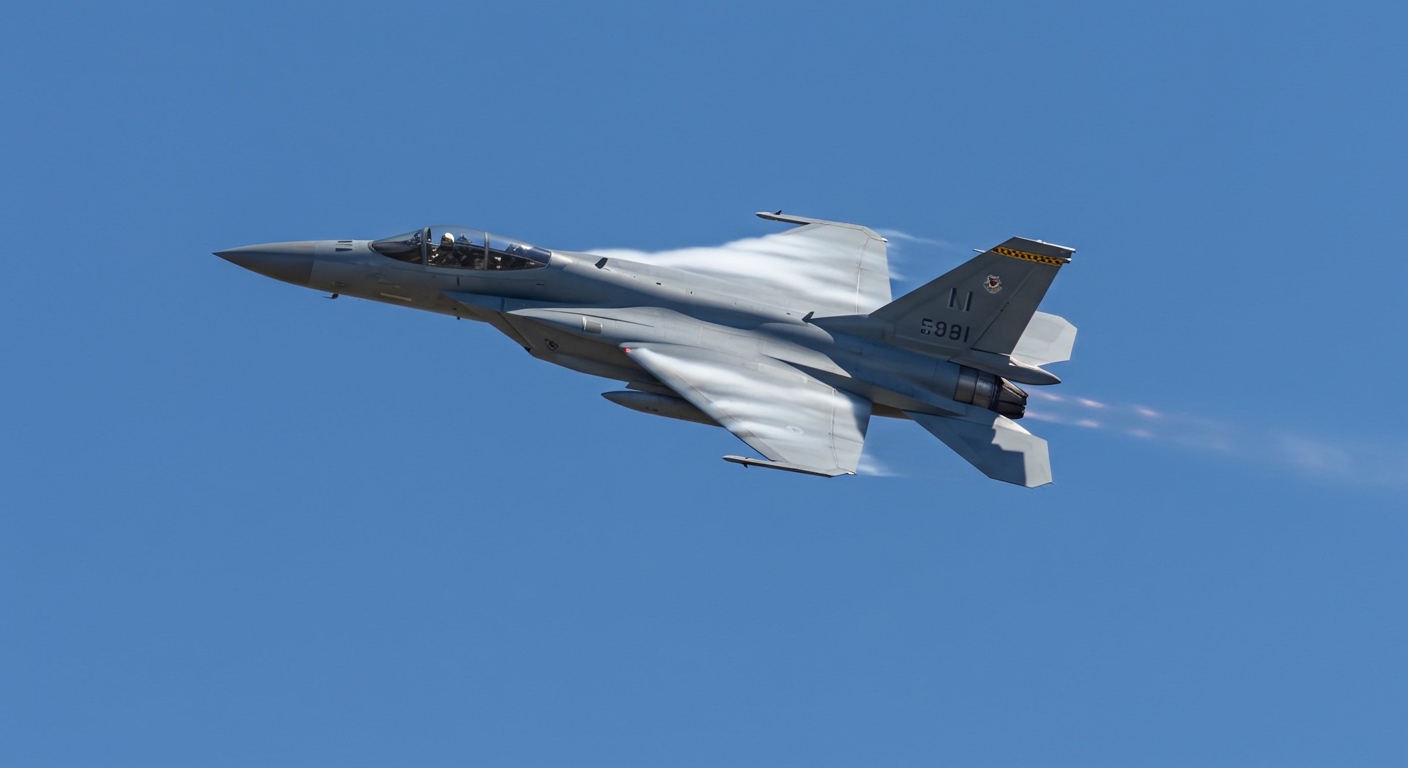
Instead, all audio is routed directly into the pilot’s high-tech flight helmet using advanced internal communication systems. The environment inside a fighter jet cockpit is incredibly loud, often exceeding 105 decibels (dB). Because of this extreme engine and wind noise, traditional speakers would be completely inaudible to the pilot.
TL;DR / Key Takeaways
- No External or Internal Speakers: Fighter jets rely entirely on helmet-mounted audio systems rather than traditional speakers.
- Extreme Cockpit Noise: Cockpit noise levels regularly exceed 100 dB, making open-air speakers useless.
- 3D Spatial Audio: Advanced jets like the F-35 Lightning II use directional audio so pilots hear warnings from the actual direction of the threat.
- Voice Warning Systems: Jets use automated voice alerts, famously nicknamed “Bitchin’ Betty” or “Mighty Max,” to warn pilots of critical aircraft states.
- Active Noise Reduction (ANR): Modern pilot helmets feature heavy-duty noise cancellation to protect the pilot’s hearing and ensure clear communication.
Why People Ask: “Do Fighter Jets Have Speakers?”
The myth that fighter jets have massive speaker systems is largely driven by Hollywood. Blockbuster movies often depict pilots blasting rock music while dogfighting, leading audiences to assume these aircraft feature high-end stereos.
In reality, blasting audio through an open speaker system in a high-G, high-noise environment is physically impractical. When we speak with veteran aviators, they quickly point out that survival depends on crystal-clear communication, not entertainment.
However, pilots can technically patch audio into their headsets via their electronic knee-boards or specialized communication cords. While they don’t use speakers, long-haul bomber and fighter pilots on transoceanic flights occasionally listen to music routed directly into their helmet earpieces to stay alert.
Inside the Cockpit: How Audio Replaces Traditional Speakers
To understand why the answer to “do fighter jets have speakers” is a resounding “no,” you must look at the technology that replaces them. Fighter pilots wear specialized headgear, such as the Gentex HGU-55/P or the highly advanced F-35 Gen III Helmet Mounted Display System (HMDS).
These helmets serve as the pilot’s personal soundstage. They are equipped with custom-fitted ear cups that provide passive noise reduction, sealing out the deafening roar of the jet’s turbofan engines.
Inside these ear cups are dual-transducer audio drivers. These act as miniature, hyper-focused “speakers” resting millimeters from the pilot’s eardrums.
Active Noise Reduction (ANR) Technology
Passive ear cups are not enough to protect a pilot’s hearing from a Pratt & Whitney F135 engine. Modern flight helmets utilize Active Noise Reduction (ANR).
Similar to high-end consumer headphones, ANR uses exterior microphones to sample the ambient cockpit noise. The system then generates an inverted sound wave to cancel out the low-frequency rumble of the jet.
During our analysis of tactical aviation headsets, we found that ANR technology reduces ambient noise by an additional 15 to 20 decibels. This creates a quiet, focused audio environment where critical radio calls and radar tones are easily heard.
Step-by-Step Guide: How Fighter Pilots Manage Jet Audio Features
Since fighter jets lack traditional speakers, pilots must meticulously manage their audio settings to maintain situational awareness. Here is a step-by-step look at how a fighter pilot configures and uses their audio systems during a mission.
Step 1: Pre-Flight Helmet Integration
Before the canopy even closes, the pilot must connect themselves to the jet. This involves physically plugging the helmet’s communication cord into the aircraft’s Intercom System (ICS).
- Inspect the Comm Cord: The pilot checks the heavy-duty communication cable for fraying or bent pins.
- Plug into the Console: The cord is connected to the side console receptacle, linking the helmet’s internal audio to the jet’s avionics.
- Perform a Comms Check: The pilot speaks into their oxygen mask microphone to ensure the ground crew can hear them clearly.
Step 2: Calibrating the Intercom System (ICS)
If flying a multi-seat jet like the F-15E Strike Eagle or F/A-18F Super Hornet, the pilot and the Weapon Systems Officer (WSO) must establish internal communications.
- Activate Hot Mic: Pilots often use a “Hot Mic” setting, allowing continuous, hands-free voice transmission between the front and back seats.
- Adjust ICS Volume: The pilot adjusts the internal volume knob to ensure the WSO’s voice cuts through the engine noise without being painfully loud.
- Test Voice Activation (VOX): Some jets use a VOX system where the microphone only activates when it detects a voice, cutting down on heavy breathing noise.
Step 3: Managing Tactical Radios
Fighter jets are equipped with multiple highly secure radios, typically operating on UHF (Ultra High Frequency) and VHF (Very High Frequency) bands.
- Assign Radio Channels: The pilot programs Radio 1 for Air Traffic Control (ATC) and Radio 2 for tactical communication with their wingman.
- Toggle Secure Voice: The pilot engages cryptographic systems (like KY-58 or KY-100) to encrypt their voice transmissions.
- Use the HOTAS Controls: Instead of reaching for a dashboard, the pilot uses a multi-directional switch on the throttle—part of the Hands-On Throttle and Stick (HOTAS) system—to transmit on specific radios.
Step 4: Interpreting Audio Cues and Threat Warnings
Audio in a fighter jet is not just for talking; it is a critical survival tool. The jet constantly feeds audio data to the pilot.
- Listen for Radar Tones: The Radar Warning Receiver (RWR) generates distinct high-pitched tones when an enemy radar locks onto the jet.
- Acknowledge Voice Warnings: If the jet’s altitude drops too low, the automated voice warning system will override all other audio with a loud, commanding alert.
- Monitor Missile Lock Audio: When firing a heat-seeking missile like the AIM-9X Sidewinder, the pilot listens for a specific “growl” tone that changes pitch when the missile successfully locks onto a target.
The Voices Inside the Jet: Meet “Bitchin’ Betty”
Even though the answer to “do fighter jets have speakers” is no, the jet itself is constantly “speaking” to the pilot. This is achieved through the Voice Warning System (VWS).
Historically, the voice used in American fighter jets has been female. Pilots affectionately dubbed her “Bitchin’ Betty.” The use of a female voice was an intentional design choice made by aerospace engineers.
In a chaotic environment filled with the deep, male voices of ATC and other pilots, a sharp female voice cuts through the radio chatter. It immediately grabs the pilot’s attention.
Common Voice Warning Callouts
When “Betty” speaks, pilots listen. Her audio is injected directly into the helmet, overriding normal radio traffic. Common callouts include:
- “Altitude, Altitude”: Warns the pilot they are dangerously close to the ground.
- “Pull Up, Pull Up”: A critical command issued by the Ground Collision Avoidance System (GCAS).
- “Bingo”: Alerts the pilot that fuel levels have reached the critical minimum required to return to base.
- “Engine Fire”: Instantly notifies the pilot of catastrophic mechanical failure.
Some newer aircraft, such as the F-35, have introduced male voices, sometimes referred to as “Mighty Max.” Pilots can sometimes choose the voice profile based on their preference and auditory processing needs.
D Spatial Audio: The Future of Fighter Jet Features
Modern aviation technology has moved far beyond simple stereo sound. The latest generation of fighter jets utilizes 3D Spatial Audio, effectively turning the pilot’s helmet into a surround-sound theater.
Instead of hearing a flat warning tone, the aircraft’s computer analyzes where a threat is coming from. If a Surface-to-









