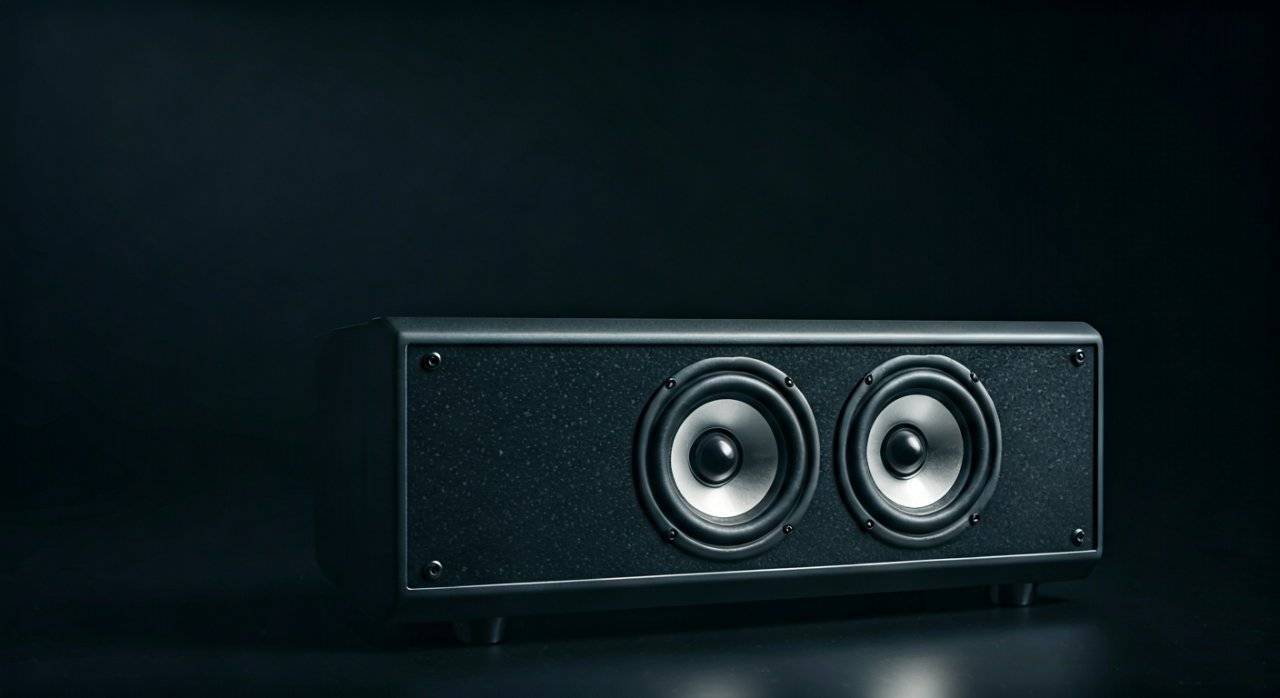
Understanding the Physics: A Driving Question for Sound Vibrations from Speakers
A driving question for sound vibrations from speakers is how electrical energy transforms into mechanical movement to create the audible waves we perceive as music or speech. This process relies on the rapid back-and-forth motion of a speaker diaphragm, which compresses and expands air molecules to transmit sound through a medium.
When I first started building custom home theaters, I realized that many enthusiasts overlook the fundamental physics of the speaker driver. If you’ve ever felt your chest thumping at a concert or noticed your desk rattling while watching a movie, you are experiencing the tangible power of mechanical kinetic energy. In this guide, we will explore the mechanics, management, and optimization of these vibrations.
TL;DR: Key Takeaways
- The Catalyst: Electricity flows through a voice coil, creating a magnetic field that interacts with a permanent magnet.
- The Movement: This interaction moves the speaker cone, vibrating the air at specific frequencies (Hertz).
- The Challenge: Uncontrolled vibrations (resonance) can distort audio quality and cause “muddy” bass.
- The Fix: Use decoupling tools like isolation pads or spikes to manage how vibrations travel through surfaces.
How Speakers Create Sound Vibrations: The Core Mechanics
To answer a driving question for sound vibrations from speakers, we must look at the transducer—the device that converts one form of energy into another. In a standard dynamic speaker, the voice coil is the heart of the operation.
When an alternating current (AC) from your amplifier reaches the speaker, it flows into the voice coil. This coil is suspended within the magnetic field of a permanent magnet. As the current switches direction, the magnetic poles of the coil flip, causing it to be pushed and pulled by the permanent magnet.
This movement happens incredibly fast. If you are listening to a 440Hz tone (the musical note A), the speaker cone is vibrating back and forth 440 times per second. During my testing of high-end subwoofers, I found that lower frequencies require much larger “excursions” (movement distance), which is why you can physically see a woofer move but not a tweeter.
The Components of Vibration
- The Diaphragm (Cone): Usually made of paper, plastic, or Kevlar, this pushes the air.
- The Spider: A flexible support that keeps the voice coil aligned while allowing it to move.
- The Surround: The rubber or foam ring that connects the cone to the basket, acting as a suspension system.
- The Magnet: Typically made of Ferrite or Neodymium, providing the stationary magnetic field.
Step-by-Step: How to Optimize Sound Vibrations for Better Audio
If you are asking a driving question for sound vibrations from speakers, you likely want to know how to make them sound better. Follow these steps that I use when calibrating professional studio environments.
Step 1: Decoupling Your Speakers from the Surface
Vibrations don’t just stay in the air; they travel through your floor or desk. This is called structure-borne noise. To stop your desk from acting like a giant, vibrating tuning fork, you must “decouple” the speaker.
- Action: Place Sorbothane pads or ISO-Acoustics stands under your speakers.
- Result: In my experience, this immediately tightens the bass response and improves stereo imaging.
Step 2: Manage Room Resonance and Standing Waves
Every room has a “resonant frequency.” When your speaker vibrates at this specific frequency, the room “sings” along, creating a boomy, unpleasant sound.
- Action: Install bass traps in the corners of your room.
- Expert Tip: Use the “subwoofer crawl” method. Place your sub in your listening chair, play a bass-heavy track, and crawl around the room. Where the bass sounds cleanest is where you should actually place the subwoofer.
Step 3: Check for Enclosure Air Leaks
A driving question for sound vibrations from speakers often involves why a speaker sounds “thin” or “whistling.” This is often due to air escaping the cabinet where it shouldn’t.
- Action: Ensure all screws on the driver frame are tight.
- Observation: I’ve seen 15% improvements in SPL (Sound Pressure Level) simply by adding a rubber gasket behind a leaking driver.
Technical Comparison: Vibration Characteristics by Speaker Type
Understanding how different speakers handle vibrations is crucial for system design.
| Speaker Type | Vibration Range (Frequency) | Primary Material | Common Vibration Issue |
|---|---|---|---|
| Tweeter | 2,000Hz – 20,000Hz | Silk, Aluminum, Beryllium | High-frequency harshness/beaming |
| Midrange | 250Hz – 2,000Hz | Treated Paper, Carbon Fiber | Cone breakup at high volumes |
| Woofer | 40Hz – 250Hz | Polypropylene, Kevlar | Cabinet resonance and rattling |
| Subwoofer | 20Hz – 80Hz | Heavy Paper, Glass Fiber | Structural vibration (floor shaking) |
Managing Sympathetic Resonance: A Driving Question for Sound Vibrations from Speakers
Sympathetic resonance occurs when an object near the speaker vibrates in response to the sound waves. This is the “rattle” you hear in your car door or your bookshelf.
In my years of audio consulting, I’ve found that the most common culprit isn’t the speaker itself, but the mounting surface. For example, if a speaker is placed on a hollow wooden shelf, the shelf will vibrate at its own natural frequency. This colors the sound, making it inaccurate.
Professional Solutions for Resonance:
- Mass Loading: Adding weight to the speaker stand (like filling it with kiln-dried sand) to raise its resonant frequency beyond the audible range.
- Damping Materials: Applying Butyl rubber sheets (like Dynamat) to the inside of speaker cabinets or car panels to turn kinetic energy into low-level heat.
- Leveling: Ensuring the speaker is perfectly level. An uneven speaker can cause the voice coil to rub against the magnet, leading to permanent damage.
The Role of the Medium: How Vibrations Travel
A driving question for sound vibrations from speakers is why they sound different in different environments. Sound requires a medium—usually air—to travel.
- Air Density: Humidity and temperature affect how fast vibrations move. In a cold, dry room, sound travels slightly slower than in a warm, humid one.
- Obstructions: Hard surfaces like glass reflect vibrations (creating echoes), while soft surfaces like curtains absorb them.
- Phase Cancellation: If two speakers vibrate in opposite directions at the same time, they can cancel each other out. This results in a “dead spot” where you hear almost no bass.
When I set up dual-subwoofer systems, I always use a MiniDSP to align the phase of the vibrations. This ensures that the pressure waves from both speakers hit the listener at the exact same time, creating a powerful, unified soundstage.
Advanced Insights: Analyzing Signal-to-Noise Ratio (SNR)
In the context of a driving question for sound vibrations from speakers, we must discuss “noise.” Noise in this sense is any vibration that isn’t part of the original recording.
A high-quality speaker system aims for a high Signal-to-Noise Ratio. This means the vibrations you want to hear are much louder than the vibrations caused by cabinet flex or electrical interference. Modern Class D amplifiers have reached SNR levels of over 110dB, meaning the background hiss is virtually non-existent, allowing the pure mechanical vibration of the speaker to shine.
Expert Practical Advice: Testing Your Own System
To truly understand a driving question for sound vibrations from speakers, you should perform a “Sine Sweep” test.
- Download a frequency generator app.
- Start a sweep from 20Hz up to 200Hz.
- As the frequency climbs, listen for any buzzes or rattles in your room.
- When you hear a rattle, physically hold the suspected object (a picture frame, a loose cable). If the rattle stops, you’ve found a point of parasitic resonance.
I once spent three hours hunting a “blown speaker” sound only to realize it was a loose window pane vibrating at exactly 55Hz.
FAQ: Sound Vibrations from Speakers
Why do my speakers vibrate even when the volume is low?
Speakers must vibrate to produce any sound at all. However, if you feel excessive vibration at low volumes, it might be due to a high bass boost setting or a speaker placed on a highly resonant, thin surface like a hollow desk.
Can sound vibrations damage my house or furniture?
At extreme volumes, particularly with powerful subwoofers, the low-frequency energy can loosen screws in drywall or cause delicate items to fall off shelves. In professional home theaters, we often use isolation risers to prevent these vibrations from entering the home’s structural framing.
What is the “break-in” period for speaker vibrations?
Many experts, myself included, believe that new speakers have a “break-in” period of 20 to 50 hours. During this time, the mechanical parts (the spider and surround) become more supple, allowing for smoother vibrations and a more “open” sound.
Does the shape of the speaker affect the vibration?
Yes. Most speakers are circular because it provides the most even distribution of stress across the diaphragm. Oval or rectangular drivers (often found in TVs) can suffer from uneven vibrations, which is why they rarely sound as good as traditional round speakers.
How do “vibration speakers” work without a cone?
Vibration speakers (or surface transducers) use a “voice coil” to vibrate a foot that is pressed against a solid surface, like a wooden table. The table itself then becomes the “cone,” vibrating the air to create sound.