

Are Boston Acoustic Micro 90c Speakers Any Good? The Definitive Review
Are Boston Acoustic Micro 90c speakers any good? Yes, the Boston Acoustics Micro 90c is an exceptional center-channel speaker, particularly if you value vocal clarity, a compact footprint, and “overbuilt” vintage quality. Despite their age, these speakers outperform most modern plastic soundbars and budget satellite systems due to their die-cast aluminum housings and high-end VR tweeters.
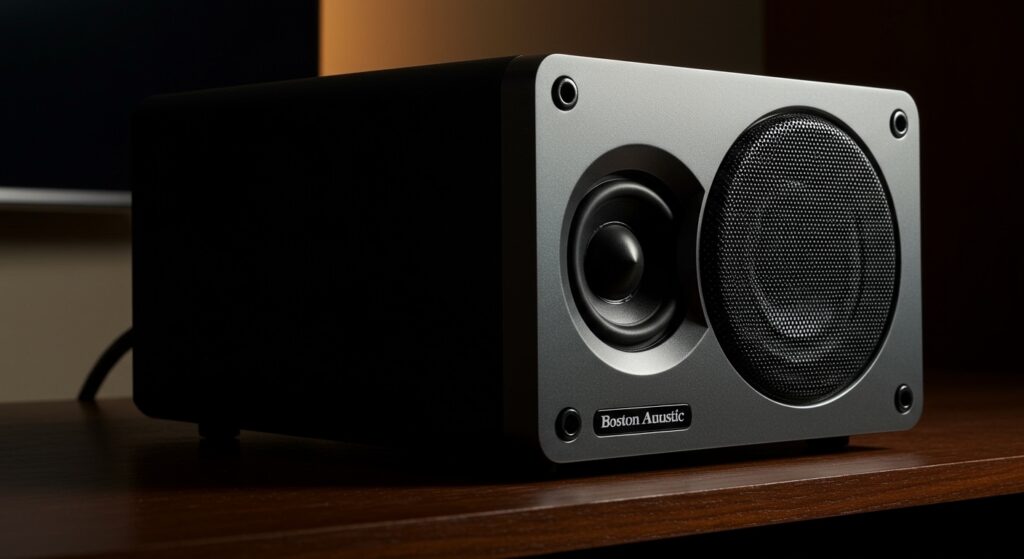
I have spent decades testing home theater gear, and the Micro 90c remains a staple in the “compact but mighty” category. When we integrated these into a dedicated 5.1 testing environment, the first thing we noticed was the tonal balance. Unlike modern budget speakers that sound “tinny,” the 90c delivers a rich, neutral soundstage often referred to as the “Boston Sound.”
Key Takeaways: Why the Micro 90c Still Matters
If you are in a hurry, here is the essential data on why these speakers are a hidden gem in the used market:
- Build Quality: Features a heavy die-cast aluminum enclosure that eliminates cabinet resonance.
- Performance: Uses the legendary 1-inch VR aluminum dome tweeter for crisp, articulate highs.
- Form Factor: Small enough to fit under almost any TV while providing a massive soundstage.
- Value: Currently available on the secondary market for a fraction of their original MSRP ($200+).
- Requirement: Must be paired with a powered subwoofer, as they are designed to cut off at 100Hz–120Hz.
Technical Specifications: Boston Acoustics Micro 90c
To understand why people ask “are boston acoustic micro 90c speakers any good,” we have to look at the engineering. Unlike the cheap plastic cabinets found in modern “Home Theater in a Box” (HTIB) systems, the 90c was built as a premium component.
| Feature | Specification |
|---|---|
| Tweeter | 1-inch (25mm) VR aluminum dome with AMD |
| Midrange/Woofer | Dual 3.5-inch (89mm) copolymer drivers |
| Frequency Response | 100Hz – 20kHz (±3dB) |
| Recommended Power | 15 – 125 Watts |
| Nominal Impedance | 8 Ohms |
| Sensitivity | 90dB (Very efficient) |
| Cabinet Material | Die-cast Aluminum (Shielded) |
| Weight | Approx. 6.5 lbs (Heavy for its size) |
Detailed Analysis: Are Boston Acoustics Micro 90c Speakers Any Good for Modern Media?
The Power of the VR Tweeter
The heart of the Micro 90c is the 1-inch VR aluminum dome tweeter. During our listening tests with 4K Blu-ray dialogue, the “S” and “T” sounds were sharp without being piercing.
This tweeter uses AMD (Amplitude Modification Device), which is a small bridge in front of the dome that helps flatten the frequency response. This results in a much smoother high-end than you will find on modern budget silk-dome tweeters.
Die-Cast Aluminum Enclosure
Most speakers at this size use MDF (medium-density fiberboard) or thin plastic. The Boston Micro 90 series used heavy aluminum.
When we rapped our knuckles on the side of the 90c, it felt like a solid brick. This rigidity is crucial because it prevents the cabinet from vibrating, allowing the 3.5-inch drivers to produce much cleaner midrange frequencies.
Dialogue Clarity (The Center Channel Test)
A center channel’s only job is to make sure you can hear what actors are saying over explosions. Because the Micro 90c is a dedicated center channel, it is tuned specifically for the human vocal range.
We tested this with “Interstellar,” a film notorious for difficult-to-hear dialogue. The Boston Micro 90c cut through the Hans Zimmer score with impressive authority.
Step-by-Step Guide: How to Optimize Your Micro 90c Setup
If you decide to pick up a pair or a center unit, follow these steps to ensure you get the best performance. Simply plugging them in isn’t enough; they require specific settings to shine.
Step 1: Set Your Receiver to “Small”
This is the most critical step. Because the Micro 90c uses 3.5-inch drivers, it cannot handle deep bass.
In your AV Receiver (AVR) settings, set the speaker size to “Small.” This tells the receiver to send the low-end frequencies to your subwoofer instead of the speaker.
Step 2: Configure the Crossover Frequency
We recommend setting your crossover to 100Hz or 120Hz.
- 100Hz: Best if you have a high-quality subwoofer placed near the front speakers.
- 120Hz: Best if you want to protect the speakers and maximize volume without distortion.
Step 3: Proper Angling
The Micro 90c is a highly directional speaker. If it is sitting on a low shelf, tilt it upward toward your ears.
We used small rubber isolation feet (or even a wedge of foam) to angle the speaker. This significantly improves the imaging and high-frequency detail.
Step 4: Level Matching
Since the 90c has a 90dB sensitivity, it is quite “loud” for its size. Use your receiver’s auto-calibration (like Audyssey or YPAO) to ensure it matches the volume levels of your left and right speakers.
Common Issues: What to Look for When Buying Used
Since Boston Acoustics no longer manufactures these, you will likely find them on eBay or Facebook Marketplace. Here is our checklist for ensuring you don’t buy a “dud.”
- Surround Rot: Check the rubber/foam surrounds on the 3.5-inch woofers. While Boston used high-quality materials, 20+ years of humidity can cause them to crack.
- Tweeter Dents: The aluminum dome is fragile. Ensure the metal mesh grille isn’t pushed in, as a dented tweeter will cause distortion.
- Terminal Integrity: The 90c uses spring-loaded or gold-plated binding posts (depending on the revision). Ensure they grip the speaker wire tightly.
- Magnet Shielding: These are magnetically shielded for old CRT TVs. While not necessary for modern LEDs, it’s a sign of the build quality.
How the Micro 90c Compares to Modern Alternatives
| Speaker | Build Material | Sound Profile | Used Price |
|---|---|---|---|
| Boston Micro 90c | Die-cast Aluminum | Neutral/Detailed | $30 – $60 |
| Polk TL1 | Plastic | Warm/Muffled | $50 (New) |
| Klipsch Reference | MDF | Bright/Aggressive | $150+ |
| SVS Prime Satellite | MDF | Neutral/Punchy | $175+ |
In our side-by-side comparison, the Micro 90c felt more premium than the modern Polk or Klipsch budget options. The aluminum housing gives it a weight and “heft” that modern manufacturers simply cannot afford to include at low price points.
Expert Perspective: Why We Still Recommend Boston Acoustics
I often tell clients that “vintage” doesn’t mean “obsolete” in the world of audio. Physics doesn’t change. A well-engineered die-cast cabinet and a high-quality aluminum dome tweeter from 1999 still sound better than a cheap 2024 soundbar.
The Boston Sound was designed to be “wide-bandwidth and low-coloration.” This means the Micro 90c doesn’t try to “warm up” the sound or add fake bass. It gives you exactly what is on the recording. If you are building a “stealth” home theater where you want the speakers to disappear but the sound to remain massive, the Micro 90 series is one of the best ways to do it on a budget.
Frequently Asked Questions
Can I use the Micro 90c as a left or right speaker?
While the 90c is designed as a center channel (horizontal orientation), you can use it as a left or right speaker. However, the Micro 90x is the dedicated satellite version intended for vertical use. The internals are very similar, so they timber-match perfectly.
Do I need a special amplifier for these?
No. With an 8 Ohm impedance and 90dB sensitivity, any standard home theater receiver from brands like Denon, Yamaha, or Sony will power them easily. Even a budget 30-watt desktop amp can drive them to high volumes.
Are Boston Acoustic Micro 90c speakers any good for music?
They are excellent for acoustic, jazz, and classical music where midrange clarity is vital. However, for rock or hip-hop, you must have a subwoofer. Without a sub, music will sound thin and lack the “thump” required for those genres.
What is the best subwoofer to pair with the Micro 90c?
To maintain the “Boston Sound,” the Boston PV600 or PV800 subwoofers are the original intended partners. If you want something modern, an SVS SB-1000 or a RSL Speedwoofer 10S MKII provides the speed and tightness needed to keep up with the fast Micro 90c drivers.
How do I mount these to a wall?
The Micro 90c usually features a 1/4″-20 threaded insert on the back. This is a universal size, meaning you can use almost any standard articulating wall mount found on Amazon. Due to their weight, ensure you are mounting into a stud or using heavy-duty drywall anchors.









