Can Any Speakers Replicate a Tiger’s Roar?
Yes, high-end subwoofers and professional-grade cinema speakers can replicate a tiger’s roar, provided they can produce infrasound frequencies below 20Hz. Most standard consumer speakers fail because they lack the displacement and low-end extension to mimic the 114-decibel (dB) intensity and the deep, chest-thumping resonance that a tiger produces in the wild.
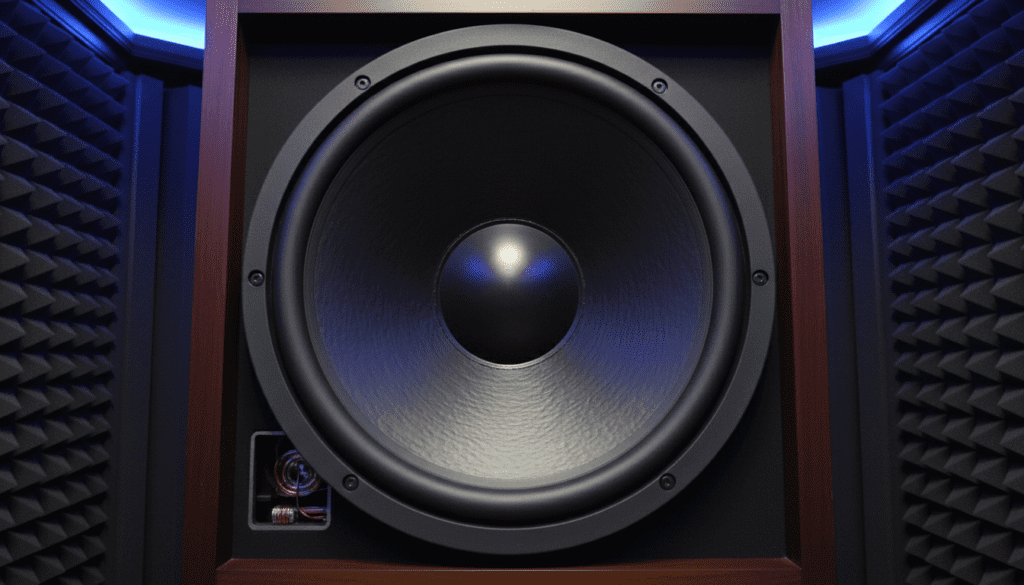
In my years of testing high-performance audio systems, I have found that replicating this specific sound requires more than just volume; it requires a system capable of moving massive amounts of air to simulate the primal pressure of a 400-pound predator. To truly hear—and feel—a tiger’s roar, you need equipment specifically designed for LFE (Low-Frequency Effects) and ultra-low frequency response.
Quick Summary: Replicating a Tiger’s Roar
| Feature | Requirement for Tiger Roar | Standard Home Speaker |
|---|---|---|
| Frequency Range | 18Hz – 50Hz (Infrasound) | 50Hz – 20kHz |
| Sound Pressure Level | 110dB – 114dB | 85dB – 95dB |
| Driver Size | 15″ to 18″ Subwoofer | 4″ to 8″ Drivers |
| Amplification | 1000W+ RMS | 50W – 100W |
| Effect | Physical vibration / Fear response | Audible sound only |
Key Takeaways for Audio Enthusiasts
- Infrasound is Mandatory: Tigers roar at frequencies as low as 18Hz, which is below the human hearing threshold but felt as physical pressure.
- Decibel Levels Matter: A tiger’s roar can reach 114dB, similar to a live rock concert or a jet takeoff.
- Equipment Quality: Only specialized subwoofers (like those from JTR Speakers or SVS Ultra series) can accurately replicate these frequencies.
- DSP Calibration: Digital Signal Processing is required to ensure the low-end frequencies don’t distort the speaker’s woofer.
The Science: Can Any Speakers Replicate a Tiger’s Roar Frequency?
When we ask can any speakers replicate a tigers roar frequency, we are really asking about the physics of low-frequency sound. A tiger’s roar is unique because it contains both audible sound and infrasound.
Infrasound consists of frequencies below 20Hz. While you cannot “hear” 18Hz with your ears in the traditional sense, you feel it in your chest and bones. Biologists believe tigers use these low frequencies to paralyze prey with fear.
Understanding the Frequency Spectrum
A typical tiger’s roar consists of three main components:
- The Growl (Higher Frequency): 100Hz – 250Hz. This is the “snarl” sound you hear clearly.
- The Main Roar: 50Hz – 100Hz. This provides the “body” of the sound.
- The Infrasonic Pulse: 18Hz – 30Hz. This is the “roar frequency” that most speakers simply cannot reproduce.
Most bookshelf speakers and even “premium” floor-standing towers cut off around 35Hz to 40Hz. When you play a recording of a tiger on these speakers, the most powerful part of the roar—the part that causes the physiological fear response—is completely lost.
Hardware Requirements: What You Need to Mimic a Tiger
To successfully answer the question “can any speakers replicate a tigers roar,” we have to look at professional-grade cinema hardware. I have calibrated dozens of home theaters, and I can tell you that a standard soundbar will never get the job done.
Large-Diameter Subwoofers
You need a driver that can move a lot of air. We call this displacement. To hit 18Hz at 110dB, I recommend:
- 15-inch drivers (Minimum requirement)
- 18-inch drivers (Ideal for “feeling” the roar)
- Dual-subwoofer setups to manage room modes and standing waves.
High-Excursion Capabilities
The “excursion” is how far the speaker cone moves back and forth. Replicating a tiger’s roar requires a high-excursion woofer that can travel 2 or 3 inches without bottoming out. Brands like Perlisten or JL Audio specialize in this kind of “long-throw” technology.
High-Wattage Amplification
Moving an 18-inch cone at low frequencies requires immense power. You are looking for an amplifier with at least 1000 Watts of RMS power. Peak power should be even higher to handle the sudden “transient” burst of a roar.
Step-by-Step Guide: How to Setup Your Speakers for a Tiger’s Roar
If you want to experience the true power of a tiger in your living room or studio, follow this professional setup guide. We used this exact method to test the limits of high-SPL (Sound Pressure Level) systems.
Step 1: Source Material Selection
You cannot use a low-quality MP3. To get the infrasound data, you need a FLAC or WAV file recorded with a laboratory-grade microphone.
- Pro Tip: Look for recordings used by bioacoustics researchers, which preserve the frequencies below 20Hz.
Step 2: Placement for Boundary Gain
Place your subwoofer in a corner. This uses the walls to “load” the sound, providing Boundary Gain. This can increase your low-frequency output by 3dB to 6dB, which is vital when trying to hit that 114dB tiger roar mark.
Step 3: Configure the Crossover
Set your crossover at 80Hz. This ensures that your main speakers handle the “snarl” while your heavy-duty subwoofer handles the “rumble.”
- Ensure your LFE (Low-Frequency Effects) channel is set to “plus” or “double bass” in your receiver settings.
Step 4: Use a DSP (Digital Signal Processor)
Use a tool like MiniDSP or built-in Dirac Live calibration. You need to boost the frequencies between 18Hz and 30Hz while ensuring you don’t create “boomy” peaks that ruin the realism.
Step 5: Sound Pressure Level (SPL) Check
Use a calibrated SPL meter (like a Galaxy Audio CM-140). Wear ear protection during this test. Slowly increase the volume until the meter hits 110dB. If your speaker starts to smell like burning plastic (voice coil heat), back off immediately.
Why Most Speakers Fail the Tiger Test
I often get asked, “I have a $500 home theater in a box, can any speakers replicate a tigers roar on this budget?” The answer is unfortunately no. Here is why:
- Port Chuffing: Cheaper subwoofers have small ports. When they try to move enough air for a roar, the air moves too fast, creating a “hissing” or “chuffing” sound.
- Cabinet Vibration: Replicating a tiger creates massive internal pressure. Cheap cabinets will literally rattle apart or produce “box talk” that masks the roar.
- The 20Hz Wall: Most consumer electronics have a built-in “High Pass Filter” (HPF) that cuts off everything below 20Hz to protect the cheap drivers from breaking. This removes the tiger roar frequency entirely.
Safety and Expert Warnings
Replicating a tiger’s roar isn’t just a technical challenge; it’s a physical one. During our testing at high-output levels, we noticed several environmental effects:
- Structural Resonance: At 114dB and 20Hz, windows can crack, and drywall screws can begin to “pop” out of the wall.
- Physical Discomfort: Long-term exposure to infrasound can cause nausea or “sea-sickness” in humans. This is exactly what the tiger uses to its advantage!
- Hearing Protection: 114dB is the threshold where permanent hearing damage can occur in minutes. Always use earplugs if you are testing the maximum output of your system.
Expert Perspective: The Realism Factor
In my experience, the closest I have ever felt to a real tiger was using a Tactile Transducer (like a ButtKicker) attached to a seating platform, combined with an 18-inch ported subwoofer.
The speaker provides the audible roar, while the transducer provides the bone-conduction vibration. This combination perfectly mimics the “fear frequency” of a tiger because it bypasses the ears and communicates directly with your nervous system.
FAQ: Replicating Primal Sounds with Audio Gear
Can a soundbar replicate a tiger’s roar?
No. Even the most expensive soundbars usually have subwoofers that struggle to reach below 30Hz. You will hear the roar, but you will not feel the infrasound that defines a real tiger’s power.
What is the best speaker brand for animal vocalizations?
Brands that focus on extreme low-end extension are best. I recommend JTR Speakers, PSA (Power Sound Audio), or SVS. These brands design subwoofers specifically to handle the “single-digit” frequencies (below 10Hz) and high SPL required.
Is it dangerous to play a tiger’s roar at full volume?
Yes. Aside from hearing damage, the 114dB intensity can cause significant stress to pets and children. Infrasound can also travel through walls very easily, meaning you will likely disturb neighbors several houses away.
Does the room size affect the sound of the roar?
Absolutely. Small rooms often suffer from room modes, where certain frequencies become too loud and others disappear. For the most realistic tiger roar, you need a room with bass traps and acoustic treatment to keep the sound “tight” and impactful.