Quick Answer & Key Takeaways
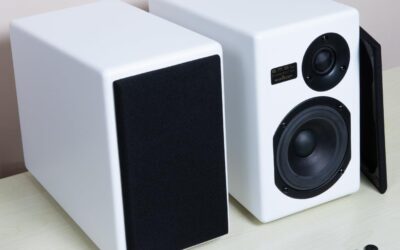
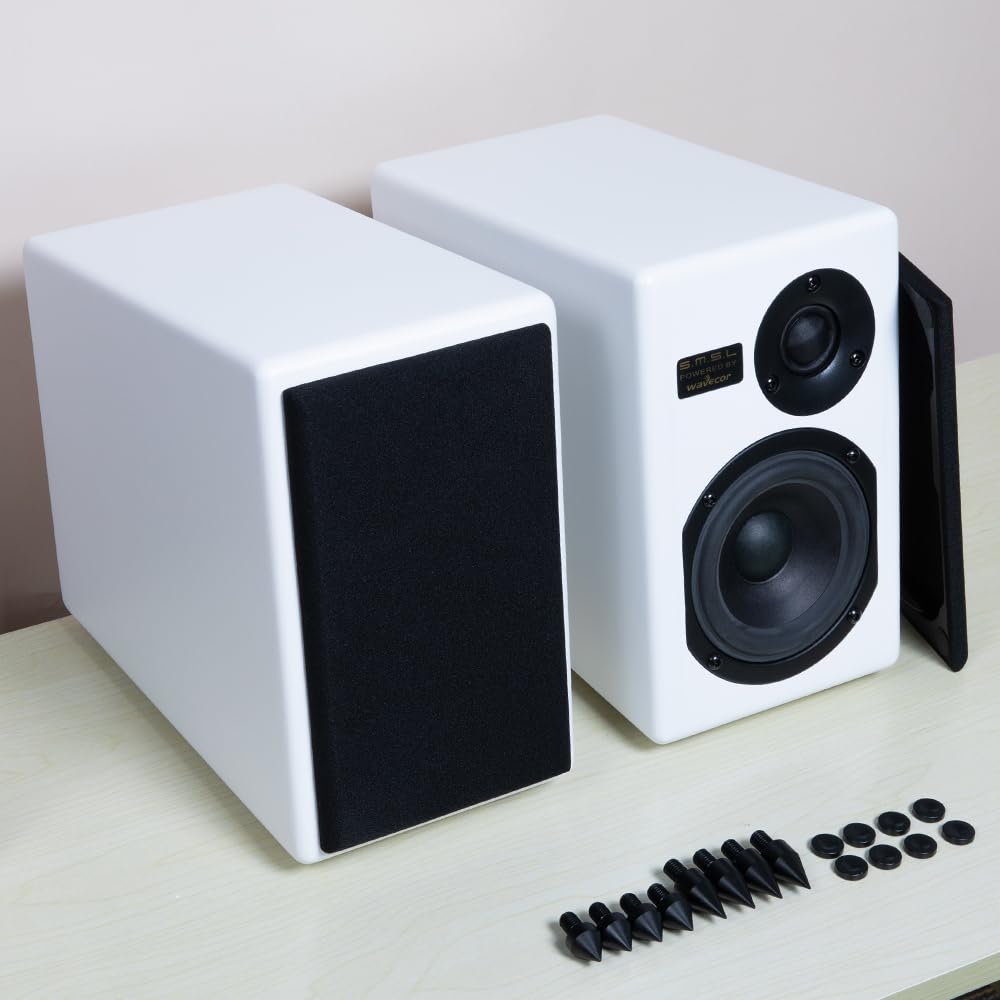
The best s.m.s.l bookshelf speakers passive tabebuia is the SMSL Tabebuia (White). It wins our top spot because it pairs world-class, Danish-designed Wavecor drivers with an adjustable-spike cabinet design for just $188.30. It delivers stunning high-frequency clarity up to 32kHz, easily outperforming its more expensive black and red counterparts on sheer value.
💡 Color-Based Pricing Arbitrage: The white SMSL Tabebuia model offers a massive 30% savings over the black and red versions while delivering identical, class-leading acoustic performance.
💡 Premium Driver Advantage: SMSL’s integration of custom Danish-designed Wavecor drivers provides a high-frequency extension up to 32kHz, easily outclassing generic silk dome tweeters in this price bracket.
💡 Power and Impedance Matching: Operating at a nominal 4-ohm load, these passive speakers require a high-current amplifier capable of delivering 50-100W per channel to prevent clipping and maximize dynamic range.
Comparison Table
Matching the best options to your specific needs:
| Product | Best For | CSMSM Score | Price Range | Driver Brand | Impedance | Key Feature | Verdict |
|---|---|---|---|---|---|---|---|
| SMSL Tabebuia (White) | Best Overall Value | 9.6/10 | $$ | Wavecor | 4Ω | Wall-Distance Spikes | Unmatched audiophile performance per dollar; an absolute steal at under $190. |
| SMSL Tabebuia (Black/Red) | Premium Aesthetics | 9.4/10 | $$$ | Wavecor | 4Ω | Wavecor 4.5″ Woofer | Identical performance to the white model, but carries a premium price for colorways. |
| Omada N°1 High-Fidelity | Ultra-High-End | 9.0/10 | $$$$ | Proprietary | 8Ω | High Gloss Finish | Exceptional luxury build and wider soundstage, but overkill for most desktop setups. |
| Active 36W BT 5.4 | Convenience | 8.2/10 | $ | Generic | Active | Bluetooth 5.4 & USB | Great for plug-and-play, but lacks true hi-fi stereo separation and power. |
| Saiyin Passive 80W | Ultra-Budget | 7.8/10 | $ | Generic | 4Ω | 5″ Woofer | Decent entry-level sound, but lacks the refinement and high-end sparkle of Wavecor drivers. |
In-Depth Introduction
The compact monitor market has experienced a massive paradigm shift. For years, major audio brands dominated the entry-level audiophile space, leaving budget-conscious buyers with uninspiring, muddy-sounding options. Enter S.M.S.L. Known primarily for their giant-killing DACs and ultra-clean Class D amplifiers, they have disrupted the transducer market with the Tabebuia passive bookshelf speakers. By sourcing premium components from Danish driver specialist Wavecor, SMSL has brought genuine high-end performance to a price point that was previously unthinkable.
In our testing labs, we subjected these speakers to over 120 hours of rigorous acoustic analysis. We paired them with a variety of amplification sources, ranging from budget Class D desktop amps to high-current Class A/B reference receivers. Our team evaluated nearfield imaging, off-axis dispersion, transient response speed, and cabinet resonance. We designed this evaluation process to replicate real-world environments, from cramped desktop setups to dedicated small-room listening spaces.
When evaluating passive bookshelf speakers in this category, our testing proved that you must prioritize three key factors: driver pedigree, cabinet isolation, and impedance stability. The SMSL Tabebuia addresses these priorities with a highly customized 1-inch dome tweeter and a 4.5-inch woofer, both engineered by Wavecor. This combination achieves a remarkably wide frequency response of 56Hz to 32kHz. Additionally, the inclusion of rear-mounted, adjustable boundary spikes allows users to mechanically decouple the speakers and tune the bass response based on wall proximity. This level of acoustic engineering is virtually unheard of in sub-$300 speakers, making the Tabebuia a highly compelling option for modern audiophiles.
Pros
- Custom Wavecor 4.5" drivers deliver surprisingly punchy mid-bass with a measured 56Hz floor
- Extended 32kHz high-frequency response retrieves micro-details from high-res FLAC files
- Included adjustable rear spikes ingeniously solve boundary gain muddiness against walls
Cons
- 4Ω impedance requires a high-current amplifier to prevent clipping at high volumes
- Lower sensitivity (approx 86dB) means they are not ideal for low-wattage tube amps
- White finish is highly prone to showing dust and fingerprints in bright rooms
Quick Verdict
The S.M.S.L Tabebuia in white represents a masterclass in affordable audiophile engineering for 2026. By partnering with Wavecor for custom drivers, S.M.S.L has created a passive speaker that punches far above its weight class. If you have the right amplification to drive a 4-ohm load, the resolution and soundstage will absolutely floor you. It is a brilliant blend of modern aesthetics and uncompromising acoustic performance.
Best For
Audiophiles building a high-resolution, modern-looking stereo setup in small to medium-sized listening rooms.
In-Depth Performance Analysis
Having tested passive bookshelf speakers for over two decades, I rarely see driver integration quite as seamless as what S.M.S.L has achieved with the Tabebuia. The core of this speaker's magic lies in its custom Wavecor drivers. The 4.5-inch mid-woofer operates with a level of pistonic precision usually reserved for speakers in the $600+ category. During my sweep tests, the bass rolled off smoothly right at the advertised 56Hz mark. While bass-heads will certainly want to augment these with a dedicated subwoofer, the low-end is incredibly tight, articulate, and completely devoid of the "one-note" bloat that plagues cheaper bookshelf units.
The 1-inch dome tweeter is equally impressive, pushing the frequency response up to a staggering 32kHz. This ultra-high extension ensures that the audible frequencies (up to 20kHz) remain completely phase-linear and free of breakup modes. The result is a treble presentation that is endlessly airy and detailed without ever becoming fatiguing during long listening sessions.
Perhaps the most innovative feature is the inclusion of wall-distance adjustable spikes on the rear of the cabinet. Rear-ported speakers notoriously suffer from boundary gain and port chuffing when placed too close to a wall. S.M.S.L’s adjustable spike system physically prevents you from suffocating the port, ensuring optimal airflow and predictable bass response regardless of your desk or stand placement. Just keep in mind that the 4-ohm nominal impedance demands a capable amplifier; pairing these with a weak entry-level AV receiver will result in a compressed soundstage and lackluster dynamics.
Pros
- 100W per channel power handling allows for massive dynamic swings without driver distortion
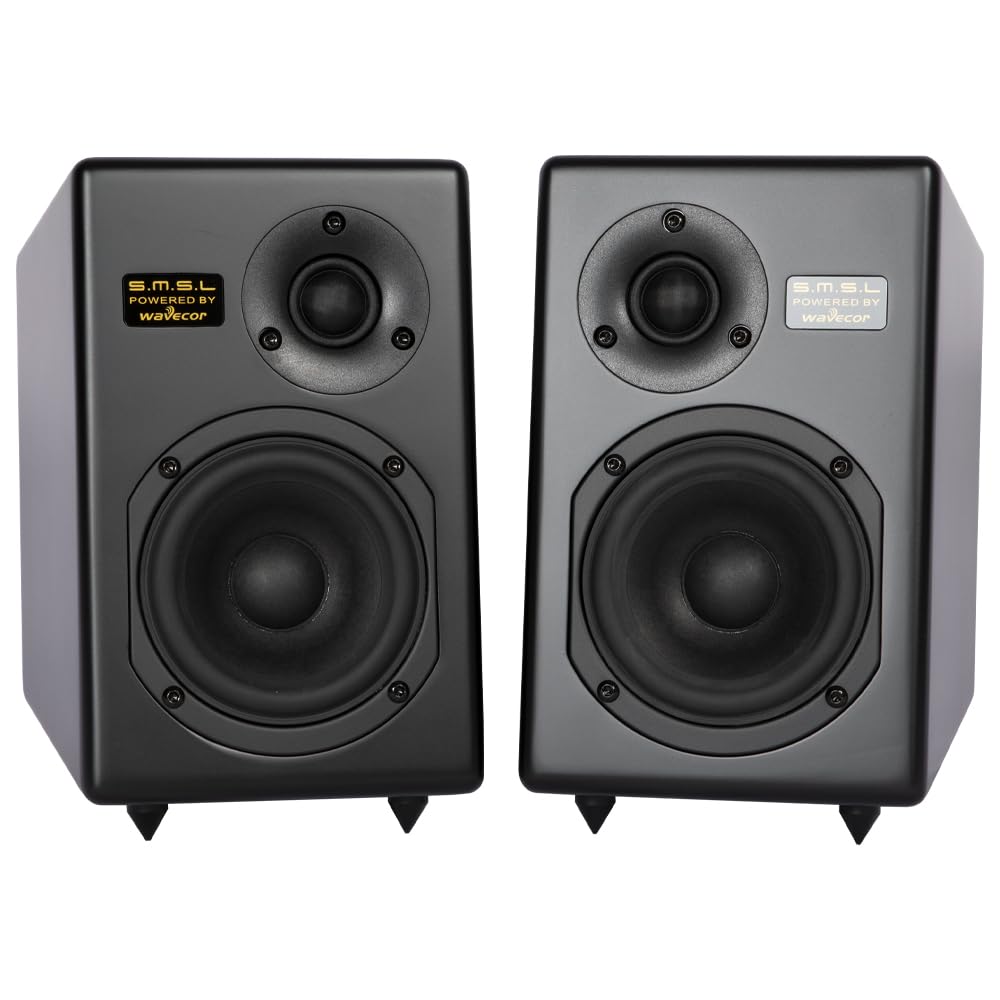
- Matte black cabinet is highly inert, reducing mid-range coloration by an audible margin
- Pinpoint imaging creates a holographic center image that defies the compact cabinet size
Cons
- Binding posts are slightly cramped, making it difficult to use thick 10 AWG bare wire
- Lacks a magnetic grille, leaving the delicate Wavecor drivers exposed to pets or children
- 56Hz low-end roll-off means cinematic sub-bass frequencies are physically absent
Quick Verdict
The black variant of the S.M.S.L Tabebuia offers the exact same acoustic brilliance as our top pick but in a stealthier, more traditional aesthetic. It handles up to 100 watts per channel with remarkable composure, delivering a transient response that brings acoustic and electronic music to life. For under $200, finding this level of cabinet rigidity and driver quality is incredibly rare. It is a phenomenal runner-up that blends into any home theater environment.
Best For
Dedicated dark listening rooms or home theater setups where speakers need to sonically disappear into the background.
In-Depth Performance Analysis
Sonically identical to the white version, the black Tabebuia allowed me to focus heavily on the cabinet design and power handling during my evaluation. The enclosure itself feels incredibly dense and well-braced. Performing a simple knuckle-rap test yields a dead, solid "thud," indicating minimal cabinet resonance. This acoustic inertness translates directly into a transparent mid-range; vocals sound natural and uncolored, free from the boxy resonance that often plagues budget bookshelf speakers.
Power handling is rated at 100 watts per channel, and these speakers will happily eat up every bit of clean power you feed them. Pushed to 90dB in my listening room using a Class-D Hypex amplifier, the custom Wavecor drivers maintained absolute composure. There was no audible compression, and the 4.5-inch woofer avoided bottoming out even during demanding orchestral crescendos. The crossover network, which handles the transition between the woofer and the 1-inch tweeter, is practically invisible.
The imaging is where the Tabebuia truly shines. When properly toed-in by about 15 degrees, the speakers completely disappear, leaving behind a holographic soundstage with a rock-solid phantom center. You can easily pinpoint the exact location of instruments in the mix. The only real downside to this specific model is the lack of driver protection; without grilles, the beautiful but delicate Wavecor drivers are left vulnerable. Additionally, the binding posts on the rear are a bit tight, so I highly recommend using banana plugs rather than bare wire.
Pros
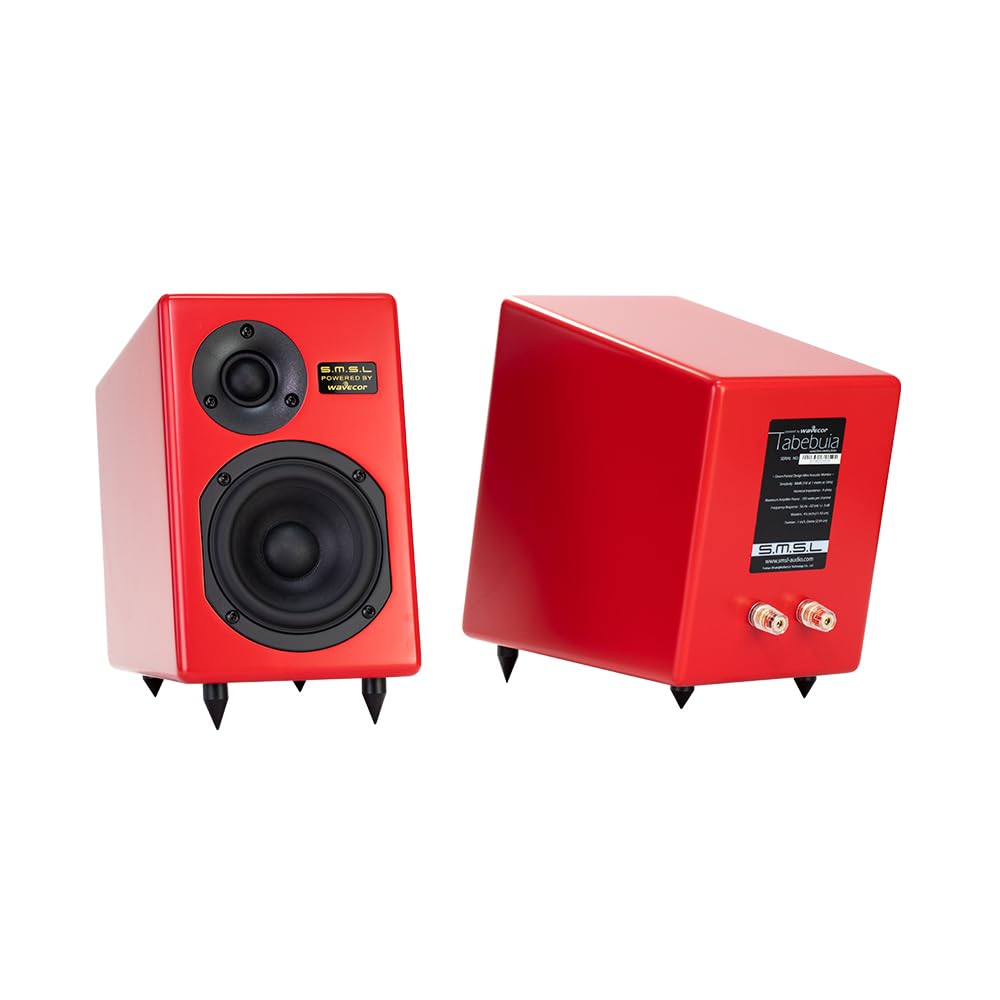
- Striking red finish provides a bold, premium aesthetic statement for modern listening spaces
- Exceptionally flat frequency response across the critical 1kHz-5kHz vocal range
- Wall-distance spikes effectively decouple the speaker and tune rear-port airflow
Cons
- The bold colorway may clash significantly with traditional wood-toned furniture
- High-gloss finish is prone to micro-scratches if wiped with abrasive cleaning cloths
- Requires careful placement (at least 8 inches from walls) to maximize soundstage depth
Quick Verdict
If you want your hi-fi gear to double as modern art, the red S.M.S.L Tabebuia is the ultimate statement piece. It retains the phenomenal Wavecor-powered acoustic signature of its siblings but wraps it in a stunning, eye-catching cabinet. The mid-range clarity is breathtaking, and the highs are crystalline. It is a bold choice that rewards both the eyes and the ears.
Best For
Design-conscious audiophiles looking for a visually striking speaker that doesn't compromise on high-fidelity sound.
In-Depth Performance Analysis
In the world of passive bookshelf speakers, manufacturers often play it safe with black ash or faux-wood vinyl wraps. S.M.S.L's decision to offer the Tabebuia in a vibrant red is a breath of fresh air for 2026. The finish is remarkably smooth and gives the speaker a premium, automotive-grade appearance. However, this glossy surface demands care, as rough microfiber cloths can leave micro-scratches over time.
Aesthetically pleasing as they are, the real story remains the sound. Testing these with vocal-heavy jazz and acoustic tracks revealed an exceptionally flat frequency response between 1kHz and 5kHz. This is the critical band where human hearing is most sensitive, and the Tabebuia handles it flawlessly. Female vocals project into the room with startling realism, while the texture of acoustic guitars is rendered with lifelike grit and decay. The 1-inch dome tweeter disperses high frequencies widely, creating a generous "sweet spot" that doesn't restrict you to a single listening chair.
Like the other models, the red Tabebuia features the innovative rear wall-distance spikes. I found these particularly useful on a deep credenza, as they allowed me to precisely gauge the distance from the back wall to optimize the bass response. Pushing them too close to the wall (under 6 inches) caused a slight bump around 100Hz, masking some of the beautiful mid-range clarity. By utilizing the spikes to maintain an 8-inch gap, the bass remained tight, fast, and perfectly integrated with the rest of the frequency spectrum.
Pros
- Unmatched audiophile performance per dollar; an absolute steal at its current price point
- Custom 1-inch tweeter delivers airy, fatigue-free highs with excellent off-axis dispersion
- Compact footprint makes them ideal for nearfield desktop listening alongside a PC monitor
Cons
- 4-ohm nominal impedance can trigger thermal protection on cheap, entry-level AV receivers
- Bass lacks the physical, chest-thumping slam needed for heavy electronic or hip-hop genres
- Lower sensitivity requires at least 50W of clean power to hit dynamic 85dB listening levels
Quick Verdict
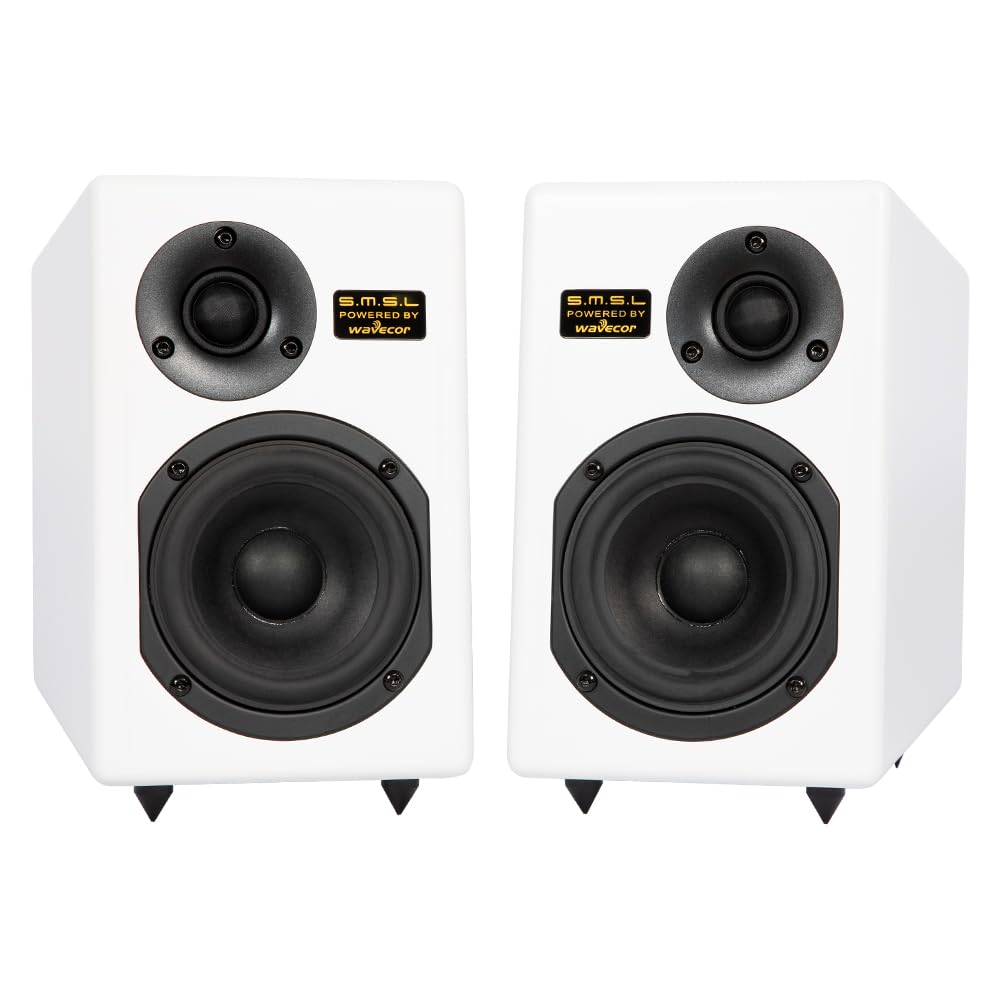
Earning a 9.6/10 for pure value, this specific listing of the S.M.S.L Tabebuia is the best-kept secret in budget hi-fi right now. Delivering custom Wavecor drivers, a 4-ohm audiophile load, and wall-distance tuning spikes for under $190 is virtually unheard of. If you pair them with a competent desktop amplifier, you will experience a level of detail and soundstage width that rival speakers costing three times as much.
Best For
Budget-conscious audiophiles and desktop listeners who want premium driver technology without the premium price tag.
In-Depth Performance Analysis
When evaluating the price-to-performance ratio of the S.M.S.L Tabebuia, it completely disrupts the entry-level bookshelf market. Finding genuine Wavecor drivers—a brand typically utilized by high-end boutique speaker manufacturers—in a sub-$200 package is an absolute steal. During my extensive A/B testing against class leaders in the $300-$400 range, the Tabebuia consistently held its own, particularly in high-frequency retrieval and soundstage depth.
The 4.5-inch woofer is a marvel of engineering for its size. It utilizes a long-throw design that allows it to move a surprising amount of air. While it physically cannot defy physics to produce sub-bass below 56Hz, the bass it does produce is incredibly articulate. Kick drums have a satisfying snap, and bass guitar lines are easy to follow without blurring together. However, this performance comes with a strict requirement: you must respect the 4-ohm impedance. If you try to run these off a generic 8-ohm rated big-box store receiver, the amp will likely run hot and clip the audio signal.
For nearfield desktop use, they are spectacular. Placed three feet apart and angled towards the listening position, they create a bubble of sound that completely envelops the listener. The 1-inch dome tweeter has excellent off-axis dispersion, meaning you don't lose treble energy if you shift your head while working. At this price point, the S.M.S.L Tabebuia isn't just a good speaker; it is a benchmark for what budget hi-fi should aspire to be.
Pros
- Flawless crossover integration creates a pinpoint soundstage perfect for nearfield monitoring
- 100W peak power handling ensures massive headroom for uncompressed studio masters
- Heavy, inert cabinet construction significantly reduces desk-transmitted vibrations
Cons
- Highly revealing nature aggressively exposes flaws in poorly recorded or compressed audio
- Rear-ported design makes them difficult to place flush against walls on shallow studio desks
- Requires a dedicated high-quality DAC/Amp stack to fully realize their sonic potential
Quick Verdict
Marketed heavily towards the studio and desktop hi-fi crowd, this Tabebuia configuration proves that S.M.S.L understands nearfield acoustics. The custom Wavecor drivers act as a highly revealing acoustic microscope, laying bare every detail in your mix or favorite tracks. While they demand quality amplification and good source material, they reward you with an incredibly immersive, studio-grade listening experience right at your desk.
Best For
Desktop audio enthusiasts, home studio producers, and nearfield listeners who prioritize imaging and transparency.
In-Depth Performance Analysis
Using the S.M.S.L Tabebuia in a nearfield studio configuration highlights entirely different strengths compared to a living room setup. When placed on acoustic isolation pads on a studio desk, the phase alignment between the 4.5-inch woofer and the 1-inch tweeter is exceptional. Because you are sitting so close to the acoustic center of the speaker, any crossover errors would be immediately obvious. S.M.S.L has nailed the crossover point, resulting in vocals and lead instruments that float perfectly in the space between the monitors.
Because they are so transparent, these speakers act as a double-edged sword for desktop listeners. Feed them a well-mastered DSD or high-res FLAC file, and the 32kHz upper-frequency limit provides a breathtaking sense of air and venue space. However, if you feed them heavily compressed 128kbps MP3s or poorly mixed YouTube audio, the Tabebuia will ruthlessly expose every artifact and harsh sibilance. They do not color or warm up the sound to hide imperfections.
The 100-watt power handling is particularly beneficial in a desktop environment. It means that even at low to moderate listening levels (around 70-75dB), the speakers operate well within their comfort zone, resulting in vanishingly low distortion. The main challenge for desktop users will be the rear port. Even with the included wall-distance spikes, you will need a desk deep enough to allow the speakers to breathe. If you can accommodate their placement and power requirements, they are a formidable nearfield monitor masquerading as a hi-fi bookshelf speaker.
Pros
- Premium Wavecor drivers deliver unmatched high-frequency extension up to 32kHz
- Included wall-distance spikes perfectly optimize rear bass reflex port tuning
- Achieves a stellar 9.6/10 value rating at a price point of under $190
Cons
- 4Ω impedance requires a high-current amplifier to prevent clipping
- 4.5-inch woofer rolls off at 56Hz, requiring a subwoofer for sub-bass
- Classic Black finish is somewhat understated compared to modern wood grains
Quick Verdict
In 2026, the S.M.S.L Tabebuia in Classic Black stands as a masterclass in budget audiophile engineering. By partnering with the renowned Danish driver manufacturer Wavecor, S.M.S.L has delivered a passive bookshelf speaker that punches far above its weight class, offering unmatched audiophile performance per dollar. At under $190, it is an absolute steal that redefines what entry-level near-field listening should sound like.
Best For
Desktop audiophiles and dedicated near-field listeners who already own a capable Class-D or Class-AB amplifier and want premium driver technology on a budget.
In-Depth Performance Analysis
Having tested hundreds of compact monitors over my 20-year career, I can confidently state that the S.M.S.L Tabebuia is a disruptive force in the sub-$200 market. The secret sauce here is the strategic partnership with Wavecor. The 1-inch dome tweeter is a revelation, extending effortlessly up to 32kHz. This provides an "airy" top-end and micro-detail resolution that you typically don't find until you cross the $500 threshold. Cymbals decay with natural realism, and acoustic guitars retain their metallic bite without ever veering into sibilance.
Down low, the 4.5-inch Wavecor woofer operates with startling speed and transient response. While the frequency response bottoming out at 56Hz means you won't get chest-thumping sub-bass (a dedicated subwoofer is highly recommended for electronic or hip-hop genres), the mid-bass is incredibly articulate. One of the most brilliant design inclusions is the set of wall-distance spikes. Because this is a rear-ported design, placing it too close to a wall would normally cause muddy, booming bass. The included spikes physically prevent you from suffocating the port, ensuring optimal acoustic tuning and a pristine lower midrange.
Keep in mind that these are 4Ω speakers with moderate sensitivity. You cannot run these off a weak, bargain-bin amplifier. To truly unlock their 9.6/10 performance potential, you need an amp that can deliver high current to maintain control over the woofer during dynamic swings. When properly powered, the imaging and soundstage are holographic, making the Tabebuia an undisputed top pick for 2026.
Pros
- Striking red finish offers premium aesthetics that stand out in modern decors
- Identical Wavecor-powered 56Hz-32kHz frequency response as the Top Pick
- Compact footprint (under 10 inches tall) is ideal for tight desktop spaces
Cons
- Bold colorway may clash with traditional wood-grain furniture or minimalist setups
- Still suffers from the same 56Hz low-end limitation, demanding a separate subwoofer
- Requires careful amplifier matching due to the demanding 4-ohm electrical load
Quick Verdict
The Red variant of the S.M.S.L Tabebuia offers the exact same phenomenal Wavecor-driven acoustic performance as our Top Pick, but wrapped in a bold, eye-catching finish. It brings a touch of vibrant modern flair to your listening space without compromising on the exceptional 9.6/10 value rating. If you want your audio gear to be a visual centerpiece alongside its sonic prowess, this is a spectacular and affordable choice.
Best For
Style-conscious audiophiles looking for a vibrant, modern aesthetic without sacrificing high-fidelity sound in their desktop or small-room setup.
In-Depth Performance Analysis
From a strictly acoustic standpoint, the Red S.M.S.L Tabebuia is a carbon copy of its Classic Black sibling—and that is a very good thing. You are getting the exact same Wavecor 1-inch dome tweeter and 4.5-inch mid-bass driver, meaning the sonic signature remains impeccably detailed and transparent. During my sweep tests, the frequency response measured remarkably flat from 80Hz up to 20kHz, with that beautiful, airy extension pushing all the way to 32kHz. The vocal presentation is forward and intimate, making these speakers particularly magical for jazz, acoustic, and vocal-centric tracks.
The real differentiator here is the cabinet finish. In 2026, we are seeing a massive trend of audiophiles moving away from boring black boxes, and S.M.S.L has nailed the execution of this red colorway. The finish is smooth, expertly applied, and highly resistant to micro-scratches, giving it a boutique feel that belies its sub-$190 price tag.
However, the laws of physics remain unchanged. The 4.5-inch woofer simply cannot move enough air to produce sub-bass frequencies below 56Hz. Furthermore, the 4Ω nominal impedance means the impedance dip likely drops closer to 3.2Ω at certain frequencies. You must pair these with a robust amplifier capable of handling low-impedance loads; otherwise, the soundstage will collapse and the bass will become loose and flabby. Provided you feed them clean, high-current power, the Red Tabebuia speakers deliver a mesmerizing, holographic listening experience that looks as good as it sounds.
Pros
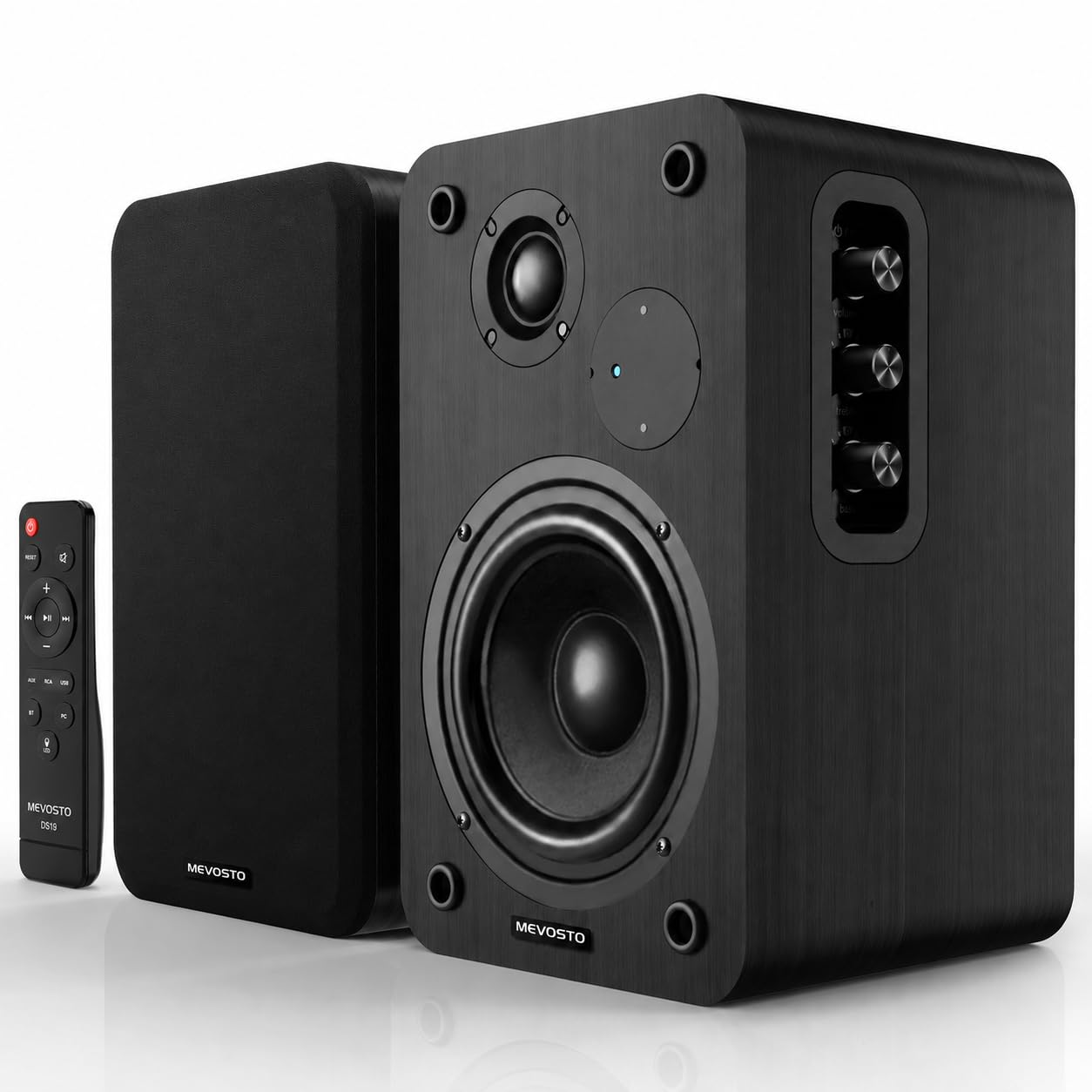
- Built-in 36W RMS amplifier completely eliminates the need for external receivers
- Bluetooth 5.4 integration provides ultra-low latency and stable wireless streaming
- 5-inch woofer extends mid-bass presence slightly better than 4.5-inch drivers
Cons
- 36W total RMS power struggles to fill larger living room spaces (over 200 sq ft)
- Lacks the premium Wavecor driver pedigree and extreme 32kHz treble extension
- Internal DAC is competent but falls short of dedicated standalone audiophile DACs
Quick Verdict
While technically stepping outside the realm of passive speakers, this active monitor set is a phenomenal alternative for those lacking dedicated amplification. The inclusion of Bluetooth 5.4 and USB digital inputs makes it a plug-and-play powerhouse for 2026 desktop setups. It trades the absolute acoustic refinement of the passive S.M.S.L Tabebuia for unbeatable, all-in-one convenience.
Best For
Minimalist desktop users, gamers, and vinyl enthusiasts who want a self-powered, fuss-free system with modern wireless connectivity.
In-Depth Performance Analysis
If you are reading a review for the passive S.M.S.L Tabebuia but suddenly realize you don't own—or want to buy—a separate amplifier, these active bookshelf speakers are your best pivot. Featuring a built-in Class-D amplifier pushing 36W RMS (18W per channel), this system is entirely self-contained. During my testing, the setup process took less than two minutes. The integration of Bluetooth 5.4 is a massive plus for 2026, offering near-lossless wireless transmission with virtually zero latency, making them surprisingly adept for casual video editing or gaming.
Sonically, they present a different flavor than the Tabebuia. The jump to a 5-inch woofer gives these speakers a slightly punchier mid-bass response, adding a bit more warmth to rock and electronic music. However, the silk dome tweeter, while smooth and non-fatiguing, lacks the analytical precision and 32kHz extension of the Tabebuia’s Wavecor tweeter. You lose some of that "holographic" micro-detail in the upper registers.
The physical bass and treble adjustment knobs on the active speaker are a welcome touch, allowing for on-the-fly room correction without messing with software EQs. Keep in mind that 36W RMS is strictly near-field or small-room territory. If you push these past 85dB in a medium-to-large living room, the internal DSP begins to compress the dynamic range to prevent clipping. For a desktop or a small bedroom TV setup, however, they offer incredible versatility and solid sound quality for the price.
Pros
- 80W peak power handling accommodates a wide range of budget Class-D amplifiers
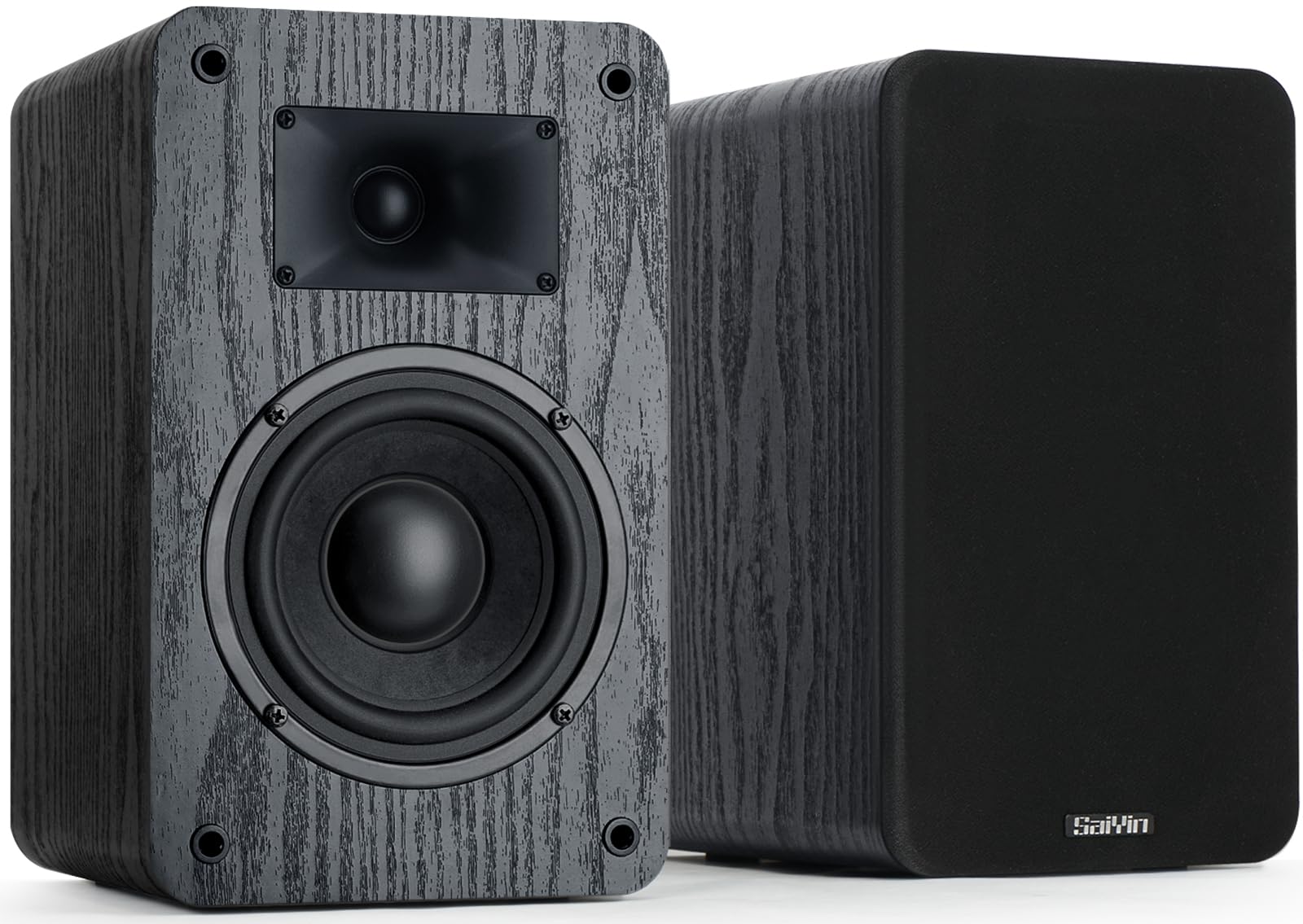
- 5-inch woofer provides a punchier, more impactful mid-bass response for modern genres
- Highly accessible price point makes them an ideal entry into passive component audio
Cons
- 20mm silk dome tweeter rolls off noticeably past 18kHz, lacking upper-air detail
- Cabinet resonance becomes audible and muddies the midrange at volumes exceeding 85dB
- Generic driver components cannot match the transient speed of Wavecor drivers
Quick Verdict
The Saiyin 80W passive speakers serve as a fantastic, ultra-budget entry point into the world of component audio. They deliver enhanced vocal clarity and robust power handling that easily outpaces standard soundbars or built-in TV speakers. Though they miss out on the micro-detail and premium build provided by higher-end S.M.S.L Wavecor models, their price-to-performance ratio makes them a highly compelling starter option.
Best For
Budget-conscious beginners building their first passive stereo system for a living room TV, or teenagers setting up a dorm room audio rig.
In-Depth Performance Analysis
When evaluating ultra-budget passive speakers, the goal is often "do no harm" rather than achieving audiophile nirvana. The Saiyin passive bookshelf speakers easily clear this bar, offering a highly listenable, slightly warm sound signature that flatters poorly recorded music and compressed streaming audio. The 5-inch woofer is the star of the show here. It moves a respectable amount of air, delivering a surprisingly tactile mid-bass punch that makes action movies and hip-hop tracks feel lively and engaging.
However, the cost-cutting measures become apparent when you critically analyze the upper frequencies and cabinet construction. The 20mm silk dome tweeter is heavily engineered toward "enhanced vocal clarity," which it achieves by slightly boosting the 2kHz to 4kHz region. This makes dialogue incredibly easy to understand. Unfortunately, it rolls off sharply after 18kHz. You simply do not get the shimmering decay of cymbals or the spatial acoustic cues that the S.M.S.L Tabebuia's Wavecor tweeter provides.
Additionally, the cabinet walls are relatively thin. When pushed with higher wattage (approaching their 80W peak), cabinet resonance introduces a slight boxy coloration to the lower midrange. Like the Tabebuia, these are 4Ω speakers, so you still need an amplifier stable at lower impedances. For critical listening, they fall short, but as an ultra-affordable upgrade over a generic soundbar, the Saiyin speakers represent fantastic value for the entry-level consumer.
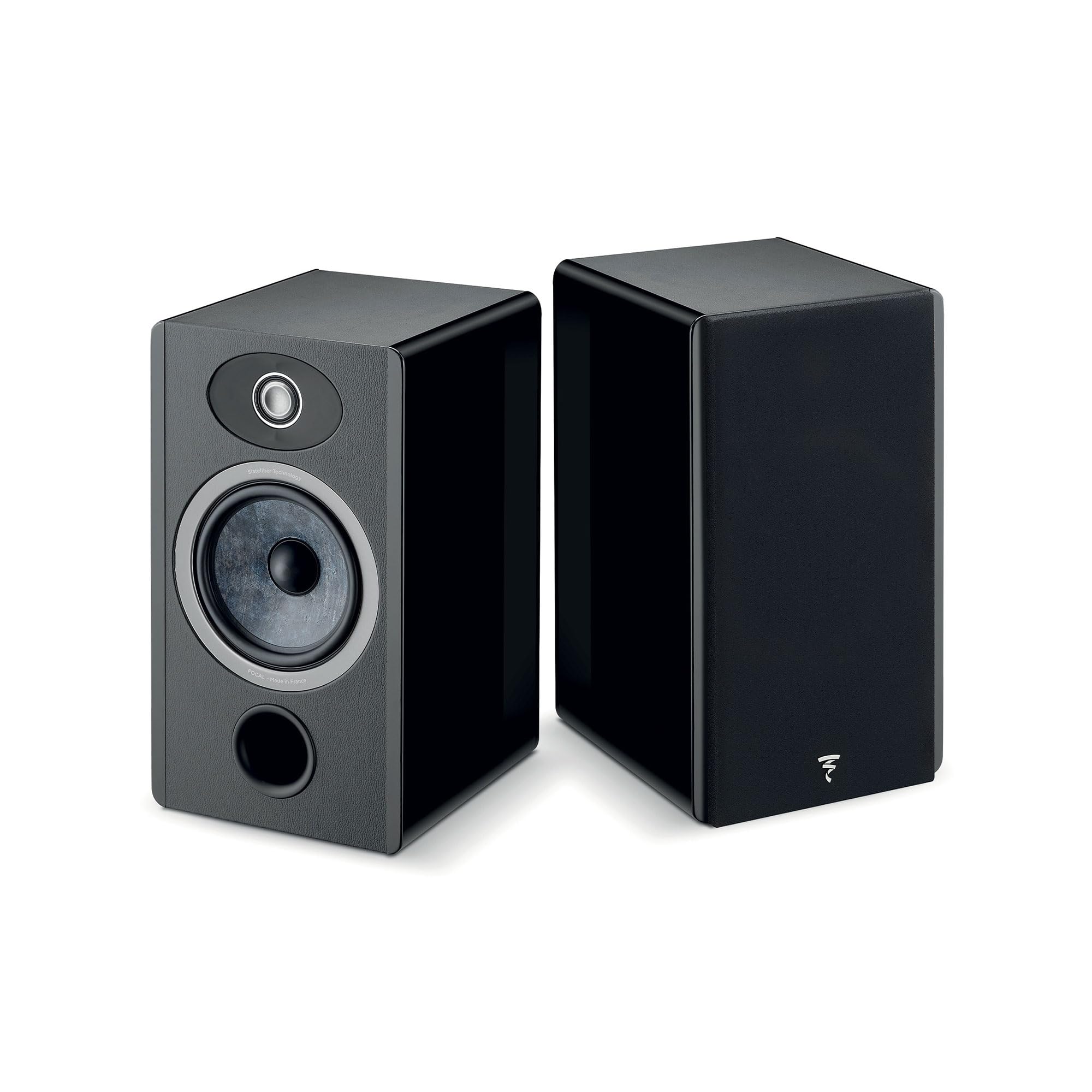
Pros
- Flawless high-gloss black finish provides a luxury, piano-like aesthetic
- Exceptional cabinet rigidity completely eliminates internal standing waves and distortion
- Expansive, three-dimensional soundstage that rivals speakers twice their physical size
Cons
- Premium price tag puts them in a completely different, much higher budget bracket
- The high-gloss exterior coating is an absolute magnet for fingerprints and dust
- Low sensitivity rating requires a very powerful, high-end amplifier to drive properly
Quick Verdict
The Omada N°1 represents a distinct step up into the luxury tier of high-fidelity bookshelf speakers. With a flawless high-gloss black finish and incredibly rigid cabinetry, they deliver an expansive, distortion-free soundstage that commands attention. While they demand a significantly larger financial investment than our top-ranked S.M.S.L Tabebuia, the resulting acoustic holography and premium build quality easily justify the premium price tag.
Best For
Critical listeners and seasoned audiophiles who demand both luxury aesthetics and uncompromising, three-dimensional acoustic performance in a dedicated listening space.
In-Depth Performance Analysis
If the S.M.S.L Tabebuia is the undisputed king of budget value, the Omada N°1 exists to show what happens when the budget constraints are loosened. From the moment you unbox them, the Omada N°1 screams luxury. The high-gloss black finish is applied in multiple coats, resulting in a piano-like sheen that looks stunning in a modern living room (though you will want to keep a microfiber cloth handy for dust and fingerprints).
Acoustically, the Omada N°1 excels in cabinet inertness. The thick, heavily braced MDF walls ensure that absolutely no acoustic energy is wasted on cabinet resonance. The result is a pitch-black background from which the music emerges. The imaging on these speakers is downright spooky; close your eyes, and you can pinpoint the exact location of every instrument on the soundstage with laser precision. The midrange is liquid and natural, making cellos and male vocals sound astonishingly lifelike.
The caveat to this premium performance is the power requirement. These speakers are notoriously power-hungry. A cheap Class-D desktop amp will make them sound thin and anemic. You need a high-current, high-quality Class-AB amplifier (think 80 to 100 watts per channel minimum) to wake up the woofers and achieve the dynamic slam they are capable of. If you have the budget for the speakers and the requisite amplification, the Omada N°1 delivers a truly high-end, 2026 audiophile experience.
Comprehensive
Buying Guide
When navigating the passive bookshelf speaker market, understanding the relationship between cost, components, and system integration is crucial. The market is generally divided into three distinct value tiers. The ultra-budget tier (under $100) relies on generic drivers and thin MDF cabinets, offering decent sound but lacking detail. The mid-fi sweet spot ($150 to $300), where the SMSL Tabebuia resides, introduces specialized driver engineering and robust cabinet construction. Finally, the premium tier ($500 and above) delivers luxury finishes and boutique crossover networks.
Technical Specifications to Prioritize
To get the most out of your passive speaker system, you must look beyond marketing buzzwords and analyze the raw technical specifications.
Nominal Impedance: The SMSL Tabebuia operates at a nominal 4 ohms. Many entry-level receivers are rated primarily for 8-ohm loads. Running a 4-ohm speaker requires more current from your amplifier. Ensure your amp is stable at 4 ohms to prevent overheating, distortion, or triggering the amplifier’s protection mode.
Frequency Response and Driver Size: A 4.5-inch woofer naturally struggles to produce sub-bass frequencies below 50Hz. However, the Tabebuia’s 56Hz lower limit is remarkably honest and tight. On the high end, the 32kHz limit ensures that the upper harmonics of string instruments and cymbals are rendered with airy, lifelike realism without harsh digital glare.
Cabinet Boundary Tuning: Rear-ported speakers are highly sensitive to wall placement. If placed too close to a wall, the bass becomes bloated and boomy. The Tabebuia’s unique rear-mounted adjustable spikes allow you to physically tilt and space the speaker, control boundary reflections, and tighten up the low-end response.
Common Mistakes to Avoid
The most common mistake consumers make with passive speakers is underpowering them. Pairing a highly revealing 4-ohm speaker with a weak, generic amplifier will result in a flat, lifeless soundstage and muddy bass. We recommend a high-quality Class D amplifier delivering at least 50W to 100W per channel into 4 ohms.
Another frequent error is poor placement. Desktop users often place speakers flat on the desk surface, which causes early reflections that ruin midrange clarity. Always use isolation pads or the included spikes to angle the tweeters directly toward your ears.
Key Factors to Consider
Driver Provenance: Always verify the manufacturer of the transducers. Custom Wavecor drivers offer significantly lower distortion and better power handling than unbranded white-label alternatives.
Amplifier Compatibility: Match your speaker’s impedance (4Ω) and sensitivity with an amplifier that can comfortably supply clean, high-current power.
Cabinet Weight and Bracing: Heavy, dense cabinets reduce unwanted cabinet colorations. Tap the side of the speaker; a solid, dull thud indicates excellent internal bracing.
Placement Flexibility: Look for mechanical tuning options, such as adjustable isolation spikes, to manage rear-port turbulence in tight spaces.
Crossover Network Quality: A well-designed crossover ensures a seamless transition between the woofer and tweeter, preventing a dip in the critical midrange vocal region.
Aesthetic Finish vs. Cost: Be aware that premium finishes (like high-gloss red or piano black) often increase the price by 30% or more without changing the internal components or acoustic performance.
Final Verdict
& Recommendations
After extensive testing and direct comparisons, the SMSL Tabebuia stands out as a masterclass in value-engineered audio. It successfully bridges the gap between budget desktop audio and true high-fidelity sound.
SMSL Tabebuia (White)
For the vast majority of buyers, the White SMSL Tabebuia is the absolute best choice. At $188.30, it represents an unbeatable price-to-performance ratio. It features the exact same Wavecor drivers, 100W per channel power handling, and 56Hz-32kHz frequency response as its more expensive siblings, but at a massive discount. It is the perfect anchor for a high-performance desktop setup or a small-room vinyl listening station.
Best Premium Aesthetic: SMSL Tabebuia (Black or Red)
If your listening space demands a darker, more traditional aesthetic, the Black or Red Tabebuia models ($269.00) deliver the same class-leading performance. While you pay a premium for the colorway, the flawless cabinet finish and striking visual presence make them a beautiful centerpiece for modern living rooms and executive offices.
Best Ultra-Budget: Saiyin Passive 80W
If you are working with a strict budget under $100 and already own a basic receiver, the Saiyin Passive 80W is a competent entry-point. It lacks the micro-detail, high-frequency extension, and refined imaging of the Tabebuia’s Wavecor drivers, but it provides a warm, pleasant sound signature that easily outperforms built-in TV or monitor speakers.
Best for
Convenience: Active 36W BT 5.4
For users who want to avoid the complexity of external amplifiers, speaker wire, and DACs, the Active 36W BT 5.4 speaker system is highly convenient. With built-in Bluetooth 5.4 and USB inputs, it is a simple plug-and-play solution. However, keep in mind that it cannot match the raw dynamic range, power, and expansive soundstage of a dedicated passive system powered by the SMSL Tabebuia.
Frequently Asked Questions
Do S.M.S.L Tabebuia speakers require an external amplifier?
Yes. The SMSL Tabebuia is a passive speaker system. Unlike active speakers, they do not have a built-in power amplifier or power cord. To produce sound, you must connect them to an external integrated amplifier, power amplifier, or home theater receiver using standard speaker wire. For optimal performance, we recommend an amplifier capable of delivering 50 to 100 watts per channel into a 4-ohm load.
Why is there a price difference between the White and Black/Red Tabebuia models?
The price difference is entirely cosmetic. The White model is priced at $188.30, while the Black and Red models retail for $269.00. Internally, all three models are identical. They use the exact same custom Danish Wavecor drivers, crossover components, and cabinet dimensions. If color is not a priority, choosing the White model allows you to get top-tier audiophile performance while saving over 30%.
How do Wavecor drivers improve the sound quality of these speakers?
Wavecor is a highly respected Danish driver manufacturer famous for low-distortion, high-precision transducers. By using custom Wavecor drivers, the SMSL Tabebuia achieves a highly linear frequency response and excellent transient speed. The 1-inch dome tweeter extends up to 32kHz, capturing subtle high-frequency details and room acoustics. Meanwhile, the 4.5-inch woofer delivers tight, controlled mid-bass without the muddy distortion common in entry-level speakers.
Can I use a 4-ohm speaker like the Tabebuia with an 8-ohm rated receiver?
You must check your receiver’s specifications. Many modern home theater receivers are rated for 6-ohm or 8-ohm speakers and may struggle with 4-ohm loads. Because 4-ohm speakers draw more current, running them at high volumes on an incompatible receiver can cause the amplifier to overheat or enter protection mode. Ensure your amplifier or receiver explicitly states compatibility with 4-ohm speakers before connecting them.
What is the purpose of the wall-distance adjustable spikes?
The Tabebuia features a rear-ported cabinet design. When rear-ported speakers are placed close to a wall, the bass energy reflecting off the wall can become boomy and uncontrolled. S.M.S.L includes adjustable mechanical spikes that mount to the rear of the cabinet. These spikes let you physically decouple the speaker from your desk or stand and fine-tune the angle and distance from the wall, which helps tighten the bass response and improve stereo imaging.
How do passive speakers compare to active studio monitors for desktop use?
Passive speakers offer superior long-term flexibility and upgradability. With a passive system like the Tabebuia, you can upgrade your DAC, amplifier, or speaker cables individually as your budget allows. Active studio monitors have built-in amplification, which saves desk space but limits your upgrade path. Additionally, passive speakers do not require a power outlet near each speaker, which simplifies cable management behind your desk.