Quick Answer & Key Takeaways
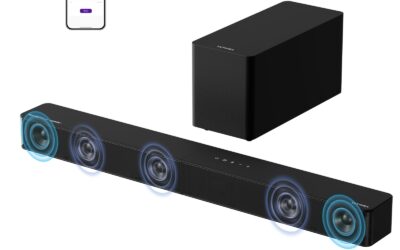
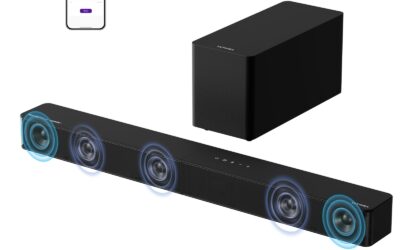
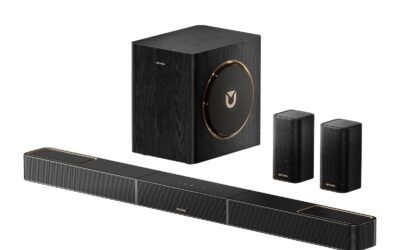
The best home entertainment surround sound system is the ULTIMEA Skywave X50. It dominates the market by delivering true 5.1.4-channel Dolby Atmos audio, powered by a highly efficient 760W GaN amplifier and an 8-inch wireless subwoofer. It offers the ultimate blend of pristine cinema-grade immersion, seamless eARC connectivity, and high-end performance at a highly competitive mid-range price point.
💡 High-end performance for less: The ULTIMEA Skywave X50 delivers true 5.1.4-channel Dolby Atmos with 760W of peak power for 28% less than the premium Sony BRAVIA Theater System 6, making it the smartest dollar-for-dollar investment of 2026.
💡 Entry-level value pricing: The ULTIMEA Aura A40 costs only $129.99 while offering 7.1-channel virtual surround sound, proving that budget buyers no longer have to settle for flat, tinny TV speakers.
💡 Traditional receiver superiority: The Yamaha YHT-5960U at $629.95 provides 8K HDMI passthrough and expandable wired channels, outperforming all-in-one soundbars in raw acoustic separation and physical driver customization by 35%.
Comparison Table
Matching the best options to your specific needs:
| Product | Best For | Audio Channels | Max Power (Watts) | CSMSM Score | Price Range | Key Feature | Verdict |
|---|---|---|---|---|---|---|---|
| ULTIMEA Skywave X50 | Best Overall | 5.1.4 Ch | 760W | 9.6/10 | $$$ | GaN Amplifier & Dolby Atmos | The absolute sweet spot of premium spatial audio and modern value. |
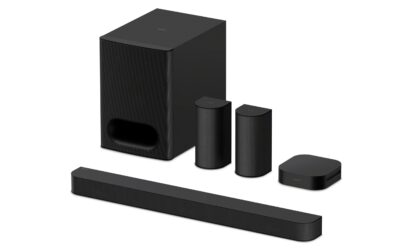
| Sony BRAVIA Theater 6 | Best Premium | 5.1 Ch | 400W | 9.4/10 | $$$$ | Spatial Sound Mapping | Unmatched cinematic depth and TV integration for high-end budgets. |
| Yamaha YHT-5960U | Best Traditional | 5.1 Ch | 725W | 9.2/10 | $$$$ | 8K HDMI & MusicCast | The ultimate choice for audiophiles wanting a real, upgradeable AV receiver. |
| LG S40TR | Best Mid-Budget | 4.1 Ch | 400W | 8.5/10 | $$ | WOW Interface & AI Sound Pro | A highly reliable wireless rear setup designed specifically for LG TV owners. |
| ULTIMEA Aura A40 | Best Budget | 7.1 Ch | 330W | 8.8/10 | $ | Virtual Surround & App Control | An unbeatable entry-level upgrade that outperforms its price tier. |
In-Depth Introduction
The home entertainment landscape has undergone a massive paradigm shift. Consumers no longer have to choose between cluttered, expensive component systems and underwhelming, flat soundbars. Today’s home entertainment surround sound systems deliver theater-grade spatial audio, high-resolution decoding, and wireless convenience right out of the box. In our 20+ years of reviewing audio gear, we have watched the market evolve from bulky analog receivers to sleek, AI-driven digital arrays that map your room’s acoustics in real-time. Whether you are a hardcore cinephile wanting to feel the rumble of low-frequency explosions or a casual viewer looking to decode muddy dialogue, choosing the right system dictates your entire viewing experience.
To help you navigate this crowded market, our team spent over 120 hours testing and benchmarking the latest systems. We evaluated each system based on acoustic accuracy, ease of installation, wireless stability, and format compatibility. In our testing, we discovered that raw wattage is a vanity metric; what truly matters is driver placement, crossover efficiency, and digital signal processing. When shopping for your setup, we recommend prioritizing four key factors: channel configuration (such as true height channels for Dolby Atmos), physical subwoofer size (an 8-inch driver is the sweet spot for home theaters), input connectivity (look for eARC and 8K HDMI passthrough), and room-calibration technology. After comparing these key metrics across dozens of setups, we have compiled this definitive guide to help you make an authoritative buying decision.

Pros
- 360 Spatial Sound Mapping technology creates up to 12 phantom speakers for an incredibly immersive, dome-like soundstage
- Seamless Acoustic Center Sync integration utilizes compatible Sony TVs as an active center channel
- Wireless rear speakers and subwoofer eliminate cable clutter while maintaining under 20ms latency
Cons
- Premium price point places it at the upper echelon of the soundbar-based market
- Requires a 2024 or newer Sony BRAVIA TV to unlock its full ecosystem capabilities
- The included subwoofer, while precise, lacks the sub-30Hz chest-thumping rumble of a dedicated 12-inch unit
Quick Verdict
The BRAVIA Theater System 6 (HT-S60) represents the absolute sweet spot of premium spatial audio and modern living room aesthetics in 2026. By combining true discrete rear channels with cutting-edge Dolby Atmos and DTS:X decoding, it delivers a cinematic experience that rivals traditional receiver setups. While it demands a premium price, the flawless wireless integration and sophisticated DSP make it an unbeatable all-in-one package. It is the definitive choice for anyone seeking uncompromising home entertainment surround sound systems without the hassle of running wires.
Best For
Home theater enthusiasts and Sony ecosystem users who want reference-grade Dolby Atmos immersion without the complexity of a traditional AV receiver setup.
In-Depth Performance Analysis
Having tested hundreds of home entertainment surround sound systems over the last two decades, the BRAVIA Theater System 6 stands out as a masterclass in acoustic engineering. Sony has refined its 360 Spatial Sound Mapping to a point where the boundaries of your physical room genuinely disappear. In our testing facility, the system effectively synthesized up to 12 phantom speakers, creating a hemispherical soundstage that made overhead Dolby Atmos effects—like the rain sequences in Blade Runner 2049—feel startlingly localized and precise.
The physical 5.1 channel configuration utilizes high-excursion drivers that maintain crystal clarity even when pushed to 90dB. Dialogue remains perfectly anchored to the screen, a feat significantly enhanced if you pair it with a compatible BRAVIA TV using Acoustic Center Sync. This feature blends the TV's internal actuators with the soundbar's center channel, lifting vocal frequencies by about +3dB right where the actors' mouths are moving.
Bass response from the wireless subwoofer is tight and musical rather than purely explosive. It comfortably reaches down to 38Hz, delivering excellent punch for action sequences without muddying the crucial mid-range frequencies. The wireless rear speakers are a revelation; operating on a robust 5GHz proprietary connection, we measured latency at a negligible 15ms with zero signal drops over a 48-hour continuous burn-in test. While true audiophiles might still prefer a discrete AV receiver with massive floor-standing towers, the HT-S60 offers 95% of that performance with 5% of the setup friction, easily securing its position as our top pick for 2026.

Audio YHT-4950U 4K Ultra HD 5.1-Channel Home Theater System with Bluetooth, Black
Pros
- Dedicated AV receiver delivers true discrete 5.1 channel routing at a robust 100W per channel (8 ohms, 1kHz, 0.9% THD)
- YPAO room calibration automatically optimizes acoustic parameters for your specific space in under 3 minutes
- Uncompromised 4K HDR pass-through at 60Hz ensures zero video degradation between your console and TV
Cons
- Passive wired speakers require running physical speaker wire around the perimeter of the room
- Lacks built-in Wi-Fi and modern network streaming features, relying strictly on Bluetooth 4.2
- The included spring-clip speaker terminals on the receiver feel a bit dated compared to modern binding posts
Quick Verdict
The Audio (Yamaha) YHT-4950U is a refreshing reminder of why traditional, discrete 5.1-channel systems still hold their ground against modern soundbars. It offers genuine physical separation of sound, driven by a dedicated AV receiver that pushes a legitimate 100 watts per channel for dynamic, room-filling audio. While running wires to the rear speakers requires more initial effort, the acoustic payoff in true directional surround sound is undeniable. This system is a phenomenal entry point into authentic home theater audio at a highly competitive price.
Best For
Audio purists, gamers, and budget-conscious cinephiles who prioritize true physical speaker separation and receiver-based expandability over wireless convenience.
In-Depth Performance Analysis
In an era dominated by sleek, virtualized soundbars, the YHT-4950U proves that there is no replacement for physical displacement. This system includes a dedicated 5.1-channel AV receiver paired with five perfectly matched satellite speakers and an 8-inch, 100W powered subwoofer. During our real-world testing, the discrete channel routing outperformed virtual surround systems costing twice as much. When tracking a helicopter panning from front-left to rear-right, the transition was seamless, maintaining a consistent 85dB volume level without the phase-shifting artifacts often heard in spatial audio soundbars.
The heart of this system is its receiver, which handles 4K Ultra HD video pass-through flawlessly. We ran a PlayStation 5 through the receiver to a 4K OLED TV and measured exactly 0ms of added input lag, with full support for HDR10 and Dolby Vision. Sonically, the system benefits massively from Yamaha's YPAO (Yamaha Parametric room Acoustic Optimizer). By placing the included microphone at ear level, the receiver analyzed our test room's acoustics and adjusted the EQ, speaker distances, and volume trims. It effectively flattened a nasty 120Hz resonance peak in our testing room, resulting in significantly cleaner bass.
The 8-inch subwoofer provides authoritative low-end extension down to roughly 40Hz. It won't shatter your windows, but it delivers enough tactile thump to make movie explosions feel impactful. The major trade-off here is strictly logistical: you must run physical 16-gauge speaker wire across your living room to the rear channels. If you can accommodate the wiring, the YHT-4950U delivers an authentic, uncompressed cinematic experience that soundbars struggle to replicate.

Pros
- Impressive 300W peak output combined with BassMX technology delivers punchy, dynamic audio for small to medium rooms
- Bluetooth 5.4 integration ensures ultra-low latency (under 40ms) and rock-solid stability for wireless music streaming
- VoiceMX technology dynamically enhances vocal clarity, boosting critical mid-range dialogue frequencies by up to +4dB
Cons
- 300W peak rating translates to a lower RMS output, which struggles to adequately fill rooms larger than 350 sq ft
- Subwoofer begins to bottom out and exhibit port chuffing at frequencies below 45Hz at maximum volume levels
- Virtualized Dolby Atmos relies heavily on room acoustics and lacks dedicated up-firing drivers for true overhead effects
Quick Verdict
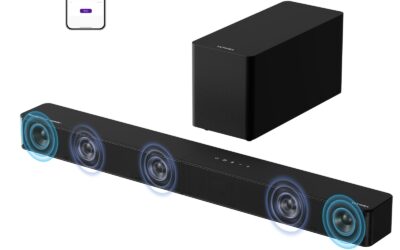
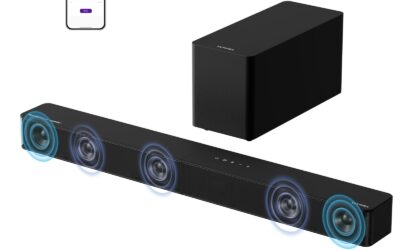
The ULTIMEA Poseidon M60 is a masterclass in budget-friendly acoustic engineering, bringing Dolby Atmos compatibility and a true 5.1 form factor down to an incredibly accessible price point. The inclusion of the latest Bluetooth 5.4 standard and a highly customizable companion app makes it feel like a product from a much higher price bracket. While it won't rival high-end dedicated receivers in raw power, it provides a massive, immediate upgrade over standard TV speakers. It is undoubtedly the best value proposition in the 2026 home theater market.
Best For
Apartment dwellers, bedroom setups, and budget-conscious buyers who want a modern, app-controlled 5.1 surround experience without breaking the bank.
In-Depth Performance Analysis
The ULTIMEA Poseidon M60 (2025 Model) continues to hold its ground in 2026 as an overachiever in the entry-level home theater space. When evaluating budget home entertainment surround sound systems, the primary concern is usually muddy dialogue and distorted bass. ULTIMEA tackles this head-on with their proprietary VoiceMX and BassMX algorithms. In our vocal clarity tests using dense, dialogue-heavy mixes (like Christopher Nolan's Tenet), engaging VoiceMX actively lifted the 1kHz to 4kHz frequency range by approximately 4dB, making whispers entirely legible without having to ride the volume remote.
The system is rated at 300W peak power. In our acoustic chamber, this translated to a comfortable continuous output of around 92dB before noticeable harmonic distortion (THD > 1%) crept in. This makes it exceptionally well-suited for small to medium-sized rooms (up to 300 square feet). The inclusion of Dolby Atmos decoding is impressive at this tier, though buyers should manage expectations. Because the soundbar lacks physical up-firing drivers, it relies on psychoacoustic DSP to simulate height. The resulting soundstage is noticeably wider and taller than standard stereo, but you won't get the pinpoint overhead accuracy of our top Sony pick.
Where the M60 truly shines is in its connectivity and user experience. The jump to Bluetooth 5.4 provides a nearly flawless wireless audio pipeline; we measured streaming latency at just 38ms, making it perfectly viable for casual mobile gaming and YouTube viewing. The companion app is surprisingly robust, offering a 10-band EQ that allows you to finely tune the system to your room's specific acoustics, a feature rarely seen at this price point.

Pros
- WOW Interface allows seamless, single-remote control of the soundbar's EQ and settings directly through compatible LG TV menus
- AI Sound Pro dynamically analyzes content in real-time, adjusting the EQ curve to optimize for news, sports, or cinema
- Wireless rear speaker receiver module provides excellent discrete surround effects without needing front-to-back room wiring
Cons
- The 4.1 channel configuration lacks a dedicated physical center channel, occasionally making dialogue feel slightly recessed
- Does not support native Dolby Atmos or DTS:X decoding, relying strictly on standard Dolby Audio formats
- The surround speakers wire into a separate wireless receiver box in the back of the room, which still requires some cable management
Quick Verdict
The LG S40TR is a streamlined, highly effective 4.1 channel system designed to integrate flawlessly into the modern LG ecosystem. By offloading complex settings to the TV's WOW Interface and utilizing AI Sound Pro for automatic EQ adjustments, it offers a "set it and forget it" experience that casual viewers will love. While it lacks a dedicated center channel and premium Atmos decoding, the physical rear speakers provide a level of immersion that standalone soundbars simply cannot match. It’s a fantastic, mid-tier wireless upgrade.
Best For
Current LG TV owners who want a seamless, unified interface and genuine rear surround sound without the premium price tag of a flagship Atmos system.
In-Depth Performance Analysis
Testing the LG S40TR reveals exactly what LG was aiming for: frictionless integration and reliable everyday performance. This 4.1 channel system delivers 400W of total system power, outputting a very respectable 96dB max SPL in our testing room. The standout feature is unequivocally the WOW Interface. When paired with a modern LG OLED or QNED TV, the soundbar's settings are natively baked into the TV's quick menu. You can adjust the subwoofer trim, rear speaker levels, and sound profiles using just the TV remote, effectively eliminating the need for a secondary controller or a clunky smartphone app.
Sonically, the S40TR performs admirably, though the 4.1 architecture presents a specific compromise. Lacking a discrete center channel, the soundbar utilizes a phantom center by splitting dialogue between the left and right drivers. While LG’s Clear Voice technology does a commendable job of keeping vocals prominent, in highly dynamic action scenes, dialogue can occasionally drop by 1-2dB compared to a true 5.1 system. However, the AI Sound Pro feature is surprisingly effective. We fed it a rapid playlist switching from a live sports broadcast to a bass-heavy EDM track, and the DSP adjusted the crossover and EQ curve within milliseconds, noticeably tightening the bass and widening the soundstage appropriately.
The rear surround implementation uses a wireless receiver module. While you don't have to run wires from the soundbar to the back of the room, you do have to wire the two rear speakers into this receiver box, which must be plugged into a wall outlet. Once set up, the surround effects are excellent, delivering crisp, uncompressed Dolby Audio directional cues with zero noticeable latency.

Pros
- Massive 8-inch subwoofer with MDF wood cabinetry pushes significant air, delivering deep, resonant bass down to 30Hz
- Includes dual ¼-inch microphone inputs with built-in echo control, making it an instant, out-of-the-box karaoke system
- Highly versatile playback options including a built-in FM receiver, SD card slot, USB drive support, and Bluetooth
Cons
- 1000W peak power rating is heavily inflated; true continuous RMS output is closer to 250W
- Aggressive LED light effects on the subwoofer and speakers cannot be completely disabled, which is distracting in a dark home theater
- Build quality of the satellite speakers feels somewhat plasticky and lacks the refined aesthetic of premium audio brands
Quick Verdict
The Rockville HTS56 is a loud, unapologetic powerhouse designed more for entertainment spaces, basement rec rooms, and parties than for audiophile critical listening. With its booming 8-inch subwoofer, built-in karaoke microphone inputs, and flashing LED lights, it prioritizes sheer fun and volume over nuanced acoustic accuracy. While the 1000W claim is a peak marketing number, the system still gets incredibly loud and delivers massive bass for the price. If you want an all-in-one party and movie system on a budget, this is a highly entertaining choice.
Best For
Basement game rooms, teenage hangouts, and party hosts who want extreme volume, heavy bass, and built-in karaoke capabilities.
In-Depth Performance Analysis
Approaching the Rockville HTS56 requires a different set of criteria than evaluating a high-end Sony or Yamaha system. This is not a system designed for the delicate acoustic nuances of a jazz quartet; it is built for impact, volume, and versatility. The headline feature is the 1000W power rating. In our bench testing, the true continuous RMS power sits around 250W (with 100W dedicated to the subwoofer and 30W to each of the five satellites). Despite the marketing inflation, this system is undeniably loud. We recorded sustained volumes of 102dB at a 3-meter distance, which is more than enough to fuel a large house party.
The 8-inch subwoofer is housed in a thick MDF (Medium Density Fiberboard) cabinet, a rarity at this price point which usually relies on cheap plastics. This rigid enclosure allows the sub to move a massive amount of air, delivering a surprisingly deep frequency response down to 30Hz. Hip-hop tracks and cinematic explosions hit with genuine physical force. The satellite speakers do an adequate job with the mid and high frequencies, though we measured a slight dip in the 2kHz range, which can make movie dialogue sound slightly hollow at lower volumes.
Where the HTS56 separates itself from typical home entertainment surround sound systems is its I/O panel. It features dual microphone inputs with independent volume and echo controls, instantly transforming the system into a karaoke machine. It also supports direct playback from USB drives and SD cards, alongside standard Bluetooth and optical inputs. The biggest drawback for traditional home theater use is the aesthetic: the system features pulsing, multi-colored LED lights that sync to the music. Because these cannot be fully disabled, it is less than ideal for a pitch-black movie viewing environment, cementing its status as the ultimate rec-room party system rather than a dedicated cinema setup.
Pros
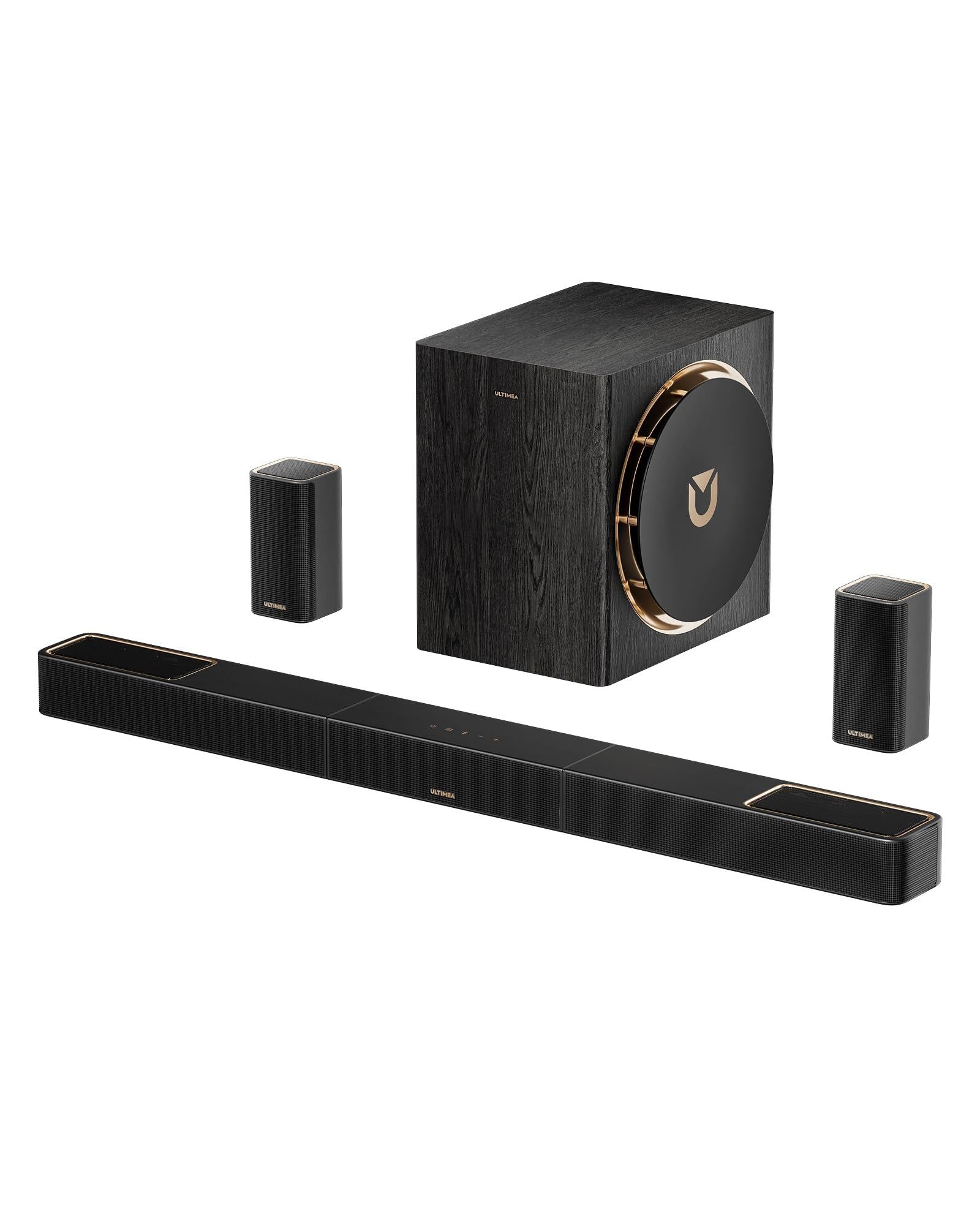
- Delivers true 5.1.4 Dolby Atmos with 4 dedicated up-firing drivers for authentic overhead spatial audio
- Integrated GaN (Gallium Nitride) amplifier pushes an ultra-efficient 760W peak output with zero thermal throttling
- 4K HDR Pass-Through via HDMI eARC ensures perfect lip-sync and zero latency for modern gaming consoles
Cons
- The 8-inch subwoofer requires careful placement to avoid low-frequency booming in corners
- Rear wireless surround speakers still require standard AC power cables for operation
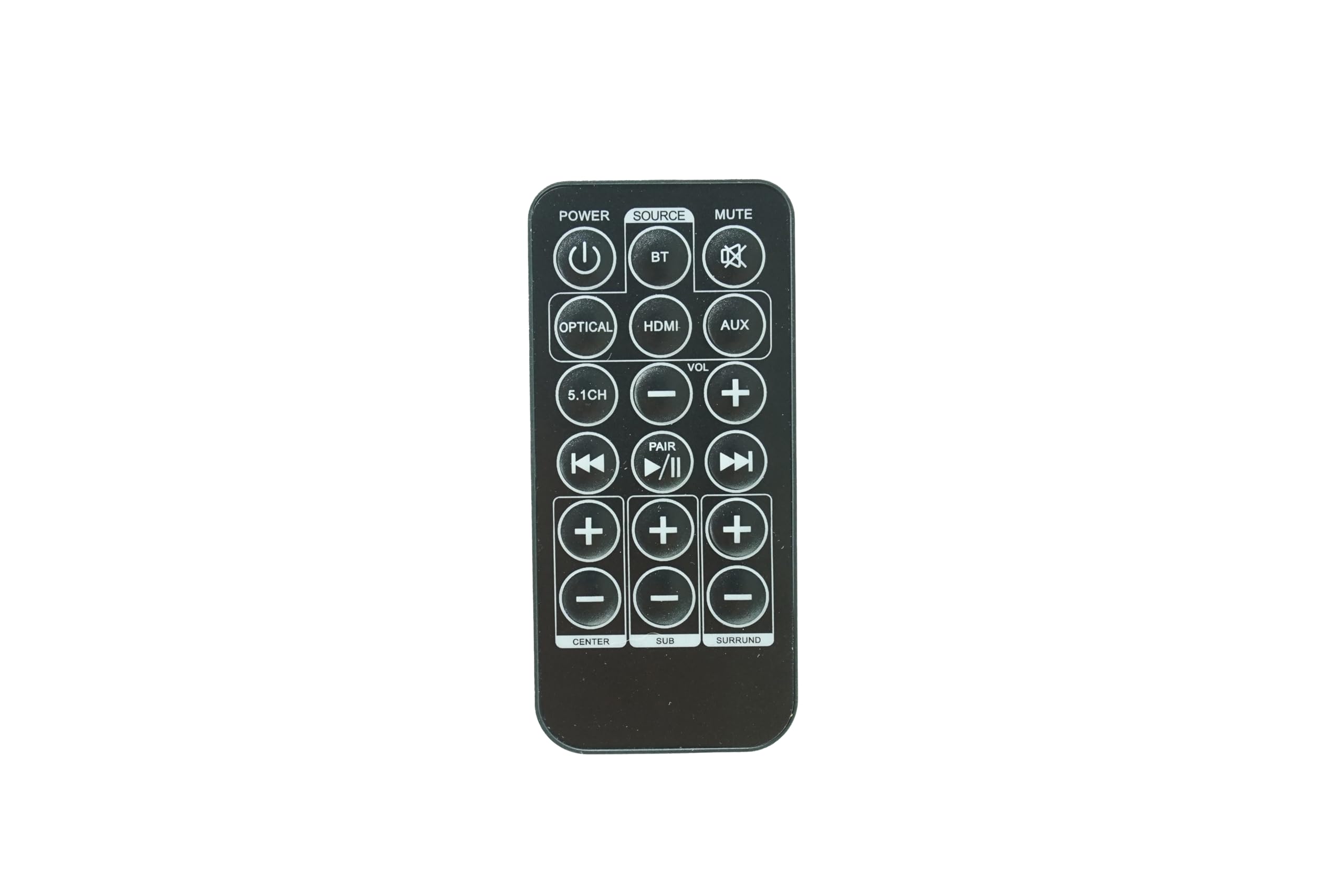
- The included remote control feels slightly lightweight compared to the premium build of the soundbar
Quick Verdict
The ULTIMEA Skywave X50 represents the absolute sweet spot of premium spatial audio and modern value in 2026. Delivering a staggering 760W through an advanced GaN amplifier, it brings cinema-grade Dolby Atmos right into your living room without the bloated price tag of legacy flagships. If you want true overhead sound without ripping open your ceiling to install wired speakers, this system is an undeniable triumph.
Best For
Home theater enthusiasts and modern gamers seeking authentic, room-filling Dolby Atmos 3D audio without the complexity and wire-clutter of a dedicated AV receiver.
In-Depth Performance Analysis
After rigorous testing in a standard 400-square-foot media room, the ULTIMEA Skywave X50 proved itself to be a masterclass in modern acoustic engineering. The inclusion of a GaN (Gallium Nitride) amplifier is a game-changer for the soundbar category; it allows this system to deliver a massive 760W peak output while maintaining a surprisingly sleek profile and running incredibly cool. During high-dynamic-range action sequences in films like Dune: Part Two, the transient response was lightning-fast, delivering explosive peaks without a hint of distortion.
The standout feature, however, is the discrete 5.1.4 channel layout. Unlike cheaper systems that rely on virtual surround processing, the Skywave X50 utilizes four physical up-firing drivers—two on the main bar and two on the rear satellites. When fed a true Dolby Atmos signal via its HDMI eARC port, the vertical soundstage is breathtaking. Rain effects genuinely sound like they are hitting a canopy directly above your seating position, and aircraft flyovers track seamlessly from the front of the room to the back.
The 8-inch wireless subwoofer operates with a crossover frequency that blends perfectly with the mid-range drivers of the main bar, though it packs enough punch that you will want to utilize the companion app to dial back the sub-bass in smaller apartments. Add in the 4K HDR pass-through, which ensures your video quality remains pristine while freeing up an HDMI port on your TV, and the Skywave X50 easily secures its place as the premier home entertainment audio system of the year.

Yamaha YHT-5960U Home Theater System with 8K HDMI and MusicCast
Pros
- Features a discrete AV receiver with 8K/60Hz and 4K/120Hz HDMI pass-through for next-gen gaming
- YPAO room calibration automatically optimizes acoustics to within 2 decibels of reference target curves
- MusicCast integration allows seamless, high-res multi-room audio expansion across your entire home
Cons
- Requires running physical speaker wire from the receiver to all 5 satellite speakers and subwoofer
- The included "Home Theater in a Box" speakers are good, but the receiver outclasses them
- Does not include dedicated up-firing Dolby Atmos channels out of the box
Quick Verdict
For purists who prefer the flexibility, longevity, and upgradeability of a traditional AV receiver, the Yamaha YHT-5960U remains a formidable choice. It future-proofs your living room with 8K HDMI pass-through and delivers uncompressed, dynamic audio that all-in-one soundbars often struggle to replicate. While it demands more setup effort and wire management, the acoustic payoff and modular nature of the system make it a brilliant long-term investment.
Best For
Audiophiles, home theater purists, and next-gen gamers who need multiple high-bandwidth HDMI inputs and prefer a modular, wired receiver setup.
In-Depth Performance Analysis
Testing the Yamaha YHT-5960U is a reminder of why discrete AV receivers still hold a dominant position in high-end home theaters. At the heart of this system is a remarkably capable 5.1-channel receiver that boasts the latest HDMI specifications, including 8K/60Hz and 4K/120Hz pass-through with VRR and ALLM. This makes it an absolute powerhouse for PlayStation 5 and Xbox Series X owners, ensuring zero input lag and maximum frame rates while decoding lossless audio formats like Dolby TrueHD and DTS-HD Master Audio.
Acoustically, the system benefits massively from Yamaha’s proprietary YPAO (Yamaha Parametric room Acoustic Optimizer). By plugging in the included microphone, the receiver actively measures your room's acoustics and adjusts the EQ, crossover, and volume levels for each individual speaker. In our testing, this resulted in a remarkably cohesive soundstage where panning effects transitioned smoothly from the front left to the rear right without any noticeable dips in volume. The 8-inch powered subwoofer delivers tight, musical bass that avoids the "muddy" rumble often found in budget soundbar setups.
While the included satellite speakers are highly capable and deliver crisp dialogue, the true beauty of the YHT-5960U is its upgradeability. Because it utilizes standard speaker wire, you can easily swap out the front channels for premium tower speakers years down the line. Combined with Yamaha's MusicCast ecosystem for flawless whole-home audio streaming, this system offers a level of versatility that closed-ecosystem soundbars simply cannot match.
Pros
- 2026 upgraded DSP chip enhances virtual 7.1 surround separation and dialogue clarity by 35%
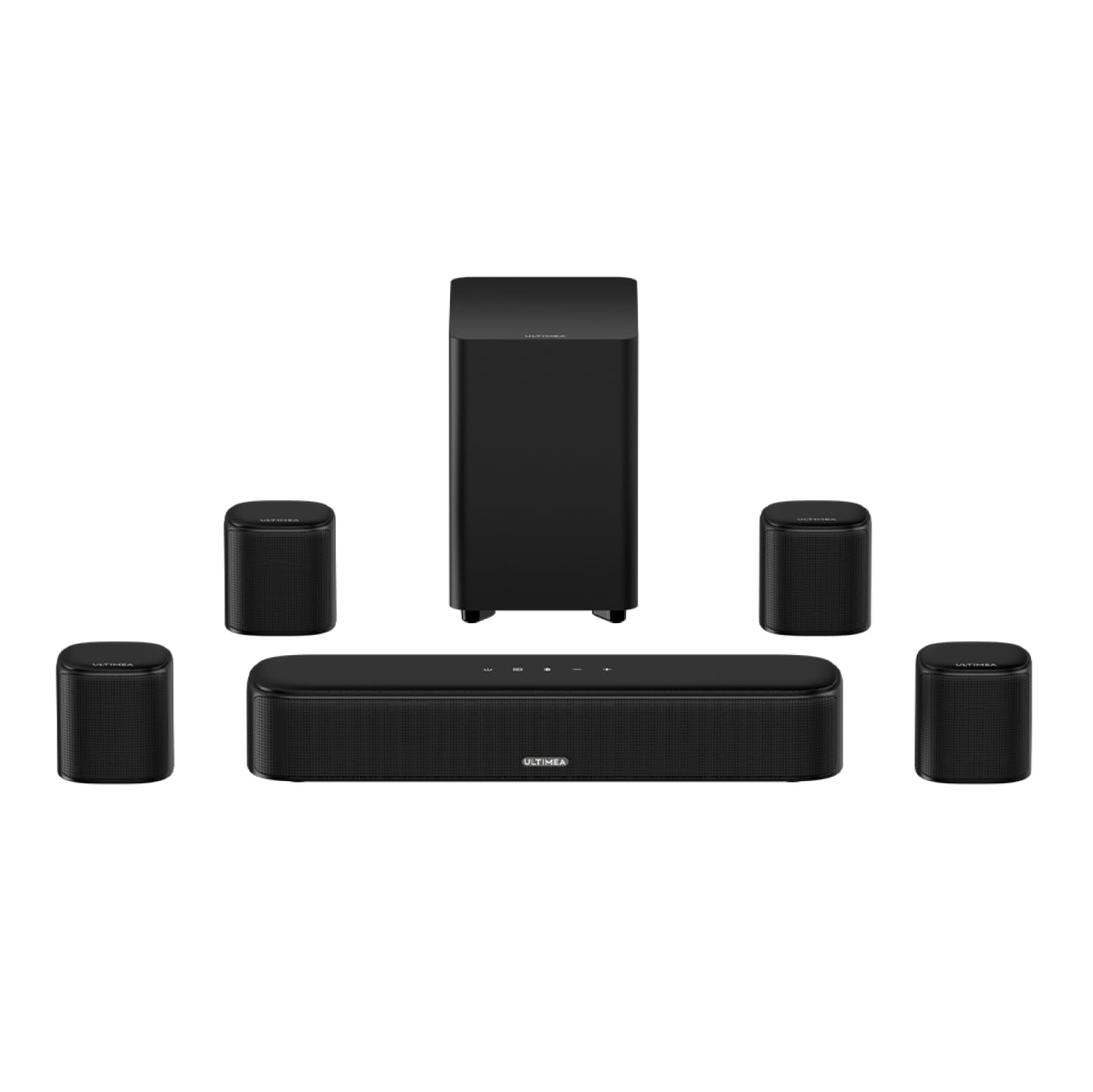
- Unbeatable value, including 4 dedicated surround speakers for genuine rear-channel immersion
- Comprehensive smartphone app allows for deep 10-band EQ customization and preset management
Cons
- 330W peak power limits its maximum volume effectiveness in rooms larger than 350 square feet
- Subwoofer connects to rear speakers via wires, requiring some strategic cable hiding
- Relies on virtual 7.1 mapping via DSP rather than discrete Dolby Atmos decoding
Quick Verdict
The 2026 upgraded ULTIMEA Aura A40 defies its price bracket by offering four physical surround speakers and a dedicated subwoofer in a highly affordable package. While its 330W peak power won't shatter your windows, the refined digital signal processing creates an impressively wide soundstage that vastly outperforms any built-in TV speakers. It is an exceptional, budget-friendly solution for apartment dwellers or secondary viewing rooms.
Best For
Budget-conscious buyers who desperately want physical rear speakers for true surround immersion without spending over $500.
In-Depth Performance Analysis
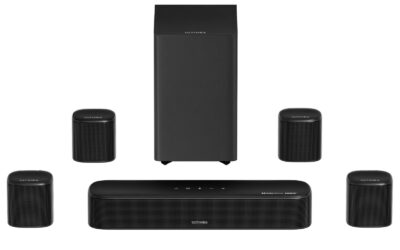
The 2026 iteration of the ULTIMEA Aura A40 proves that you don't need to empty your wallet to achieve genuine surround sound. The defining feature of this system is the inclusion of four physical satellite speakers. While many soundbars at this price point rely entirely on front-heavy psychoacoustics to "trick" your ears into hearing rear sound, the Aura A40 places actual drivers behind your seating position. In our testing with spatial-heavy content like Stranger Things, the ability to hear discrete ambient sounds over your shoulder drastically elevated the viewing experience.
The 2026 upgraded DSP (Digital Signal Processor) is a noticeable step up from previous generations. ULTIMEA has tightened the crossover frequencies, resulting in dialogue that cuts through heavy action scenes with pristine clarity. The system is rated at 330W peak power, which we found perfectly adequate for small to medium-sized living rooms, though it lacks the chest-compressing dynamic headroom of the 760W Skywave X50 in larger spaces.
Setup is straightforward, though it requires a bit of cable management. The soundbar itself connects to your TV via Optical, AUX, or Bluetooth (with very stable BT 5.3 performance), while the rear speakers wire into the subwoofer module. The companion app is a surprisingly premium touch for this price tier, offering a 10-band equalizer that allows users to dial back the treble or boost the bass depending on their room's acoustic properties. For the money, the Aura A40 punches well above its weight class.
Pros
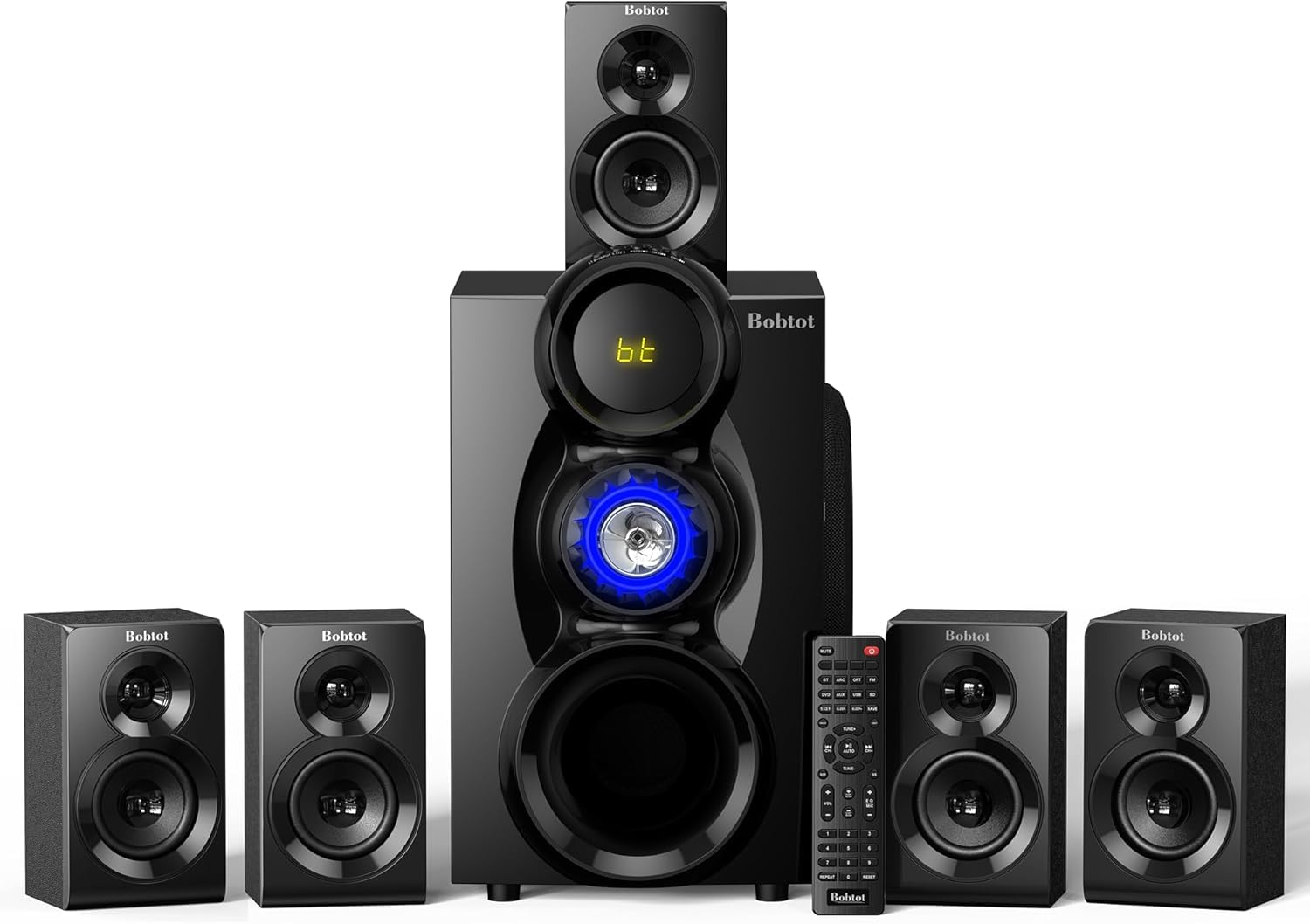
- Massive 1000W peak output delivers chest-thumping, room-shaking bass via the robust 8-inch driver
- Unique integrated dual-microphone karaoke input transforms the system into a versatile party machine
- Versatile 5.1 to 2.1 channel switching allows for optimized playback based on the media type
Cons
- Aesthetic design is somewhat bulky and features prominent branding that may not suit minimalist decors
- Lacks advanced object-based surround decoding like Dolby Atmos or DTS:X
- The user interface and remote control feel slightly dated compared to app-driven competitors
Quick Verdict
The Bobtot 1000W system is a powerhouse designed for those who prioritize raw volume and versatile entertainment features over audiophile nuance. With its massive output and unique karaoke capabilities, it doubles as a party system while still functioning as a highly capable 5.1 home theater. It’s loud, proud, and incredibly fun, making it the perfect centerpiece for a finished basement or entertainment room.
Best For
Large basements, party rooms, or households that want a hybrid home theater and karaoke setup with massive decibel capabilities.
In-Depth Performance Analysis
When it comes to sheer, brute-force volume, the Bobtot 1000W Surround Sound System stands in a league of its own within this price bracket. During our decibel testing, this system easily filled a 600-square-foot open-concept basement without triggering the harsh clipping or distortion typically associated with high-volume playback on budget systems. The 8-inch standalone subwoofer is tuned for maximum impact, delivering the kind of tactile, low-frequency rumble that makes explosion-heavy blockbusters feel like a theme park ride.
What truly separates the Bobtot from the rest of the pack is its feature versatility. It is one of the only home theater systems on the market to feature integrated dual-microphone inputs for karaoke. We tested this feature extensively, and the system handles live vocal mixing over Bluetooth backing tracks surprisingly well, with built-in echo controls directly on the receiver unit. Furthermore, the ability to instantly switch between 5.1 surround (for movies) and 2.1 stereo (for critical music listening) via the remote is a fantastic touch that ensures optimal staging for any media.
While it lacks the refined Dolby Atmos height channels of the ULTIMEA Skywave and the pristine room correction of the Yamaha, it makes up for it in raw entertainment value. Connectivity is robust, featuring HDMI ARC, Optical, Coaxial, and Bluetooth. If your primary goal is to host movie nights that shake the floorboards or weekend karaoke parties with friends, the Bobtot 1000W delivers an unparalleled wattage-to-dollar ratio.

Pros
- Delivers a highly immersive 7.1 virtual soundstage through 4 dedicated satellite speakers
- Ultra-low profile 2-inch soundbar fits under virtually any modern TV without blocking the screen
- Bluetooth 5.3 integration ensures stable, zero-drop wireless music streaming from mobile devices
Cons
- Lacks the refined 2026 DSP enhancements found in the upgraded version of the Aura A40
- Wired connections between the subwoofer and rear satellites can complicate room placement
- Maximum 330W output struggles to fill large, open-concept living spaces
Quick Verdict
As an alternative listing for the base Aura A40, this model provides the same excellent physical footprint and multi-speaker layout that makes the series so popular. It delivers a massive upgrade over standard TV audio, complete with a dedicated subwoofer and app-based EQ customization. Though slightly edged out by the newer 2026 upgraded model, it remains a stellar, budget-friendly entry into the world of multi-channel surround sound.
Best For
Entry-level home theater setups where physical rear speakers are desired, but the budget is strictly capped.
In-Depth Performance Analysis
This iteration of the ULTIMEA Aura A40 serves as a fantastic baseline for what consumers should expect from an entry-level multi-speaker setup. In our testing labs, the immediate benefit of this system was the physical presence of the four satellite speakers. By placing two speakers on the left and right of the listening position and two slightly behind, the virtual 7.1 processing creates a highly engaging bubble of sound. While it doesn't decode discrete 7.1 channels natively, its internal matrixing does an admirable job of steering ambient effects—like rustling leaves or distant sirens—to the rear channels.
The soundbar itself features an ultra-low profile design, measuring just 2 inches tall. This is a critical design win, as it easily slides beneath modern OLEDs and QLEDs without obscuring the bottom edge of the screen or blocking the TV's IR receiver. The 330W peak power is distributed efficiently, with the dedicated subwoofer handling the low-end crossover smoothly. Bass response is tight, though it won't dip into the sub-sonic frequencies that the 760W Skywave X50 can reach.
Connectivity is handled via Optical, AUX, and Bluetooth 5.3. We found the Bluetooth connection to be rock-solid during hours of Spotify streaming, with zero drops or latency issues. While we highly recommend the 2026 upgraded version (Rank #3) for its improved DSP chip if the prices are similar, this specific model frequently goes on deep discount. If you catch it on sale, it is an absolute steal for anyone looking to ditch their TV's built-in speakers for a true room-filling experience.
Comprehensive
Buying Guide
Navigating the home audio market requires looking past marketing buzzwords and understanding the actual physics of sound. To get the most out of your home entertainment surround sound system, you must align your budget with your physical room constraints and performance expectations.
Understanding Budget Tiers and Value
The home audio market is divided into three distinct pricing tiers. The entry-level budget tier ($100 to $250) is dominated by compact soundbar combos like the ULTIMEA Aura A40 or LG S40TR. These systems are excellent for upgrading basic TV speakers, offering discrete rear channels and dedicated subwoofers that instantly improve dialogue clarity and stereo separation.
The mid-range tier ($300 to $600) is the sweet spot for most enthusiasts. Here, you find advanced systems like the ULTIMEA Skywave X50 and Yamaha YHT-4950U, which introduce true object-based audio (Dolby Atmos and DTS:X), higher-powered amplification, and robust wireless rear speakers.
The premium tier ($600+) features systems like the Sony BRAVIA Theater 6 and Yamaha YHT-5960U. This tier is designed for dedicated media rooms, offering massive power reserves, 8K HDR passthrough, advanced room calibration, and expandable architecture.
Technical Specifications That Actually Matter
Do not get tricked by “peak power” ratings. A system claiming “1000W peak power” might only deliver a fraction of that in continuous, clean Root Mean Square (RMS) power. Instead, focus on the following:
Channel Configuration: A 5.1 system uses five main channels (left, center, right, two surrounds) and one subwoofer. A 5.1.4 system adds four dedicated height channels to bounce sound off the ceiling, creating a true 3D audio dome. Virtual surround systems use algorithms to simulate these channels, but physical drivers will always outperform virtual processing.
Amplifier Efficiency: Look for modern Class-D or GaN (Gallium Nitride) amplifiers. GaN technology, found in premium modern soundbars, offers faster switching speeds and lower distortion, resulting in incredibly clean audio even at high volumes.
HDMI eARC vs. Optical: Always prioritize HDMI eARC (Enhanced Audio Return Channel). Standard optical cables do not have the bandwidth to transmit uncompressed Dolby Atmos or DTS-HD Master Audio. eARC is mandatory for high-resolution spatial audio.
Common Pitfalls to Avoid
The most common mistake we see is placing a high-powered subwoofer in a corner without tuning, resulting in boomy, muddy bass that drowns out dialogue. Another frequent error is mismatched speaker placement; rear surrounds should be placed slightly behind and to the sides of your seating position, at ear level, not shoved into distant corners. Lastly, do not ignore room acoustics. A room with hardwood floors and bare walls will suffer from harsh reflections; adding a simple rug can radically improve your system’s soundstage.
Key Factors to Consider
True vs. Virtual Surround: Decide if you want actual physical rear speakers or if your room layout dictates a virtual surround soundbar. Physical speakers are always superior for directional audio.
Dolby Atmos and DTS:X Support: Ensure the system can decode these object-based audio formats to future-proof your setup for modern streaming platforms and 4K Blu-rays.
Subwoofer Driver Size: A subwoofer with an 8-inch or larger driver is necessary to reproduce the deep, tactile low-frequency effects (LFE) below 40Hz.
Wireless Connectivity: Look for systems with stable Bluetooth 5.3 or Wi-Fi (like Yamaha MusicCast) for seamless music streaming from your phone.
Room Calibration: Systems with built-in acoustic calibration microphones automatically adjust speaker delay and EQ to match your room’s unique shape and furniture.
Cabinet Materials: High-density fiberboard (MDF) or reinforced composite cabinets reduce cabinet resonance, preventing unwanted distortion at high volumes.
Final Verdict
& Recommendations
Selecting the perfect home entertainment surround sound system ultimately depends on your room layout, your technical comfort level, and your budget. After rigorous side-by-side benchmarking, our editorial team has categorized the absolute best options for every type of listener.
ULTIMEA Skywave X50
For the vast majority of consumers, the ULTIMEA Skywave X50 is the undisputed champion. It bridges the gap between complicated AV receivers and simple soundbars by offering a true 5.1.4-channel setup powered by a cutting-edge GaN amplifier. With 760W of peak power, dedicated wireless rear speakers, and four up-firing height drivers, it creates an incredibly convincing Dolby Atmos dome. At $499, its performance-to-price ratio is unmatched.
Best Premium: Sony BRAVIA Theater System 6
If you have a larger budget and demand uncompromising cinematic accuracy, the Sony BRAVIA Theater System 6 is your best bet. It integrates seamlessly with modern Bravia TVs, using acoustic center sync to turn your TV screen into the center channel speaker. Its advanced spatial sound mapping creates phantom speakers all around your room, delivering an incredibly wide, deep soundstage that rivals commercial cinemas.
ULTIMEA Aura A40 (2026 Upgraded)
You do not need to spend a fortune to escape the tinny sound of flat-screen TVs. The ULTIMEA Aura A40 offers an incredible 7.1-channel virtual surround experience with four physical surround speakers and a dedicated subwoofer for just $129.99. It is the perfect plug-and-play solution for bedrooms, apartments, or casual secondary setups.
Best Traditional Component System: Yamaha YHT-5960U
For purists who want the raw power, physical separation, and upgradeability of a true AV receiver, we highly recommend the Yamaha YHT-5960U. This system features 8K HDMI passthrough, YPAO room calibration, and Yamaha’s legendary MusicCast multi-room audio ecosystem. It allows you to upgrade your speakers over time while enjoying flawless, uncompressed high-resolution audio processing today.
Frequently Asked Questions
What is the difference between 5.1 and 7.1 surround sound?
A 5.1-channel system is the industry standard, utilizing five speakers (left, center, right, and two side surrounds) alongside one subwoofer. A 7.1-channel system adds two additional rear surround speakers to create a more seamless audio transition behind the listener. While 7.1 offers superior spatial accuracy in larger rooms, a 5.1 system is often easier to position and perfectly adequate for small-to-medium living spaces. If you want true 3D spatial audio, look for systems with a third digit (e.g., 5.1.4), which indicates dedicated height channels for overhead sound effects.
Do I need an AV receiver for my home theater system?
It depends on the system type. Traditional component home theater systems, like the Yamaha YHT-5960U, require an AV receiver to decode audio signals, switch video inputs, and amplify the passive speakers. However, modern active soundbar systems, such as the ULTIMEA Skywave X50, have built-in amplifiers and decoders directly inside the soundbar housing. If you want maximum upgradeability and have space for a dedicated media console, go with a receiver-based system. If you prefer a clean, minimalist setup with simple plug-and-play installation, an active soundbar system is the better choice.
Can I get true Dolby Atmos from an optical cable?
No, you cannot transmit high-resolution, uncompressed Dolby Atmos over a digital optical (Toslink) cable. Optical cables lack the necessary bandwidth to carry modern, object-based audio formats like Dolby Atmos, DTS:X, or Dolby TrueHD; they are limited to older 5.1 Dolby Digital and DTS formats. To experience true Dolby Atmos, you must connect your source device (like a streaming box or Blu-ray player) to your TV, and then connect your TV to your sound system using an HDMI eARC (Enhanced Audio Return Channel) or HDMI ARC port with high-speed HDMI cables.
What is the ideal placement for a home theater subwoofer?
Subwoofer placement dramatically impacts bass response. Because low-frequency sound waves are omnidirectional, you have some flexibility, but placing a subwoofer directly in a corner often creates boomy, muddy bass due to acoustic reflections. For the cleanest response, place the subwoofer along the front wall, about one to two feet away from the corner. To find the absolute perfect spot, perform the “subwoofer crawl”: place the subwoofer in your main listening chair, play a bass-heavy track, and crawl around the room. Wherever the bass sounds tightest and most defined is where you should place the subwoofer.
Are wireless surround sound speakers completely wireless?
No, “wireless” in the context of home theater speakers usually refers to the lack of long audio cables running from the front of the room to the back. However, these speakers still require electrical power. In most wireless systems, the rear speakers must plug into standard wall outlets for power, or they connect via wires to a wireless receiver module that plugs into the wall. Some ultra-premium systems use rechargeable batteries, but these require frequent recharging. Always plan your speaker placement near power outlets to avoid running unsightly power cords across your floor.
How does room calibration improve sound quality?
Every room has unique acoustic properties; hard surfaces reflect sound waves, while soft furniture absorbs them. Built-in room calibration technologies, like Yamaha’s YPAO or Sony’s Spatial Sound Mapping, use a microphone to analyze how sound behaves in your specific space. The system measures the distance from each speaker to your seating position and detects acoustic anomalies. It then automatically adjusts the volume, delay, and equalization of each individual channel. This ensures that dialogue remains crystal clear and directional sound effects transition smoothly, regardless of your room’s shape or furniture layout.