Quick Answer
The best 6.5-inch car speakers for most factory door swaps are the Rockford Fosgate Prime R165X3: a true 3-way coaxial pair with polypropylene cones, a silk dome midrange, included grilles, and 45W RMS handling. Choose the Pioneer TS-G1620F for stock radios, the P1650 Punch for refined sound, or the Orion XTR XTX654 for high-SPL midrange.
Pros
- Budget-friendly price point for a name-brand upgrade
- Easy drop-in replacement for many vehicles with standard 6.5-inch openings
- Coaxial design avoids separate tweeter mounting complexity
- High sensitivity means they work well with stock head units
- Lightweight and compact for simple installation
Cons
- Low 25W RMS rating may limit volume headroom for powerful amplifiers
- Plastic basket and cone may be less durable than higher-end models
- No included grilles or mounting hardware; verify what's in the box
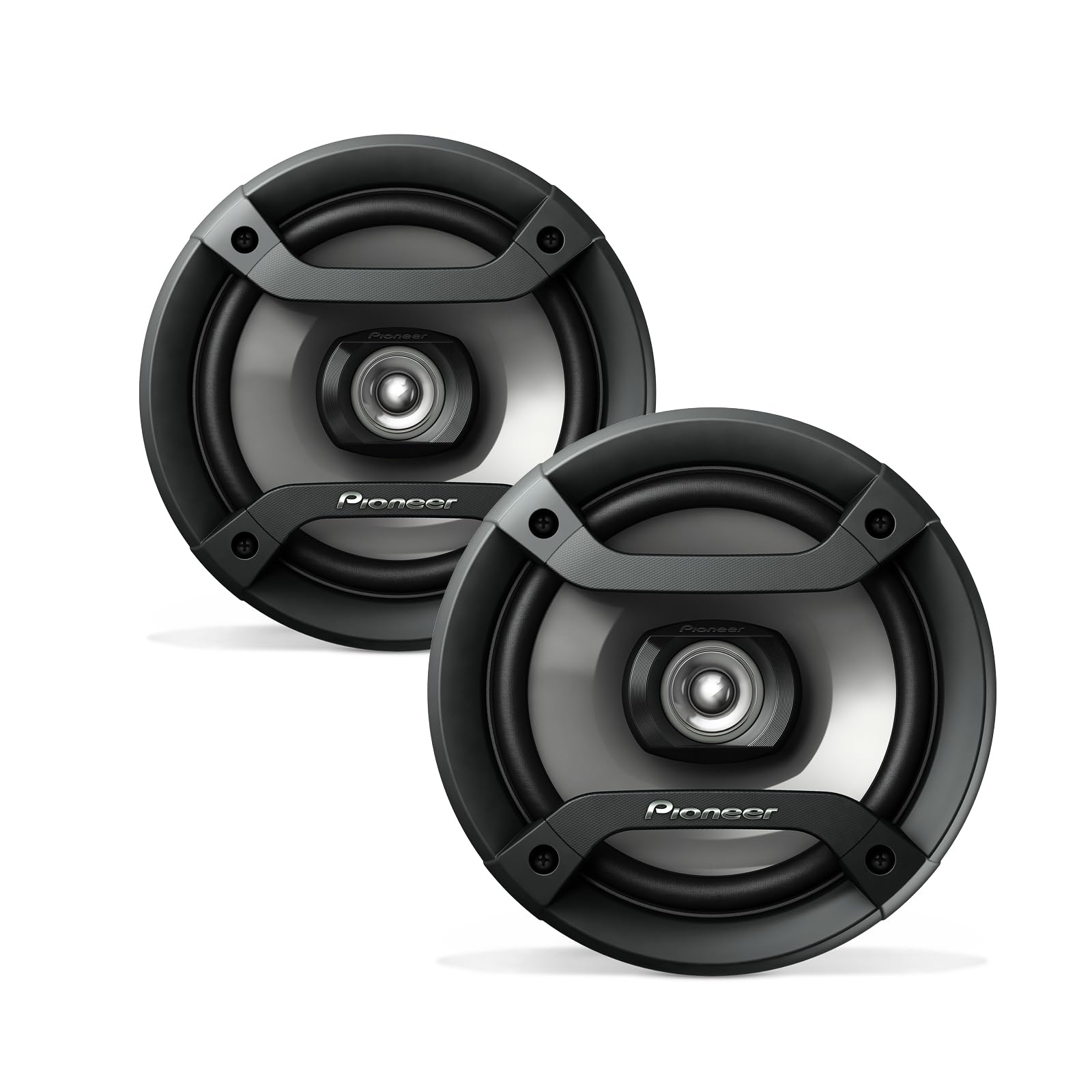
The Pioneer F-Series TS-F1634R are 6.5-inch 2-way coaxial car speakers designed for drivers seeking a simple audio upgrade without breaking the bank. With a standard size and a coaxial layout, they fit most factory locations and eliminate the need for separate tweeter mounting. Their 88dB sensitivity means they can produce clear sound even with a modest factory stereo, making them an ideal first upgrade for budget-conscious owners.
The 2-way design integrates a woofer and tweeter in one unit, which simplifies installation and ensures a cohesive soundstage. Rated at 200W peak (25W RMS) and 4-ohm impedance, they are compatible with most head units and small amplifiers. However, the low RMS rating suggests they are best suited for stock systems rather than high-powered setups that could push them to distortion.
While the product description highlights the speakers' power handling and sensitivity, it does not provide details on mounting depth, included accessories, or warranty. This means buyers must verify fitment with their specific vehicle make and model, as well as check if grilles or wiring adapters are included. Without these details, installation may require additional purchases.
Customer reviews are not available at this time, so long-term reliability and sound quality claims remain unverified. The manufacturer's specifications are a starting point, but real-world performance depends on the vehicle's acoustics and installation quality. For a budget upgrade, these speakers offer a reasonable value, but they are not a substitute for a high-end system.
Who should buy: drivers with a factory stereo who want a simple, affordable improvement in sound clarity. Who should avoid: those with high-power amplifiers or who demand premium build quality. Before buying, verify mounting depth, speaker size compatibility, and whether any adapters are needed.
Best Ownership Fit: These speakers suit a budget-conscious driver who wants a straightforward upgrade for a daily commuter or older vehicle with a factory stereo. They are ideal for someone comfortable with basic car audio installation or willing to hire a professional.
Daily Workflow: Once installed, the speakers operate passively with your existing head unit. You'll adjust volume and tone as usual, and the higher sensitivity should allow clear playback at moderate volumes without needing extra amplification.
Likely Friction: The main friction is fitment uncertainty. Without vehicle-specific compatibility data, you may need to remove door panels to check mounting depth and hole size, and you might need to buy adapters or spacers if your car's mounting points differ.
Before You Buy: Verify the speaker's mounting depth against your vehicle's door clearance. Check the cutout diameter and screw hole pattern. Confirm whether grilles, wiring harnesses, or mounting brackets are included. Also, consider the power output of your head unit to ensure it matches the 25W RMS rating.
Installation: These are standard 6.5-inch coaxial speakers, but installation steps will vary by vehicle. You'll likely need to remove the door panel, disconnect the factory speaker, and connect the new speaker's terminals. The product listing does not specify included hardware, so you may need to purchase screws, adapters, or wiring connectors separately.
Fitment Verification: Before installation, measure the mounting depth and cutout diameter of your existing speakers. Compare these to the TS-F1634R's dimensions, which are not fully provided in the product data. If in doubt, consult your vehicle's manual or a professional installer.
Maintenance: Car speakers generally require minimal upkeep. Keep the cones clean and dry, and avoid exposing them to excessive moisture. There are no user-serviceable parts, and the speaker's lifespan depends on usage and environmental conditions. If a speaker fails, replacement is the typical solution.
Warranty: The warranty terms are not mentioned in the product data. Contact Pioneer or the seller to confirm coverage before purchase.
Standard Size: These are 6.5-inch speakers, a common size in many vehicles. However, '6.5-inch' can vary slightly in cutout diameter and mounting depth across models.
Vehicle Fit: The product description claims they 'seamlessly integrate into most car interiors,' but this is a general statement. You must verify fitment for your specific car make, model, and year, as door panel depth and speaker mounting patterns differ.
Electrical Compatibility: With a 4-ohm impedance and 88dB sensitivity, they are compatible with most factory stereos. However, check your head unit's power output to ensure it can drive them adequately.
Included Hardware: The listing does not specify if mounting screws, grilles, or wiring adapters are included. Plan to purchase these if needed.
Pros
- Polypropylene cone material is durable and weather-resistant, promising longevity in varied climates
- 3-way design with dedicated tweeter and midrange may improve high-frequency detail over stock speakers
- Included grilles protect the speakers and provide a finished appearance
- Mounting depth of 2.15" allows installation in many doors with limited clearance
- Rockford Fosgate's reputation suggests reliable build quality, supported by a 1-year warranty
Cons
- Rated 45W RMS / 90W max, so they may not handle high-powered amplifiers without distortion
- No sensitivity or frequency response specs provided, making it hard to predict loudness and tonal balance
- Lack of customer reviews leaves real-world performance unverified
The Rockford Fosgate Prime R165X3 6.5" 3-way speakers are a budget-friendly factory replacement option for car owners seeking a modest audio upgrade. With a 45W RMS / 90W max power rating, they are best suited for stock or moderately powered head units. Their principal strength lies in the durable polypropylene cones and silk dome tweeter, which promise improved clarity and longevity over typical paper-cone factory speakers. However, their modest power handling and lack of detailed specifications may give pause to audiophiles or those planning to add an external amplifier.
These speakers appear designed to solve a common problem: replacing worn or lackluster factory speakers with a drop-in upgrade that doesn't require extensive modification. The included grilles and mounting hardware simplify installation, and the 5.51" mounting diameter and 2.15" depth make them compatible with many vehicles' stock locations. This positions them as a practical choice for the average listener who wants better sound without a complex build.
Key features translate into real-world benefits: the polypropylene cones resist moisture and temperature changes, reducing the risk of warping or deterioration over time. The 3-way design, featuring a dedicated tweeter and midrange, can enhance vocal clarity and high-frequency detail compared to a basic 2-way speaker. The included grilles not only protect the speakers but also give a factory-like appearance, avoiding the need for separate grilles. The 1-year warranty provides basic peace of mind, though it's shorter than some competitors may offer.
Limitations become apparent for certain buyers. The 45W RMS rating is modest; if you plan to amplify these speakers significantly, they may reach their limits and distort. Without sensitivity or frequency response data, it's hard to predict how loud they will play or how they will balance with other speakers. Additionally, the lack of customer reviews means we cannot gauge real-world reliability or sound quality beyond the manufacturer's claims. If you need high-volume output, deep bass, or are an audiophile seeking precise tonal accuracy, you may need to look at higher-end components or add a subwoofer.
In conclusion, the Rockford Fosgate Prime R165X3 speakers are a reasonable choice for budget-conscious drivers who want a durable, straightforward upgrade from factory speakers. They are best used with a factory or modest aftermarket head unit, and you should verify their fit in your vehicle before purchasing. If you have more ambitious audio goals, consider investing in speakers with higher power handling and more detailed specifications.
Strong Match: The clearest buyer is someone driving an older vehicle with tired factory speakers, looking for an affordable replacement that improves clarity and durability without adding an amplifier. These speakers' polypropylene cones and included grilles make them a practical, low-maintenance choice.
Also Consider It If: If you are a DIY installer who values easy fitment, the compact mounting depth and included hardware reduce installation hassle, making these a good candidate for a weekend project.
Not the Best Fit: If you are an audio enthusiast who plans to run high-powered amplifiers or expects thunderous bass, these speakers' 45W RMS rating and lack of bass response specifications will likely disappoint. They are not designed for high-volume or bass-heavy listening.
Decision in One Sentence: The Rockford Fosgate Prime R165X3 speakers are a solid choice for budget-minded listeners replacing factory speakers, provided they use them with a stock or modest head unit and prioritize durability over raw power.
Consider It For:
- Replacing factory speakers with a durable polypropylene cone that resists moisture and wear.
- Improving high-frequency detail with a silk dome tweeter and dedicated midrange.
- Easy installation thanks to included grilles, hardware, and a shallow mounting depth.
- Backed by a 1-year warranty from a well-known brand, offering basic assurance.
Pass If:
- You plan to amplify them heavily—45W RMS is a limiting factor.
- You need detailed specs like sensitivity or frequency response to match your system.
- You expect strong bass output; these are full-range speakers, not subwoofers.
- You rely on verified customer feedback to make purchase decisions—there are none yet.
Polypropylene Cones: This material is known for its rigidity and resistance to moisture, making it a durable choice for car doors and other environments where humidity and temperature fluctuate.
Silk Dome Piezo Tweeter: Silk dome tweeters typically offer smooth, natural high frequencies, while the piezo element is known for reliability and high output. This combination aims to deliver clear highs without harshness.
3-Way Design: Including a separate midrange driver allows for better separation of frequencies, potentially improving vocal clarity and overall soundstage compared to a 2-way speaker.
Included Grilles: Grilles protect the speaker cones from damage and give a finished look, eliminating the need to purchase them separately.
Pros
- Shoebox-sized footprint (6.54" diameter) suits custom builds where space is tight
- High sensitivity means less amplifier power needed, ideal for budget amp setups
- The bullet design offers a dynamic frequency range, reducing the need for separate tweeters
- 4-ohm impedance is standard for most car audio amplifiers
- Overall depth of 2.84" simplifies installation in shallow enclosures
Cons
- No grilles or mounting hardware included, requiring separate purchase for protection and installation
- Midrange speakers need a proper crossover or bandpass filter to avoid distortion at low frequencies
- Mounting diameter and depth must be verified against vehicle-specific mounting locations
The ORION Cobalt CM654 is a 6.5-inch midrange loudspeaker designed for car audio enthusiasts who are building a component system. With a high sensitivity rating of 96.67 dB, it delivers strong output even with moderate amplifier power, making it a practical choice for those seeking efficiency. The compact mounting depth of 2.63 inches allows installation in shallow locations like doors or kick panels, which is a key convenience for custom installs.
The speaker features a 1.5-inch high-temperature voice coil and a 250W RMS power handling, indicating it can sustain high volumes without thermal failure. The bullet tweeter design extends high-frequency response, allowing the speaker to cover a wider range than typical midrange drivers, which can simplify system design by potentially eliminating the need for separate tweeters.
However, these are raw midrange drivers, not full-range speakers. They require proper crossover or bandpass filtering to avoid playing frequencies they cannot handle, which could lead to distortion or damage. The package includes only the speakers, so buyers must source grilles, mounting hardware, and wiring separately. Additionally, the mounting depth and diameter must be verified against the intended vehicle location to ensure a proper fit.
Customer reviews are not available at this time, so real-world performance and durability remain unverified. The manufacturer claims balanced sound and wide frequency range, but these are not independent proof.
Ideal buyers are those planning a custom audio build with a dedicated midrange component. Avoid if you seek a plug-and-play full-range speaker. Before purchase, verify your vehicle's mounting depth, the crossover requirements, and whether grilles are needed for your installation.
Best Ownership Fit: This speaker suits hobbyist car audio builders who enjoy customizing their sound system and have basic knowledge of speaker installation and crossover setup. It is not for casual listeners seeking a drop-in replacement.
Daily Workflow: Once installed, the speaker operates as part of a component system. The user will adjust amplifier and crossover settings to achieve the desired sound. No daily maintenance is required beyond occasional cleaning of the speaker cone if exposed.
Likely Friction: The main friction is the lack of included grilles and mounting hardware, which means additional purchases and installation effort. Also, proper crossover setup is essential to avoid poor sound quality or speaker damage.
Before You Buy: Verify the mounting depth (2.63") and diameter (5.67" cutout) against your vehicle's door or panel space. Ensure your amplifier can deliver at least 250W RMS per channel at 4 ohms. Plan to purchase grilles and mounting hardware separately. Confirm the crossover or DSP settings you will use to limit low frequencies.
Installation: The speaker is designed for surface or flush mounting. The mounting depth is 2.63 inches, but the overall depth is 2.84 inches, so ensure there is clearance behind the mounting surface. Use appropriate mounting hardware (screws) and wire connections, which are not included.
Crossover Requirement: As a midrange driver, it must be paired with a crossover or DSP to filter out frequencies below its optimal range. The manufacturer does not specify the recommended crossover frequency, so consult the speaker's frequency response curve or contact ORION for guidance.
Maintenance: No specific maintenance is detailed. If the speaker is exposed to dust or moisture, periodic gentle cleaning with a soft brush may be needed. Avoid water contact.
Verification: Since the manual is not provided, buyers should verify correct wiring polarity, power handling, and ensure the amplifier's output does not exceed the speaker's RMS rating to prevent damage.
Size: Overall diameter 6.54", overall depth 2.84".
Mounting: Mounting diameter 5.67", mounting depth 2.63".
Power: 1000W max, 250W RMS, 4-ohm impedance.
Voice Coil: 1.5" high-temperature voice coil.
Efficiency: 96.67 dB.
Design: Mid-range with bullet tweeter for extended high-frequency response.
Pros
- High power handling (480W max) delivers headroom for loud systems
- Kapton voice coil maintains integrity under heat, promoting speaker longevity
- 8-ohm impedance may be easier on amplifiers and compatible with many systems
- Compact 6.5-inch size fits many factory locations with proper mounting
- Improves midrange clarity over stock speakers, enhancing vocals and instruments
Cons
- Midrange-only design requires separate tweeters and woofers for full-range sound
- 8-ohm impedance may not match amplifiers optimized for 4-ohm loads, affecting power output
- No grille or hardware included (not specified), requiring additional purchase for installation
The DS18 PRO-GM6B is a 6.5-inch midrange loudspeaker designed for car audio enthusiasts who want to upgrade their system's vocal and instrumental clarity. This speaker is best suited for those building a component system with separate tweeters and subwoofers, as it focuses on the midrange frequencies that carry the core of music. If you're looking for a simple drop-in replacement for stock full-range speakers, this is not it, but for a dedicated midrange driver, it offers solid specifications at an accessible price.
Power handling is a key strength. With a maximum power rating of 480 watts and 140 watts RMS at 8 ohms, this speaker can handle significant amplifier output. This means you can push it hard without worrying about distortion or damage, making it a good choice for enthusiasts who like their music loud. The 8-ohm impedance is worth noting: it may be slightly less efficient than a 4-ohm speaker, but it can be gentler on amplifiers and is a common specification in component systems.
Build quality appears focused on durability. The 1.5-inch high-temperature Kapton voice coil is designed to withstand extreme heat, which is crucial when you're driving a speaker hard. This feature helps maintain the speaker's structural integrity over time, potentially extending its lifespan compared to speakers with less robust voice coils. The red aluminum bullet tweeter adds a distinctive look and helps with high-frequency response, though it's part of the midrange driver's design.
However, there are limitations to consider. The most significant is that this is a midrange speaker, not a full-range one. You'll need to pair it with a separate tweeter for highs and a subwoofer for lows to get a complete sound. Additionally, the 8-ohm impedance may affect how much power your amplifier delivers; if your amp is rated for 4-ohm loads, you might get less output. Installation may require custom mounting, and since no grille or hardware is mentioned, you'll need to budget for those separately.
In summary, the DS18 PRO-GM6B is a strong choice for car audio hobbyists who are building a component system and want a dedicated midrange speaker that can handle power and deliver clear vocals. The main reason to hesitate is its specialized nature and 8-ohm impedance, which may not suit those seeking a simple upgrade or those with amplifiers optimized for 4-ohm speakers. If you're not prepared to integrate it into a full component setup, you might be better off with a full-range coaxial speaker.
Midrange Driver: This speaker is engineered to reproduce the midrange frequencies, typically between 300 Hz and 5 kHz, where vocals and many instruments live. By focusing on this range, it can deliver clear, articulate sound that often gets muddied in stock speakers. It's ideal for listeners who prioritize vocal clarity and musical detail.
Power Handling (480W Max / 140W RMS): The high power ratings mean this speaker can handle substantial amplifier output without distortion. The RMS rating indicates the continuous power it can handle, while the max rating shows its peak capability. This gives you headroom to play loud and dynamic music without worrying about damaging the speaker.
8 Ohm Impedance: The 8-ohm impedance is a common specification in car audio component systems. It may be easier on amplifiers that are stable at higher impedances, and it can be a good match for many aftermarket amps. However, it means the speaker will draw less current than a 4-ohm speaker, which could result in slightly lower overall volume if your amp is not powerful enough.
1.5-inch Kapton Voice Coil: The voice coil is the part of the speaker that moves the cone. Kapton is a high-temperature material that resists deformation under heat, which is crucial when the speaker is driven hard. This feature helps ensure the speaker maintains its performance and longevity even in demanding conditions.
Red Aluminum Bullet: The red aluminum bullet is a phase plug that helps with heat dissipation and improves high-frequency response. It also gives the speaker a distinctive visual style that can add a custom look to your install. This feature is particularly appealing to enthusiasts who want their system to look as good as it sounds.
Best For: The DS18 PRO-GM6B is best for car audio enthusiasts who are building a component speaker system. If you already have or plan to add separate tweeters and a subwoofer, this midrange speaker will fill in the critical mid frequencies, delivering clear vocals and instrumentals. It's also a good fit for those who enjoy customizing their sound system and want a speaker that can handle high power.
Consider Alternatives If: You should consider a full-range coaxial or component set if you want a simple upgrade without the complexity of adding multiple drivers. This speaker is not a direct replacement for a stock full-range speaker because it only covers midrange frequencies. Also, if your amplifier is optimized for 4-ohm loads, you might get more power from a 4-ohm speaker, so consider that before choosing this 8-ohm model.
Setup and Daily Use: Setup involves mounting the speaker in a location that suits your vehicle, such as a door panel or custom enclosure. You'll need to connect it to an amplifier that provides the appropriate power, and you'll need to integrate it with other speakers in your system. Daily use is straightforward: the speaker will reproduce the midrange frequencies with clarity, but you'll need to adjust your crossover and equalizer settings to blend it with your tweeters and subwoofers.
Maintenance Requirements: The speaker is designed to be durable, but like any car audio component, it can be affected by moisture and dust. It's a good idea to keep it protected from the elements, especially if mounted in a door. There are no specific maintenance tasks mentioned, but periodic inspection of the speaker and connections is recommended to ensure optimal performance.
What Sets It Apart: The DS18 PRO-GM6B stands out for its high power handling and Kapton voice coil, which are features typically found in higher-end speakers. The red aluminum bullet adds a unique visual touch. Compared to stock speakers, it offers significantly better midrange clarity and the ability to handle more power, making it a solid upgrade for those who are serious about their car audio.
Speaker Size and Type: This is a 6.5-inch midrange speaker, a common size in car audio. It is designed to be used as part of a component system, meaning you'll pair it with separate tweeters and subwoofers. It is not a full-range speaker, so it won't reproduce the entire audio spectrum on its own.
Impedance Considerations: With an 8-ohm impedance, this speaker is compatible with amplifiers that can handle 8-ohm loads. Many aftermarket amplifiers are stable at 8 ohms, but you should check your amplifier's specifications. If your amp is rated for 4-ohm loads, it will still work, but it will deliver less power to the speaker, which might affect overall volume.
Power Requirements: The speaker can handle up to 480W max and 140W RMS, so you'll need an amplifier that can provide at least 140W RMS per channel to get the most out of it. If your amp delivers less, the speaker will still work, but you won't achieve its full potential.
System Integration: For best results, use a crossover to send only the midrange frequencies to this speaker, typically between 300 Hz and 5 kHz. This prevents it from trying to reproduce frequencies it's not designed for, which could cause distortion or damage. You'll also need to ensure your head unit or DSP can handle the system setup.
Pros
- Two-way coaxial design separates high frequencies from midbass, which helps dialogue, cymbals, and vocal clarity stand out compared with a single full-range factory driver
- Moderate 87 dB sensitivity suits owners who want an audible improvement without buying and wiring an external amplifier
- Marketed as a direct replacement for factory-installed speakers, so most installs come down to removing the door panel, swapping the speaker, and reconnecting
- The 3 by 6.88 by 6.88 inch footprint is published up front, which makes pre-purchase clearance checks straightforward
- Pioneer points buyers to a downloadable owner's manual for full technical detail, useful when planning wiring or verifying specifications before installation
Cons
- Continuous power handling is only 40 watts, so anyone building a system around a multichannel amplifier will hit the ceiling of these speakers quickly
- The quoted 37 Hz low-end figure is a manufacturer specification rather than a guarantee of usable bass from a door panel, so bass-focused listeners will still want a subwoofer
- Supplied information does not break out mounting depth, grille inclusion, wiring hardware, or warranty terms, which matters for shallow door cavities and vehicles that need adapter brackets
The Pioneer TS-G1620F is a 6.5-inch, 2-way coaxial car speaker sold as a direct replacement for factory door or rear-deck units, and it suits drivers who want clearer sound from a stock stereo without adding an amplifier. Rated at 40 watts continuous and 300 watts maximum, it targets budget upgrades rather than high-output builds, which is the main qualification worth keeping in mind.
Sound quality gains come from the 2-way layout, which splits duties between a woofer handling midbass and vocals and a separate tweeter for treble detail. That division helps keep cymbals, consonants, and string detail from being buried under midrange energy. Pioneer quotes a frequency response of 37 Hz to 24 kHz and a sensitivity rating of 87 dB, the latter mattering most to anyone running these off a factory or aftermarket head unit rather than an external amplifier.
Physically, the speaker uses the usual coaxial arrangement, with the tweeter carried at the center of the woofer so the pair occupies one standard 6.5-inch opening. Listed dimensions are 3 by 6.88 by 6.88 inches, which is useful for checking door cavity clearance before ordering, though the supplied data does not break out mounting depth separately. Pioneer directs buyers to the owner's manual for full technical specifications.
Limits show up in the power figures. Continuous handling of 40 watts is the number that matters when matching an amplifier, while the 300-watt maximum rating describes brief peaks rather than sustained output, so a powered build should treat these as an entry point. The quoted 37 Hz low end is a manufacturer specification, not a promise of usable bass from a door panel, and listeners who want genuine low-end weight will still need a subwoofer. Accessories and warranty terms are not detailed in the supplied information.
The strongest reason to choose the TS-G1620F is a low-effort improvement over worn factory speakers in a car that keeps its stock stereo, where the 2-way design and moderate sensitivity earn their keep. The main reason to hesitate is the modest continuous power rating, which caps how far the system can grow. Buyers planning a high-output setup with a multichannel amplifier, or those chasing deep bass, should look at component sets and a subwoofer instead.
2-Way Coaxial Driver Layout: Two separate drivers handle different parts of the audio range, with a woofer covering midbass and vocals and a tweeter covering treble. The practical result is that detail such as consonants, cymbals, and acoustic guitar strings is less likely to be smeared by midrange energy. Drivers replacing aging single-cone factory speakers usually notice this difference first, especially on podcasts and vocal-led music.
40 Watts Continuous Power Handling: This is the figure to use when matching an amplifier, because it describes the power the speaker is rated to take on an ongoing basis. Keeping amplifier output near that level protects the driver over long listening sessions. Owners running the speakers off head unit power, which is typically modest, will find the rating comfortable rather than restrictive.
300 Watts Maximum Power Rating: Maximum ratings describe short musical peaks, not the sustained power a speaker can absorb. Reading the number that way prevents an expensive mismatch, since pairing a large amplifier to this rating invites distortion and driver damage. Shoppers comparing spec sheets across brands should always weight the continuous figure more heavily than the peak figure.
87 dB Sensitivity Rating: Sensitivity indicates how much volume a speaker produces from a given amount of power. At 87 dB, the TS-G1620F is aimed at systems without an outboard amplifier, which is the setup most factory stereos use. The benefit is meaningful volume from limited power, though very quiet head units in older vehicles will still show their limits at highway speeds.
37 Hz to 24 kHz Frequency Response: The quoted range spans well below and above what most program material demands, which is why the speaker is described as suited to mixed genres. Treat the endpoints as manufacturer specifications rather than a description of in-car output, since door mounting, sealing, and cabin acoustics all shape the real low end. Bass-focused listeners should plan on a subwoofer.
Direct Factory Replacement Format: Pioneer positions the TS-G1620F as a swap for factory-installed speakers or an upgrade to an existing setup. That framing matters because it keeps the job in like-for-like territory rather than requiring a redesigned install. Owners doing their own work should still confirm opening size, depth, and connector type for their specific vehicle before starting.
Vehicle Fitment: The TS-G1620F uses the common 6.5-inch coaxial format and is described as a direct replacement for factory-installed speakers, so it is aimed at the many vehicles built around that opening size. Confirm your door or rear-deck cutout before ordering, since aftermarket sizing conventions and factory openings do not always line up without an adapter bracket.
Clearance and Depth: Supplied dimensions are 3 by 6.88 by 6.88 inches. That gives you an outer diameter to compare against the factory opening and a maximum overall height to compare against available cavity space behind the door panel. Mounting depth is not listed separately in the supplied data, so measure from the mounting surface to the nearest obstruction, typically the window glass at its lowest point.
Head Unit and Amplifier Pairing: With 87 dB sensitivity and 40 watts continuous handling, this speaker is best matched to factory or aftermarket head unit power, or to a small amplifier operated conservatively. Pairing it with a high-output amplifier is the most likely source of disappointment, because the continuous rating, not the 300-watt peak figure, defines safe long-term operation.
System Building Notes: Because the speaker is a coaxial rather than a component set, the tweeter position is fixed at the woofer location, which usually means low in the door. Listeners who want tweeters mounted higher, closer to ear level, should consider a component system instead. Pioneer's owner's manual carries the remaining technical detail needed for wiring and installation planning.
Best For: Owners of daily drivers with original speakers that sound dull, thin, or distorted, who want a straightforward pair-by-pair replacement while keeping the factory stereo. Commuters, ride-share drivers, and anyone doing a first audio upgrade on an older vehicle fit the profile, since the 2-way design and 87 dB sensitivity are aimed squarely at unamplified systems.
Consider Alternatives If: You are building around an aftermarket amplifier, competing on volume, or expecting deep bass from the doors alone. A 40-watt continuous rating leaves little room for a powered build, and no 6.5-inch coaxial substitutes for a subwoofer. Listeners who want imaging that places vocals near the windshield should shop component sets with separately mounted tweeters instead.
Setup and Daily Use: Expect a typical door speaker swap: remove the panel, unbolt the factory speaker, connect the new one, and reinstall. Vehicles that use proprietary connectors may need a wiring adapter, and some openings need a mounting bracket, neither of which is listed as included. Pioneer places full technical detail in the owner's manual, which is worth reading before the panel comes off.
What Sets It Apart: Positioning is the story here. Rather than chasing high power ratings, the TS-G1620F pairs a 2-way driver arrangement with a sensitivity figure suited to modest source power, which is the configuration most stock-stereo owners actually need. Buyers who understand that the 300-watt number is a peak specification, not an amplifier target, are the ones most likely to be satisfied.
Pros
- Polyethylene-naphthalate tweeters provide crisp highs, benefiting listeners who value vocal and instrument detail.
- 4-ohm impedance matches most car audio systems, making them easy to connect for DIY installers.
- Sold as a pair, offering a cost-effective way to upgrade two speakers at once.
- 6.5-inch size fits common vehicle speaker slots, reducing installation complexity for many cars.
- Brand reputation for loud performance suggests good volume capability, suitable for those wanting more sound presence.
Cons
- No power handling specifications provided, making it hard to match with amplifier output for high-volume use.
- No frequency response data, limiting insight into tonal balance for critical listeners.
- No sensitivity rating, so efficiency with factory head units is uncertain for low-power setups.
The KICKER DSC650 6.5-Inch Coaxial Speakers are a pair of aftermarket car audio speakers designed for a straightforward upgrade. They are best suited for drivers who want improved sound quality and volume over factory speakers without a complex installation. The strongest verified reason to consider them is the polyethylene-naphthalate domed tweeters, which are engineered to deliver clear high frequencies, enhancing vocal and instrument detail. However, the lack of detailed specifications means buyers should verify compatibility with their vehicle and audio system before purchase.
The key feature is the polyethylene-naphthalate domed tweeter, which provides a crisp and detailed high-end response, making music and podcasts clearer. The 4-ohm impedance is standard in most car audio systems, ensuring easy integration with existing wiring and head units. The 6.5-inch size fits common speaker openings, making them a practical drop-in replacement for many cars.
Installation is typical for coaxial speakers: they mount into standard 6.5-inch locations and connect directly to existing speaker wires. No special tools or modifications are usually required, but since no mounting depth or additional specifications are provided, it's wise to check clearance in your vehicle. The pair configuration means you can upgrade both front or rear speakers at once, providing a balanced sound stage.
Overall, the KICKER DSC650 offers a solid entry-level upgrade with a focus on clear highs and loud output. The main trade-off is the absence of detailed technical data, which could be a concern for audiophiles or those planning to pair them with high-power amplifiers. If you need precise power handling or frequency response specs, you may want to consider speakers with full published specifications.
Best For: Car owners with a 6.5-inch speaker opening who want an affordable, straightforward upgrade to improve clarity and volume from their factory audio system.
Why It Fits: The polyethylene-naphthalate domed tweeters are designed to deliver clear high frequencies, directly addressing common factory speaker dullness, and the 4-ohm impedance ensures easy integration with most car stereos.
Think Twice If: You require detailed specifications like power handling or frequency response for matching with an amplifier, or if your vehicle has non-standard speaker sizes or depth limitations.
Bottom Line: If you're looking for a simple, no-fuss speaker upgrade with enhanced treble clarity, the KICKER DSC650 is a worthy choice, provided you verify fitment.
Polyethylene-Naphthalate (PEN) Dome Tweeters: These tweeters are designed to reproduce high frequencies with precision, resulting in clearer vocals and cymbals in your music.
6.5-Inch Size: The speakers are built to fit standard 6.5-inch (160-165mm) mounting holes, making them compatible with many vehicles' factory locations.
4-Ohm Impedance: This common impedance rating allows the speakers to work with most factory and aftermarket head units without additional components.
Pair Configuration: The package includes two speakers, allowing you to upgrade both left and right channels for a balanced stereo image.
Pros
- Published mounting diameter and depth give a remote buyer something concrete to measure against, which matters most to anyone ordering for a vehicle opening they cannot test fit first.
- Grilles, mounting hardware, and printed documentation are listed as included, reducing the mid install parts run for a first time DIY installer.
- The Owner's Guide is available on the product page before purchase, so a cautious buyer can read the fit and mounting instructions before spending anything.
- A stated 55 watts RMS and 110 watts maximum rating gives a defined matching ceiling for an owner planning around factory head unit power or a modest amplifier.
- Pair packaging and a stated one year manufacturer warranty suit an owner who wants to finish both doors in a single session and have recourse if one unit fails early.
Cons
- The listing name and the description disagree on size, calling the product a 6 inch P16 in the title and a 6.5 inch P1650 throughout the description, and in many vehicles those are different openings.
- The description itself concedes that new mounting screw holes may need to be drilled with a 1/8 inch bit that is not supplied, and no wiring harness adapters, speaker wire, or mounting spacers are listed as included.
- No impedance, sensitivity, frequency response, cone material, or tweeter material is supplied, and no customer review excerpts were provided, so nothing here establishes recurring signals about fit, output on factory power, or durability.
The Rockford Fosgate P16 Punch two-way coaxial full range set arrives as a pair with mounting hardware, grilles, and an Owner's Guide, which points it at a driver replacing tired factory door or rear deck speakers rather than at someone building a competition system. The strongest ownership advantage is that the manufacturer publishes the two numbers that decide the job: a 5.51 inch mounting diameter and a 2.24 inch mounting depth. The biggest qualification is that both numbers have to be confirmed against your own opening, and the depth figure against whatever window glass or door mechanism sits behind it, before you order.
Power handling is listed at 55 watts RMS and 110 watts maximum. In routine ownership that figure works less as a headline and more as a matching constraint, because it sets the ceiling for the head unit or amplifier that will drive the pair every day. The supplied data does not list impedance, sensitivity, or frequency response, and all three influence how loud and how full the set plays on unamplified factory power. Those belong in a pre-purchase question to the seller or manufacturer, not in an assumption.
Installation is described as easy, but the same description concedes that new mounting screw holes may be required and that the 1/8 inch bit for them is not included. That one line changes the tool list, the time budget, and the skill level the job demands. Rockford Fosgate references cutting and mounting templates through the Owner's Guide, which is posted on the product page, so reading it before buying is the cheapest way to learn whether adapter brackets or spacers will also be needed.
One inconsistency deserves attention. The product name says 6 inch, while the description repeatedly describes the P1650 at 6.5 inch. No customer review text was supplied here, so the star rating on the listing cannot be broken into recurring ownership signals about fit or longevity.
Buy this pair if you want a named brand factory replacement, you have measured the opening, and you are comfortable using a drill. Skip it if you need a confirmed no-cut fit, need impedance and sensitivity numbers for an amplifier plan, or expect wiring adapters in the box.
Best Ownership Fit: A vehicle owner replacing worn factory coaxial speakers in a door or rear deck location, working occasionally rather than professionally, with basic hand tools and access to a drill. The pair packaging suits doing both sides of one location in a single session. It fits a buyer who is willing to measure the mounting opening and the clearance behind it, since the manufacturer supplies the mounting diameter and depth but cannot know your panel.
Daily Workflow: After installation, the routine is simply playing audio through whatever head unit or amplifier is already in the vehicle, within the stated 55 watts RMS and 110 watts maximum handling. The two-way coaxial layout keeps the tweeter on the same frame as the woofer, so there is no separate tweeter to aim or service. Grilles are listed as included with the P1650, which affects whether you reuse factory covers or fit the supplied ones.
Likely Friction: The listing name and description do not agree on size, giving 6 inch in the title and 6.5 inch for the P1650 in the description. Beyond that, the description states that new mounting screw holes may need drilling with a 1/8 inch bit that is not supplied, so the advertised ease of installation depends on how closely your factory opening matches the 5.51 inch mounting diameter.
Before You Buy:
- Confirm with the seller or manufacturer whether the unit shipped is the 6 inch model or the 6.5 inch P1650, since the supplied text uses both.
- Measure your mounting opening against the stated 5.51 inch mounting diameter and your available clearance against the stated 2.24 inch mounting depth, including anything moving behind the panel.
- Read the Owner's Guide posted on the product page and locate the referenced cutting and mounting templates before ordering.
- Verify separately, because the data does not state it, whether wiring harness adapters, speaker wire, mounting brackets, or spacers are needed for your vehicle, and confirm impedance and sensitivity if you plan to amplify.
What Is Stated As Included: The pair ships with mounting hardware and an Owner's Guide, and the description states that grilles are included with the P1650. Nothing in the supplied data lists speaker wire, wiring harness adapters, mounting brackets, spacers, or a drill bit. Treat anything not on that list as a separate purchase to confirm before install day.
Measuring Before Mounting: The manufacturer asks buyers to measure the mounting location before purchase and gives two figures to work against, a 5.51 inch mounting diameter and a 2.24 inch mounting depth. Depth is the number most often missed, since a panel can have the right hole and still lack room behind it. The supplied data does not distinguish top mount from bottom mount depth, so verify which measurement applies to your installation.
Tools And Drilling: The description states that new mounting screw holes can be drilled with a 1/8 inch bit if needed, and that the bit is not included. Plan for a drill and that bit, and check the Owner's Guide first, since it references Rockford Fosgate cutting and mounting templates for locations that need modification.
Documentation To Read First: The Owner's Guide is described as available both on the product page and in the box, and the manufacturer specifically asks buyers to read and understand the installation and mounting instructions before starting. Reading it before ordering is the practical move, because it is the only supplied source for the fit steps and template references.
Cleaning, Storage, And Parts: No cleaning procedure, break-in period, service interval, consumable, or replacement part is described anywhere in the supplied data, so none should be assumed. If you want guidance on cleaning grilles, handling moisture inside a door cavity, or sourcing a replacement grille, ask the manufacturer directly rather than relying on this listing.
Warranty: The listing states a full one year warranty. That is a manufacturer claim rather than verified service experience, and the supplied data does not describe the claim process, proof of purchase requirements, or whether installation method affects coverage. Confirm those terms before drilling anything.
The Numbers You Can Work With: The supplied fit data consists of a 5.51 inch mounting diameter and a 2.24 inch mounting depth, plus the note that screw holes can be drilled with a 1/8 inch bit if the factory pattern does not line up. Those three details are enough to rule the speakers in or out of a given opening, provided you measure your own panel first.
The Size Discrepancy: The product name identifies a 6 inch P16 while the description consistently describes the P1650 as a 6.5 inch speaker sold as a pair. Both cannot describe the same opening in every vehicle. Since the mounting diameter given is 5.51 inches, that figure is the one to measure against, but confirming the exact model with the seller before ordering avoids a return.
Electrical Matching: Power handling is stated at 55 watts RMS and 110 watts maximum, which is the only electrical specification supplied. Impedance, sensitivity, and frequency response are absent, and those determine how the pair behaves on factory head unit power and how it should be matched to an amplifier. Verify them with the manufacturer if your plan involves anything beyond a direct factory swap.
Alternate Sizes: The listing refers buyers to a comparison grid for alternate sizes and mounting specifications. If your measurement falls outside the 5.51 inch diameter or the 2.24 inch depth, that grid is the stated place to look rather than forcing this model into the opening.
Pros
- High power handling (140W RMS) suits listeners who play music at high volumes without distortion.
- Kapton voice coil ensures reliable performance even in hot car environments, ideal for long drives.
- Midrange focus improves vocal clarity, benefiting those who prioritize lyrics and acoustic music.
- Bullet design adds a rugged look and protects internal components, appealing to custom installers.
- 4-ohm impedance is standard for most car audio systems, simplifying integration.
Cons
- As a midrange speaker, it does not reproduce deep bass or high treble, so it requires a component system with subwoofer and tweeter for full-range sound.
- No grille included, leaving the speaker exposed to potential damage, which may concern off-road or cargo-area installations.
- Single speaker sold individually; buyers need to purchase a pair for stereo, doubling the cost.
The DS18 PRO-GM6.4B is a 6.5-inch midrange loudspeaker designed for car and truck audio systems. It is best suited for enthusiasts who want to upgrade their factory sound by adding a dedicated midrange driver to handle the critical frequencies of vocals and instruments. With a robust 140W RMS power handling and a 1.5-inch Kapton voice coil, this speaker is built to handle demanding audio playback without overheating, making it a reliable choice for high-volume listening.
Its midrange focus means it excels at reproducing the most audible part of the sound spectrum, bringing clarity to vocals and solos. The bullet dust cover not only protects the voice coil but also contributes to sound dispersion, ensuring consistent audio quality. The speaker's power capacity allows it to be driven by aftermarket amplifiers, giving users the flexibility to build a system that matches their performance goals.
Installation is straightforward for those familiar with car audio, as it fits standard 6.5-inch mounting locations. However, since it is a midrange driver, it cannot handle deep bass or high treble effectively. For a full-range sound experience, you will need to pair it with a subwoofer for lows and a tweeter for highs. This speaker is sold individually, so plan to purchase two for a stereo pair.
In summary, the DS18 PRO-GM6.4B offers excellent midrange performance and durability for car audio enthusiasts. The main trade-off is its specialization: if you are looking for a simple drop-in replacement that covers all frequencies, a coaxial speaker might be a better choice. But if you are building a component system and want to elevate vocal clarity, this midrange speaker is a solid pick.
Best For: Car audio hobbyists and DIY installers who are building a component speaker system and need a dedicated midrange driver for clear vocals and instrumentals.
Why It Fits: The speaker's high power handling (140W RMS) and durable Kapton voice coil are designed for sustained, high-volume playback, and its midrange focus addresses the most critical part of the audio spectrum for music reproduction.
Think Twice If: You want a simple full-range speaker upgrade without adding separate tweeters and subwoofers, or if you need a pair of speakers and prefer to buy a single package.
Bottom Line: If you are committed to a component system and want a reliable midrange driver that shines with vocals, the DS18 PRO-GM6.4B is a solid investment, but plan for additional components to cover the full frequency range.
Midrange Driver: Handles the most significant part of the audible spectrum, enhancing vocals and instruments.
Power Handling: 480W max and 140W RMS at 4 ohms, providing ample headroom for loud, clean sound.
Voice Coil: 1.5-inch high-temperature Kapton voice coil resists heat, ensuring longevity.
Bullet Dust Cover: Protects the voice coil and contributes to optimal sound dispersion.
Size: 6.5-inch standard size fits many car and truck door locations.
Pros
- High efficiency (97 dB) means louder output with less power, beneficial for lower-wattage amps.
- Robust power handling (350W RMS) suits high-powered systems without distortion.
- 1.5-inch voice coil adds thermal durability for sustained high-volume playback.
- Bullet tweeter design delivers crisp highs without sacrificing midrange, ideal for vocal clarity.
- Shallow mounting depth (2.96") fits doors or dashboards with limited clearance.
Cons
- Mid-range focus lacks deep bass, so a subwoofer is necessary for full-range sound.
- Pro-audio voicing can sound aggressive or harsh for casual listeners.
- Large diameter (7.01") may require custom mounting in some vehicles.
The ORION XTR XTX654 is a 6.5-inch mid-range bullet loudspeaker pair engineered for car audio enthusiasts who demand high output and efficiency. Its 97 dB efficiency rating means it converts amplifier power into sound very effectively, making it a strong choice for systems where amplifier power is limited or for those seeking high SPL. The speaker handles up to 1400W max and 350W RMS, ensuring it can keep up with powerful amplifiers without distortion.
The bullet design extends high-frequency response, so you get clear, detailed highs without losing the midrange punch that vocals and instruments need. The 1.5-inch high-temperature voice coil and 40 oz magnet structure contribute to its ability to handle sustained high-volume playback. This makes the XTX654 particularly well-suited for front-stage speakers in a component system, where clarity and output are critical.
With an overall depth of 3.31 inches and mounting depth of 2.96 inches, these speakers can fit into shallow door or dash locations, though the 7-inch overall diameter may require custom mounting in some vehicles. Their pro-audio voicing is not subtle; they are designed to be loud and forward, so they may sound harsh to listeners who prefer a smooth, warm sound.
In summary, the ORION XTR XTX654 is a high-efficiency mid-range speaker that delivers exceptional output and clarity for enthusiasts building a high-SPL system. Its main trade-off is a lack of deep bass, so it's best paired with a subwoofer. If you prefer full-range sound without a sub, consider a component or coaxial speaker with a wider frequency response.
Best For: Car audio enthusiasts who prioritize high output and efficiency, especially for competition or high-SPL builds.
Why It Fits: The 97 dB efficiency and 350W RMS power handling make it ideal for systems that need to get loud without excessive amplifier power.
Think Twice If: You want full-range sound without a subwoofer, or you prefer a smooth, warm sound signature.
Bottom Line: If you're building a high-output mid-range setup, these speakers deliver, but plan on adding a subwoofer for bass.
High Efficiency: 97 dB sensitivity means more sound from less power, ideal for lower-wattage amps.
Power Handling: 1400W max and 350W RMS ensure compatibility with high-powered amplifiers.
Bullet Design: Extends high-frequency response for crisp highs while maintaining midrange output.
Voice Coil: 1.5-inch high-temperature coil provides thermal stability for sustained loud playback.
Magnet Structure: 40 oz magnet contributes to strong motor force and efficient sound production.
Size: 6.5-inch mid-range speaker, pair.
Impedance: 4 ohms.
Power Handling: 350W RMS, 1400W max.
Sensitivity: 97 dB.
Voice Coil: 1.5 inches.
Magnet Weight: 40 oz.
Overall Diameter: 7.01 inches.
Overall Depth: 3.31 inches.
Mounting Diameter: 5.75 inches.
Mounting Depth: 2.96 inches.
Pros
- Budget-friendly price point makes it an accessible entry-level upgrade
- 3-way configuration adds a dedicated tweeter and midrange for clearer highs and mids
- High sensitivity ensures decent volume even with low-powered factory stereos
- Rubber surround and poly cone resist moisture and wear
- 3-year warranty provides peace of mind for a low-cost investment
Cons
- Limited frequency response (100 Hz - 15 kHz) means weak bass and no high-frequency sparkle
- Piezo tweeter can sound harsh at high volumes to some listeners
- Power handling is not specified, leaving uncertainty about durability under high power
The BOSS Audio Systems CH6530B 6.5-inch car speakers are a budget-friendly 3-way option designed for drivers seeking a simple upgrade from factory speakers without breaking the bank. With a price around $35, they offer a compelling value proposition for those who prioritize cost over audiophile performance. The strongest reason to consider them is their high sensitivity (90 dB), which means they can produce respectable volume even with a stock head unit, making them an easy drop-in replacement. However, their limited frequency response (100 Hz to 15 kHz) and lack of specified power handling are notable reservations for anyone expecting deep bass or high-volume headroom.
These speakers appear designed to serve the entry-level market, filling the gap for budget-conscious consumers who want improved clarity and separation over factory paper cones. The 3-way design incorporates a 0.5-inch piezo tweeter and a 1-inch polyimide dome midrange, which can enhance high-frequency detail and vocal presence compared to a standard coaxial. The poly injection cone and rubber surround are also practical choices for durability, resisting moisture and wear better than cheaper materials.
In terms of installation, the compact mounting depth (2.13 inches) and standard 5.5-inch mounting hole make them compatible with many vehicles, though professional installation is recommended to ensure proper fit and safe operation. The 3-year warranty is a strong point, especially at this price point, provided the purchase is made through Amazon.
However, the frequency response starting at 100 Hz means these speakers will not deliver substantial bass; they are best paired with a subwoofer if you crave low-end punch. Additionally, piezo tweeters are known for being bright and sometimes harsh at high volumes, which may not suit all listeners. If you listen to music with heavy bass or at high volumes, you might need to look at speakers with higher power handling and a broader frequency range, even if it means spending more.
In conclusion, the BOSS Audio CH6530B speakers are a reasonable choice for budget-minded buyers who want a simple upgrade for improved midrange and treble clarity. They are not for audiophiles or those seeking powerful bass. Before purchasing, verify your vehicle's speaker size and depth to ensure compatibility, and consider whether your listening habits will be satisfied by these limitations.
Strong Match: The clearest supported buyer is someone upgrading from blown or factory speakers in a car with a stock head unit, who wants a noticeable improvement in clarity and volume without spending much. The high sensitivity and 3-way design make these a practical choice for that scenario.
Also Consider It If: You are on a tight budget and prioritize a reputable brand name and a 3-year warranty over premium sound quality. These speakers offer a low-risk way to test an upgrade.
Not the Best Fit: If you listen to bass-heavy genres like hip-hop or EDM, or if you plan to amplify your speakers with an external amp, these will likely disappoint due to limited frequency response and unspecified power handling.
Decision in One Sentence: The BOSS Audio CH6530B is a fine budget pick for casual listeners who want a cheap, easy upgrade, but skip it if you need deep bass or high-volume performance.
Consider It For:
- Replacing factory speakers with a minimal budget.
- Getting a 3-way design with a dedicated tweeter and midrange for better high-end detail.
- Using a stock head unit where high sensitivity helps achieve louder volume.
- Benefiting from a 3-year warranty on a low-cost purchase.
Pass If:
- You need deep bass output; these speakers roll off at 100 Hz.
- You plan to drive them with high power; power handling is not specified.
- You are sensitive to harsh treble; piezo tweeters can be bright.
- Your vehicle has unusual mounting depth requirements beyond 2.13 inches.
Size: 6.5 inches
Impedance: 4 ohms
Frequency Response: 100 Hz - 15 kHz
Sensitivity: 90 dB @ 1 watt/1 meter
Mounting Depth: 2.13 inches
Mounting Hole: 5.5 inches
Woofer Cone: Poly injection with rubber surround
Tweeter: 0.5-inch piezo
Midrange: 1-inch polyimide dome
Voice Coil: 1 inch
Weight: 2.5 lbs per pair
Pros
- Buying the midranges and tweeters together removes the guesswork of matching two separate purchases for the same two-way front stage
- High RMS ratings on both drivers mean the speakers are built around amplifier power rather than head unit output, which suits owners already running an amp
- The tweeter capacitor filter simplifies installation for anyone who does not want to add and mount an external crossover network
- DS18 positions the PRO-X6.4BM around vocals and instruments, a useful focus for listeners who care more about clarity in the vocal band than deep bass
- Both drivers share a 4 ohm nominal rating, which keeps amplifier channel planning straightforward for a standard front stage
Cons
- The supplied data lists no sensitivity, frequency response, mounting depth, or cutout dimensions, which leaves fitment and level matching to the installer and may frustrate first-time buyers
- These are midrange drivers rather than full-range woofers, so anyone expecting usable low bass from this package alone will need to budget for a subwoofer
- Power ratings this high imply external amplification, meaning owners running speakers directly off a factory or aftermarket head unit will likely never hear what the drivers can do
The DS18 Mid and High Car Speaker Package pairs two 6.5-inch PRO-X6.4BM midrange drivers with two 1-inch PRO-TW220 ferrite tweeters, and it fits car audio builders who already run an external amplifier and want a vocal-forward midrange with crisp highs. The qualification is that DS18 supplies power ratings but no sensitivity, frequency response, or mounting depth figures.
Power handling is the clearest number DS18 provides. The PRO-X6.4BM midrange is rated at 250 watts RMS and 500 watts maximum at 4 ohms, while each PRO-TW220 tweeter is rated at 225 watts RMS and 350 watts maximum at 4 ohms. Ratings that high point toward an external amplifier rather than head unit power, so amplifier cost belongs in the build budget from the start.
Build detail is limited but practical. DS18 uses a ferrite motor structure in the tweeter and includes a capacitor filter on it, which blocks the low frequencies a 1-inch dome should never see and cuts down on wiring work in a simple two-way install. The 6.5-inch midrange format is one of the most common openings in factory door and pillar locations, although the listing does not confirm mounting depth or cutout diameter.
Two compromises stand out. A midrange driver is not a woofer, so anyone expecting low bass from this package alone will be disappointed and should plan on a subwoofer. Beyond that, the supplied data includes no sensitivity rating, frequency response range, or stated crossover point, and those are the numbers installers rely on to match levels and set filters. Buyers who want a documented, drop-in coaxial replacement may prefer a full-range set instead.
The strongest reason to choose this DS18 package is the pairing of vocal-focused 6.5-inch midranges with high-output tweeters in one purchase, which removes some guesswork for someone assembling a loud, mid and high forward front stage. The main reason to hesitate is the thin specification sheet, since fitment and tuning details are left to the installer. Listeners who want bass, factory-level simplicity, or a fully documented full-range solution should look elsewhere.
PRO-X6.4BM 6.5-Inch Midrange Drivers: These handle the band where voices and most instruments live, which is the part of the mix that sounds dull or distant on aging factory speakers. DS18 describes the driver as strong with instrumentals and stronger with vocals, so the listener who benefits most is someone who values intelligibility and presence over chest-thumping low end.
250 Watts RMS and 500 Watts Max at 4 Ohms: RMS is the continuous rating that matters for amplifier matching, and 250 watts per driver is well beyond typical head unit output. In practice this means an amplifier is the intended power source, and it also means the midranges should hold up at higher listening levels without being pushed to their limit.
PRO-TW220 Ferrite Tweeters: Rated at 225 watts RMS and 350 watts maximum at 4 ohms, these are built for output rather than background detail. A tweeter with this kind of rating is aimed at systems that play loud, where highs otherwise get buried under midbass and road noise. Owners of quieter, low-volume systems will not need this much capability.
Built-In Capacitor Filter: The tweeters include a capacitor filter that keeps low frequencies out of the dome. This solves two problems at once. It protects a small driver from content it cannot reproduce, and it removes the need to source and mount a separate passive high-pass network, which shortens install time for anyone wiring a straightforward two-way front stage.
Matched Mid and High Bundle: Buying four drivers as one package means the midranges and tweeters were selected to work together rather than assembled from mismatched parts. For a first amplified build, that removes one layer of research. Experienced installers with a specific tuning target may still prefer to choose each driver individually.
Amplifier Requirements: Plan on an external amplifier. With the midranges rated at 250 watts RMS each and the tweeters at 225 watts RMS each, head unit power will drive these speakers but will not come close to their stated capability. Buyers without an amplifier already installed should treat this package as one part of a larger purchase.
Impedance and Channel Planning: Both the PRO-X6.4BM midranges and the PRO-TW220 tweeters are rated at 4 ohms, which is the standard load most car amplifiers are designed around. That consistency makes it simple to plan a four-channel layout or to run mids and tweeters from separate channels without unusual wiring.
Vehicle Fitment: The 6.5-inch midrange size matches one of the most common factory speaker openings, so door and pillar locations are the obvious targets. The listing does not state mounting depth, cutout diameter, or tweeter mounting style, so measuring the existing opening and available depth before ordering is the safe approach, particularly in vehicles with shallow door cavities.
Role Within a Full System: Treat this as the mid and high section only. DS18 describes the 6.5-inch driver as a midrange, not a full-range woofer, so a separate subwoofer is the natural companion if low bass matters. Pairing these with a sub and a matching amplifier produces a complete system, while using them alone will sound thin at the bottom.
What Is Not Confirmed: Sensitivity, frequency response, and any recommended crossover point are absent from the supplied data. Installers who tune by the numbers should expect to set high-pass and low-pass points by ear or by measurement rather than by following a published specification.
Best For: Car audio owners building or upgrading an amplified front stage who want louder, clearer vocals and highs than a factory system delivers. It suits someone who already owns or is buying an amplifier and a subwoofer, and who is comfortable measuring speaker openings and wiring drivers rather than expecting a factory-style swap.
Consider Alternatives If: You want one set of speakers to cover the full range from bass to treble, you are powering speakers from a head unit only, or you need published mounting depth and sensitivity figures before committing. In those cases a documented coaxial or component set with a complete specification sheet is the more sensible purchase.
Setup and Daily Use: The workflow is a standard two-way install. The midranges go into 6.5-inch locations, the tweeters mount where high frequency output can reach ear level, and both connect to amplifier channels at 4 ohms. Because the tweeters carry a built-in capacitor filter, no additional passive high-pass network is required for basic protection.
What Sets It Apart: The combination of high RMS ratings on both the midranges and the tweeters signals a package built for volume rather than gentle background listening, and buying the four drivers together saves the research step of matching a tweeter to a midrange. What it does not offer is the specification transparency or full-range coverage that a conventional component set typically provides.
Pros
- Coaxial construction puts the woofer and tweeter in one frame, which benefits DIY installers who want to reuse existing factory speaker openings and wiring runs.
- Zero to minimal tweeter protrusion is aimed at clearing stock grilles, useful for owners who do not want to trim door panels or fabricate spacers.
- The internally dampened polypropylene cone and rubber surround are KICKER's stated approach to midrange clarity and low-end output, relevant to anyone replacing thin sounding factory paper drivers.
- KICKER's redesign of cones, voice coils and crossovers is presented as a step above original equipment, which matters to buyers upgrading a base audio system rather than a premium branded one.
- The 4-ohm nominal rating is stated up front, giving first-time installers the figure they need when confirming a head unit or amplifier channel match.
Cons
- Power handling and sensitivity are not included in the supplied data, which is a problem for buyers planning to size an external amplifier around these speakers.
- Mounting depth, grilles and installation hardware are not documented here, so owners of vehicles with shallow door cavities or unusual factory brackets need to verify fit before ordering.
- One box covers a single pair of locations, so replacing all four speakers in a car requires two sets and doubles the outlay.
The KICKER 51KSC6504 is a pair of KS-Series 6.5-inch coaxial car speakers with 0.75-inch tweeters and 4-ohm nominal impedance, best suited to a driver replacing tired factory speakers in one pair of door or rear-deck openings. The strongest supplied reason to consider them is KICKER's statement that the KS-Series was redesigned with new cones, voice coils and crossovers as an upgrade over original equipment. Power handling, sensitivity and mounting depth are not listed in the supplied data.
Two design details carry the most practical weight. The woofer uses an internally dampened polypropylene cone with a rubber surround, a combination KICKER associates with midrange detail and stronger bass output. The coaxial layout places the tweeter on the same axis as the woofer, so one unit reproduces highs and mids from a single factory opening, which is the simpler install path compared with a separate component set that requires additional tweeter mounting.
Fitment is the point KICKER emphasizes most. The KS-Series uses zero or minimal tweeter protrusion, so the tweeter sits flush or near flush with the frame, which KICKER says allows a fit in almost every vehicle on the road without modifications. Buyers should still confirm their vehicle takes 6.5-inch speakers and measure available depth behind the panel, since depth and hardware are not documented here. One box covers two positions.
As a like-for-like swap into 6.5-inch factory locations, this pair targets clarity and output gains with little fabrication, and the supplied average customer rating is strong, though no individual review text was provided to confirm real-world fit or volume. Anyone who wants tweeters mounted at ear level should compare a component set, and anyone chasing deep bass will still need a subwoofer rather than expecting a door speaker to cover it.
Best For: The owner of a daily driver with 6.5-inch factory speaker openings who is doing a self-install and wants a direct replacement for original equipment drivers in the front doors or rear deck.
Why It Fits: KICKER states the KS-Series was rebuilt with new cones, voice coils and crossovers, pairs an internally dampened polypropylene cone with a rubber surround, and uses zero or minimal tweeter protrusion so the speaker fits almost every vehicle on the road today without modifications.
Think Twice If: You are specifying an external amplifier or working with a shallow door cavity, because power handling, sensitivity and mounting depth are not present in the supplied data, and you plan to replace all four speakers, since this listing covers a single pair.
Bottom Line: A sensible factory-sound upgrade for a straightforward 6.5-inch swap, provided you confirm the missing power and depth figures against KICKER's own specifications before ordering.
Speaker Size: These are 6.5-inch coaxial speakers, so the first check is whether the vehicle's factory locations are a 6.5-inch fitment in the positions you intend to use.
Tweeter Clearance: KICKER specifies zero or minimal tweeter protrusion, which is the design decision meant to let the speaker sit under factory grilles and trim panels rather than fouling them.
Electrical Match: The pair is rated at 4-ohm nominal impedance, the figure to compare against your head unit or amplifier channel rating before wiring.
Coverage Per Purchase: The listing is a pair, which completes one axis such as both front doors or both rear positions. A four-speaker replacement requires two sets.
Not Documented Here: Power handling, sensitivity, frequency response, mounting depth, grilles and installation hardware are absent from the supplied data, so confirm those details and your specific vehicle fitment with KICKER before purchase.
Pros
- Plus One cone technology is a JBL-patented design that may enhance bass output compared to standard cones of the same size.
- Flexible tweeter mounting options (I-Mount) increase compatibility with different car interiors and installation preferences.
- Adjustable tweeter volume provides control over sound staging and helps mitigate harshness from reflective surfaces.
- Low impedance (3 ohms) can improve efficiency in vehicles with undersized factory speaker wires.
- JBL is a well-known brand in car audio, suggesting a level of quality and reliability based on brand reputation.
Cons
- No verified performance measurements (e.g., frequency response, sensitivity) are provided; sound quality is unproven.
- No customer reviews are available to indicate real-world satisfaction or common issues.
- Compatibility with specific car models and factory head units is not confirmed; installation may require adapters or modifications.
The JBL GTO609C is a 6-1/2-inch component speaker system designed for car audio enthusiasts seeking to upgrade factory sound. The strongest supported reason to consider this product is JBL's patented Plus One cone technology, which the manufacturer claims provides a larger cone area for increased bass output. This is a verified design feature, but its real-world acoustic impact remains unverified without independent measurements or user feedback.
The product's features include carbon-injected cones, soft-dome tweeters with oversized voice coils, a patented I-Mount system for flexible tweeter installation, and a dual-level tweeter volume adjustment. These features are supplied by the manufacturer and are not independent test results. The low 3-ohm impedance is another notable specification that could help maximize power from factory head units with thin wiring, potentially improving efficiency.
Customer signals are currently absent; no user reviews are available to gauge satisfaction or common issues. Therefore, any claims about sound quality, durability, or ease of installation are unverified. The only evidence we have is the manufacturer's description, which should be treated as promotional material.
Trade-offs to consider: component systems require separate tweeter placement, which may complicate installation compared to coaxial speakers. Additionally, the 3-ohm impedance may not be compatible with all aftermarket amplifiers, and the lack of included grilles or mounting hardware could add to the total cost. If you prefer a plug-and-play upgrade, a coaxial speaker might be safer.
In conclusion, the JBL GTO609C offers promising features for those willing to invest in a component system, but the absence of verified performance data and user reviews means the decision should be based on brand trust and feature preferences, not on proven results. A qualified recommendation: consider this product if you value JBL's engineering and are prepared for a more involved installation, but seek additional reviews from other sources before purchasing.
Verified Product Facts: The product is a 6-1/2-inch component speaker system with carbon-injected Plus One cones, soft-dome tweeters with oversized voice coils, a patented I-Mount system, dual-level tweeter volume adjustment, and a low 3-ohm impedance. These are manufacturer-supplied specifications and features.
Customer Signals: The provided data includes no customer reviews. Therefore, there is insufficient evidence to identify any patterns in user satisfaction, sound quality, or reliability.
Not Verified: The supplied data cannot establish long-term durability, measured sound performance (such as frequency response or sensitivity), warranty coverage, compatibility with specific vehicles, or installation difficulty. These gaps are decision-relevant because they affect the product's value and fit.
Evidence-Aware Verdict: The evidence supports that the product has a set of distinctive design features aimed at improving bass and tweeter flexibility. It does not support claims about actual sound quality or reliability, as no independent tests or user feedback are available. Buyers should rely on additional research or consider products with more verified reviews.
Sound Output: The Plus One cone technology is claimed to produce more bass due to a larger cone area. This is a verified feature, but its actual impact on sound output is unverified. Buyers who prioritize bass may find this appealing, but should expect to rely on the manufacturer's claim.
Compatibility: The low 3-ohm impedance is designed to work well with factory wiring, but it may not be optimal for all aftermarket amplifiers. Also, component speakers require separate tweeter mounting, which may not fit all vehicles without modification. Compatibility with your specific car is not confirmed.
Installation Flexibility: The I-Mount system allows for flush or surface mounting of tweeters, which is a practical feature for various installation scenarios. This is a verified design aspect that can simplify placement, but the overall installation complexity of a component system remains a factor.
Adjustability: The dual-level tweeter volume adjustment lets you fine-tune high-frequency output, which is useful for compensating for placement issues or personal preference. This is a verified feature that adds control over sound staging.
Ownership Cost: The price point is moderate for component speakers, but additional costs may arise from installation accessories or professional installation. Warranty and support details are not provided, so the total cost of ownership is unclear.
Pros
- Element Ready weather resistance against water, salt, dust, and UV suits saltwater boaters and desert or trail off-roaders who cannot shelter their speakers.
- Coaxial full range design with an integrated tweeter simplifies installs for DIY builders working with a single pair of factory-size openings.
- 65 watts RMS rating gives buyers running a small marine amplifier a clear power target when matching components.
- Published mounting hole, screw diameter, and depth figures let installers verify fitment before cutting or ordering, which reduces return risk.
- Two-year manufacturer warranty offers recourse for owners installing in high-exposure locations.
Cons
- The 2.52-inch mounting depth and 5.38-inch cutout rule out shallow door pockets and tight pods, affecting anyone replacing thin factory speakers without measuring first.
- The 4-ohm load with a 65-watt RMS rating means low-power factory head units will not reach the pair's potential, so buyers unwilling to add an amplifier get less from them.
- No sensitivity, frequency response, or enclosure recommendation is supplied, leaving buyers who want to model output or match an existing system without the numbers they need.
The Rockford Fosgate M0-65B is a pair of black 6.5-inch coaxial full range speakers built specifically for outdoor audio, and the clearest fit is a boat owner or off-road vehicle builder replacing speakers that live permanently in the weather. The strongest verified reason to consider them is the manufacturer's Element Ready design, described as able to withstand water, salt, dust, and UV rays, which addresses the exact failure modes that kill indoor-grade speakers on a deck or in a roll cage. The qualification is that this is a marine grade claim from the brand rather than an independently published certification figure, so treat it as a design intent statement.
Three supplied specifications shape daily use. The 65 watts RMS and 250 watts max power handling indicate these are meant to be driven by real amplifier power, which matters outdoors where wind and engine noise raise the volume you actually need. The 6dB per octave internal crossover network handles the split between the woofer and tweeter inside the speaker, so the install does not require external passive components. The grille integrated LCP balanced dome tweeter places the high frequency driver within the grille assembly, which keeps the footprint to a single opening per side.
Fitment is documented in unusual detail for this listing. Rockford Fosgate specifies a 5.38-inch mounting hole, a 6.12-inch screw mounting diameter, and 2.52 inches of mounting depth. Anyone dropping these into an existing boat panel, kick pod, or door should confirm all three figures before committing, since the depth in particular exceeds what many shallow factory locations allow.
Overall this reads as a straightforward weather-resistant coaxial pair backed by a 2-year warranty. The main trade-off is the combination of the 4-ohm load and 65-watt RMS rating with a physical footprint that needs verified clearance. Buyers running only a factory head unit with no amplifier, or working with a shallow mounting cavity, should look at a different speaker type instead.
Best For: A boat owner or off-road vehicle builder installing a pair of 6.5-inch coaxial speakers in an exposed location, with an amplifier available and enough panel depth to work with.
Why It Fits: The manufacturer describes the M0-65B as marine grade with Element Ready construction rated to withstand water, salt, dust, and UV rays, and rates the pair at 65 watts RMS with a 250-watt maximum and a built-in 6dB per octave crossover, which matches an amplified outdoor system.
Think Twice If: Your mounting location cannot accommodate a 5.38-inch cutout, a 6.12-inch screw pattern, and 2.52 inches of depth, or if you plan to run the speakers directly from a low-power factory head unit.
Bottom Line: A sensible weather-exposed coaxial upgrade backed by a 2-year warranty, provided you measure the mounting location against all three published dimensions first.
Cutout Diameter: The M0-65B requires a 5.38-inch mounting hole. Existing openings smaller than this will need enlarging, and openings meaningfully larger will not be supported by the speaker basket.
Screw Mounting Diameter: The screw pattern spans 6.12 inches. Confirm there is flat, solid material out to that diameter around the cutout, since trim rings, seams, and stiffeners in boat and vehicle panels often intrude at that distance.
Mounting Depth: The speakers need 2.52 inches of clearance behind the mounting surface. Check for window glass tracks, wiring looms, hull stringers, and structural bracing before cutting, as this depth exceeds many shallow factory pockets.
Electrical Load and Power: Each speaker presents a 4-ohm load and is rated at 65 watts RMS with a 250-watt maximum. Match amplifier channel output to the RMS figure rather than the maximum figure when planning the system.
Crossover: The 6dB per octave crossover is internal, so no external passive network needs to be mounted or wired during the install.
Pros
- Clear high-frequency reproduction from silk-dome tweeters, making vocals and cymbals easier to hear over road noise
- Durable nitrile butadiene rubber surround resists heat, moisture, and ozone, which matters for speakers mounted inside door panels
- Standard 4-ohm impedance simplifies matching with factory head units and common aftermarket amplifiers
- Fiberglass cone is designed to keep mid-bass tight and controlled at normal listening levels
- Compact coaxial layout avoids the extra wiring and mounting work of separately mounted tweeters
Cons
- Limited to mid-bass and highs, so listeners who want deep low end will still need a subwoofer
- 75W RMS power handling per speaker means powerful amplifier setups can push these past their limit
- Sound staging is less precise than a component set with separately mounted tweeters, since the tweeter sits on the speaker itself
The CT Sounds Meso 6.5 is a two-way coaxial speaker pair aimed at owners who want a straightforward factory speaker upgrade without adding separate tweeters or complex crossover wiring. Its main appeal is delivering a fuller sound with clearer highs than typical stock speakers. Keep in mind that it covers midrange and highs, not deep bass, so a subwoofer is still needed for serious low end.
The core components point to a speaker built for clarity rather than sheer volume. The fiberglass cone keeps the mid-bass tight, while the nitrile butadiene rubber surround gives it a forgiving, durable edge that stands up to door panel vibration and moisture. The attached silk-dome tweeters use a copper-clad aluminum voice coil and a neodymium magnet, which is why highs and vocals come through with detail instead of harshness. In daily use, that means vocals and cymbals stay clear over road noise.
With a 6.5-inch footprint, a 4-ohm load, and 75W RMS per speaker, this pair is a practical match for an aftermarket head unit or a two-channel amp. The 2-way coaxial layout keeps installation simple because the tweeter is mounted in line with the woofer, with no separate crossover to place or wire. The set handles 150W RMS combined, which is enough headroom for moderate listening levels without demanding an expensive high-current amplifier.
The reasonable power rating also sets the ceiling on what this speaker will do. It is not designed for competition-level SPL builds, and pushing it beyond its rated power will likely cause distortion and early failure. Because the tweeter sits near the woofer, sound staging is less precise than with a component set that uses separately mounted tweeters. Tonal accuracy claims come from the manufacturer, so treat them as expectations, not verified results.
For the typical owner who wants better-than-stock sound with a simple, budget-friendly swap, the CT Sounds Meso 6.5 earns a recommendation because it combines a durable cone, clear highs, and modest power handling in a drop-in package. Hesitate if you crave deep bass or very high output; this pair covers mid-bass and highs only, so a subwoofer, or a component set for staging, is the next step. For everyone else, this simple, balanced upgrade is a sensible first step.
Fiberglass Cone: The fiberglass cone is the main moving surface that pushes air to produce sound. It is lighter and stiffer than many paper cones, which helps mid-bass stay punchy and controlled at normal listening levels. For commuters and daily drivers annoyed by muddy factory speakers, this cone is the main reason voices and kick drums come through more clearly.
Nitrile Butadiene Rubber Surround: The surround is the flexible ring that lets the cone move freely and return to position. Nitrile butadiene rubber resists heat, ozone, and moisture better than basic foam surrounds, which matters inside car doors exposed to weather and temperature swings. This benefits owners who keep their cars for years and want speakers that hold up without sagging or cracking.
Silk-Dome Tweeter with CCAW Voice Coil: The attached tweeter handles high frequencies, and the silk dome softens the top end so cymbals and sibilants sound smooth rather than piercing. The copper-clad aluminum voice coil keeps the tweeter light and responsive while staying reasonably efficient. Listeners who find factory tweeters harsh benefit most from this more forgiving high-frequency presentation.
Neodymium Magnet: The tweeter uses a neodymium magnet, a compact magnet type that delivers strong magnetic force in a small package. That matters because the tweeter must fit within the speaker's center without adding weight or interfering with the woofer's movement. The practical result is efficient high-frequency output from a compact assembly that sits in the center of the speaker without extra mounting space.
4-Ohm Impedance: Each speaker presents a 4-ohm load, the standard impedance for most aftermarket car audio gear. That makes these a safe, predictable match for factory head units, quality aftermarket radios, and common two-channel amplifiers without worrying about mismatched loads. People replacing stock speakers will appreciate that wiring and amplifier requirements stay simple, since most car audio systems are designed around 4-ohm speakers.
75W RMS Power Handling: Each speaker is rated at 75W RMS, meaning it can handle a steady power feed of that size, with a 150W peak ceiling per speaker. Enough clean power lets the speaker perform at its best; too little leaves it quiet, and too much can push it into distortion. This suits owners running a modest amplifier or a solid head unit rather than competition-grade amps.
Speaker Size: 6.5-inch full-range 2-way coaxial
Impedance per Speaker: 4 Ohm
Power per Speaker: 75W RMS / 150W MAX
Power per Set: 150W RMS / 300W MAX
Color: Black
Size: 1.4 inches
Dimensions: 17 x 17 x 8 inches
Best For: The ideal buyer is a daily driver who wants a clear improvement over factory audio without stepping up to a component system or a professional install. If you listen mostly at normal volumes and want easier-to-follow vocals and crisper highs, this pair delivers those basics in a simple package.
Consider Alternatives If: Choose a component speaker set if precise sound staging matters, because a coaxial keeps the tweeter near the woofer. Add a subwoofer if you listen to bass-heavy genres, since this pair covers mid-bass and highs only. If you plan to feed each speaker well beyond 75W RMS with a powerful amplifier, a speaker with higher power handling is the safer choice.
Setup and Daily Use: Treat this as a direct replacement for an existing 6.5-inch speaker. Because the tweeter is built into the speaker, there is no separate crossover to mount, and the standard 4-ohm load connects to the existing speaker wiring without special matching. Confirm that your vehicle accepts a 6.5-inch speaker before ordering, since factory openings vary by model.
Maintenance Requirements: Routine upkeep is minimal for a speaker mounted inside a door panel. The nitrile butadiene rubber surround is selected partly for its resistance to heat, moisture, and ozone, which reduces weather-related wear. When cleaning the interior, avoid spraying water or cleaning agents directly at the cone and tweeter.
What Sets It Apart: Many entry-level coaxials use paper cones and basic tweeters, while this pair combines a fiberglass cone, a rubber surround, and silk-dome tweeters in one package. That combination targets listeners who want a balanced factory upgrade without the extra wiring and mounting work of separate components. The modest power rating also keeps amplifier requirements reasonable for a first-time upgrade.
Pros
- High continuous power rating for a 6.5-inch midrange, suitable for systems designed to play loud for extended periods.
- Heat-tolerant voice coil construction supports long-term durability in high-power setups.
- Bullet dust cover adds voice coil protection in exposed mounting locations.
- Common 4-ohm load pairs easily with typical aftermarket amplifiers.
- Pair packaging streamlines a two-position install and keeps both drivers matched.
Cons
- Midrange-only design means the driver will not produce deep bass or high treble, so tweeters, a subwoofer, and a crossover are still required for a full system.
- Roughly 10.4 pounds per pair makes these heavy for 6.5-inch drivers, so weak mounting panels may need reinforcement.
- No frequency response or sensitivity specs are provided, leaving tuning to listening and amplifier adjustments instead of published data.
The DS18 PRO-X6.4BM is a 6.5-inch midrange speaker pair for audio builders who want strong vocal and instrument presence in a system that also runs dedicated tweeters and subwoofers. Its 250W RMS rating at 4 ohms is the main reason to consider it. Buyers expecting a full-range factory stereo replacement should plan on additional drivers, because this is a midrange, not a complete speaker system.
The headline capability is 500W max power with 250W RMS at 4 ohms, which gives an amplified build substantial headroom before the driver is pushed into strain. The 1.5-inch high-temperature CCAW voice coil is designed to hold up under the heat of extended high-volume playback, a real concern when a speaker is driven hard for long sessions. The 4-ohm load is a standard impedance for many aftermarket amplifiers, so wiring choices stay simple for most installs.
The speakers are listed in red with a bullet-style dust cover that protects the voice coil from debris while adding the projection-friendly look common in pro-audio style drivers. The pair weighs about 10.4 pounds according to the listing, which is substantial for 6.5-inch drivers, so the mounting location needs solid support. Because the product ships as a pair, covering the left and right positions is a single order with matched drivers.
The main limitation is the driver's job description: it is a midrange. It will not reproduce the deepest bass or the highest treble on its own, so a complete system still requires a subwoofer, tweeters, and a crossover plan. The listing does not include frequency response or sensitivity figures, so tuning will depend on listening and amplifier adjustments rather than published data. The roughly 10.4-pound weight also means thin or flimsy mounting panels may need reinforcement.
The verdict: choose the DS18 PRO-X6.4BM if you are building an amplified system with separate drivers for lows and highs and you want strong midrange output. Hesitate if your goal is a simple full-range speaker swap with no additional planning. In that case, a coaxial or full-range 6.5-inch speaker would be the better route.
250W RMS Power Handling: This is the sustained power the speaker is rated to handle, with 500W max covering short musical peaks. For a 6.5-inch midrange, that headroom suits systems played loud for long stretches, because the driver is less likely to strain when the amplifier is driven near its limits. Builders running a dedicated amplifier benefit the most.
4-Ohm Impedance: A 4-ohm load is a common match for most aftermarket amplifiers, which simplifies system planning because impedance compatibility is one of the most frequent sources of guesswork in car audio. Users pairing this speaker with a standard two-channel or multi-channel amp get a straightforward path to a working setup without special wiring.
1.5-Inch High-Temperature CCAW Voice Coil: The voice coil is the component that generates heat under heavy use, and this one is built to tolerate high temperatures so it keeps its shape and performance during long sessions. The copper-clad aluminum wire keeps the coil responsive, and the larger diameter adds surface area for heat management. Listeners who push volume regularly benefit most.
Bullet-Style Dust Cover: The bullet cover sits over the voice coil to protect it from dirt and debris while also shaping how the midrange projects. It is a familiar design in pro-audio and SPL-style speakers, so it fits the build philosophy of this driver. Buyers who like the distinct look and added protection will appreciate it, while those wanting a more conventional appearance may prefer a standard dust cap.
Pair Configuration: The PRO-X6.4BM ships as a pair, which makes covering two speaker positions a single purchase and keeps the left and right drivers matched. Matching drivers matters for midrange because minor production differences between individual units can affect how the sound blends across the soundstage. This suits buyers replacing or building both front positions at once.
Driver Type: 6.5-inch midrange loudspeaker, sold as a pair
Power Handling: 250W RMS, 500W max
Impedance: 4 ohms
Voice Coil: 1.5-inch high-temperature CCAW
Dust Cover: Bullet style
Color: Red
Dimensions: 2.44 x 5.71 x 2.72 inches
Weight: About 10.4 pounds
Best Use Case: This driver fits a component-style build where separate speakers cover the lows, mids, and highs. It is aimed at setups focused on vocal clarity and instrument definition, including SPL-oriented car audio and custom enclosures, because the power rating lets it operate confidently in a loud, amplified system.
What to Pair It With: A subwoofer or woofer handles the low end and a tweeter handles the highs, while this midrange carries the band between them. A crossover is effectively required so the driver only receives midrange frequencies, since feeding it a full-range signal asks it to reproduce sound outside its design. That is normal for any dedicated midrange.
Power Delivery: The 250W RMS rating only pays off when the source can supply clean power. A stereo head unit alone will not unlock the driver's headroom, so a dedicated amplifier with a stable 4-ohm rating is the realistic path. Buyers should plan the amplifier into the budget before purchase.
Mounting and Protection: At about 10.4 pounds per pair, these drivers add real mass to a door, kick panel, or enclosure, so the mounting surface should be solid or reinforced. Installers should confirm depth and clearance against the vehicle before committing. If the location is exposed to impact or debris, a protective grille is worth planning, since the bullet cover is the main onboard protection.
Pros
- IP56 marine certification suggests robust protection against water splashes and environmental exposure, ideal for boats and outdoor vehicles.
- 100W RMS power handling ensures compatibility with a wide range of amplifiers and head units, providing headroom for loud playback.
- Frequency response of 40-22kHz covers the audible spectrum, supporting both deep bass and crisp highs.
- Polypropylene woofer and rubber surround are chosen for durability and weather resistance, suitable for marine environments.
- Polk Audio is a recognized brand in car audio, and the DB+ series is marketed as a direct upgrade for factory speakers.
Cons
- No verified customer reviews are available, so real-world performance and long-term reliability remain unconfirmed.
- The supplied data does not include specific installation depth or mounting dimensions, which may affect fit in some vehicles or boats.
- While the speakers are marine-certified, the provided information lacks independent test results for sound quality or durability under prolonged exposure.
The Polk Audio DB652 DB+ is a 6.5-inch, 2-way coaxial speaker designed for both car and marine use. It is marketed as a marine-certified speaker with IP56 protection, making it a potential fit for boat owners, ATV riders, or car enthusiasts seeking weather-resistant audio. The speaker handles 100W RMS and 300W peak power, which is a solid specification for aftermarket upgrades. Its polypropylene woofer and silk dome tweeter are common materials in this category, chosen for their balance of durability and sound quality.
One of the key selling points is the Dynamic Balance technology, which Polk claims uses laser imaging to optimize material combination, reducing distortion. This is a manufacturer claim, not an independent test result, but it aligns with the brand's reputation for producing reliable audio components. The built-in crossover is a practical feature, ensuring that highs and lows are directed to the appropriate drivers, which simplifies installation and improves sound separation.
However, the lack of verified customer reviews is a significant limitation. The product page shows zero reviews, so there is no anecdotal evidence of how these speakers perform in real-world conditions, such as on a boat exposed to constant moisture or in a car door with limited mounting depth. Buyers must rely on the manufacturer's specifications and Polk's brand history.
Potential trade-offs include the absence of detailed installation dimensions in the provided data. While the speakers are 6.5 inches, the mounting depth and cutout diameter are not specified, which could affect compatibility with certain vehicles or boats. Additionally, while the marine certification is promising, the supplied data does not include independent test results for long-term UV or salt-fog exposure, so durability remains an unknown.
In summary, the Polk Audio DB652 DB+ appears to be a well-specified speaker for those needing a marine-rated option. It is best suited for buyers who prioritize weather resistance and power handling and are willing to accept that long-term performance is unverified. For those with strict installation constraints or a need for proven reliability, it may be safer to consider alternatives with a larger body of customer feedback.
Verified Product Facts: The speaker is a 6.5-inch, 2-way coaxial model with a polypropylene woofer, 3/4-inch silk dome tweeter, and rubber surround. It has a frequency response of 40-22kHz, handles 100W RMS and 300W peak power, and is rated at 4 ohms. It carries an IP56 marine certification and features a coated steel basket.
Customer Signals: The supplied product page includes zero customer reviews, so there are no verified user experiences to summarize. The absence of reviews means we cannot identify any recurring themes or common issues.
Not Verified: The supplied data does not confirm long-term durability under real-world marine conditions, actual sound quality as perceived by listeners, installation dimensions (mounting depth, cutout size), or warranty details. Additionally, the performance claims (e.g., distortion-free response) are manufacturer assertions, not independently tested.
Evidence-Aware Verdict: The available evidence supports that the speaker has robust specifications and a marine certification, making it a plausible choice for boat or car use. However, the lack of customer feedback and independent testing means we cannot verify its reliability or sound quality in practice. The decision should be based on the brand's reputation and the feature set, with the understanding that real-world performance is unproven.
Marine Suitability: The IP56 certification and coated steel basket indicate the speaker is designed to resist splashes and environmental stress, which is crucial for boat or outdoor use. However, the supplied data does not include test results for salt-fog or UV exposure, so the level of protection is based on manufacturer claims.
Power Handling: With 100W RMS and 300W peak, the speaker can handle moderate to high amplifier output. This is beneficial for users who want loud, clear audio, but it also means the speaker should be paired with an appropriate amplifier to avoid damage.
Sound Quality: The combination of polypropylene woofer, silk dome tweeter, and built-in crossover is designed to produce balanced audio. The Dynamic Balance technology is a manufacturer claim that suggests reduced distortion, but without independent measurements, the actual sound quality remains subjective.
Installation Compatibility: The speaker is 6.5 inches, a common size, but the mounting depth and cutout diameter are not specified. This could be a critical unknown for vehicles or boats with shallow mounting locations. Checking the manufacturer's documentation or measuring the available space is recommended.
Brand Reputation: Polk Audio is a well-known brand in car audio, which provides some confidence in build quality. However, brand reputation alone does not guarantee that this specific model will meet all expectations, especially without user feedback.
Value for Money: At a typical price point for marine speakers, this product offers competitive specifications. The lack of reviews makes it harder to assess value relative to alternatives, but the features suggest it is positioned as a mid-range option.
Pros
- High sensitivity (91 dB) means efficient performance with factory or low-powered stereos, reducing the need for an amplifier.
- Four-way design provides a clear separation of frequencies, enhancing clarity and detail in music.
- Wide frequency response (35 Hz to 29 kHz) covers deep lows and crisp highs, suitable for various music genres.
- Included multi-fit adapters simplify installation and improve acoustic performance in different vehicles.
- 80 watts continuous power handling offers reliable performance for daily listening without distortion.
Cons
- 350W max power is peak handling, not continuous, so sustained high-volume use may not reach that level.
- Coaxial design and 6.5-inch size may not produce the deepest bass; bass-heavy listeners might need a subwoofer.
- No grilles or mounting hardware mentioned, so you may need to purchase separately if not included.
The Pioneer TS-A1681F 6.5-inch 4-way coaxial speakers are designed for car owners who want a straightforward upgrade from factory audio without the complexity of component systems. They suit drivers who value balanced, clear sound across a wide frequency range and appreciate an easy installation process. While they offer solid performance for the price, they are not intended for audiophiles seeking extreme bass or those who require a custom sound stage.
These speakers feature a 4-way design with separate drivers for different frequency ranges, which helps produce more accurate and balanced sound reproduction. With a maximum power handling of 350 watts and continuous handling of 80 watts, they can deliver dynamic audio, though the 350W figure is peak and not sustainable. The frequency response of 35 Hz to 29 kHz ensures you hear deep lows and crisp highs, making them versatile for various music genres.
The 91 dB sensitivity rating is a standout feature; it means the speakers can produce clear, loud sound even with lower power inputs, making them ideal for use with factory head units that often lack amplification. This efficiency reduces the need for an external amp, though adding one can unlock their full potential. Installation is straightforward thanks to the included 6.5-inch multi-fit adapters, which expand mounting flexibility and improve acoustic performance.
While the TS-A1681F performs well for most listeners, there are limitations. The coaxial design places all drivers on the same axis, which can compromise sound staging compared to component speakers. Additionally, the 6.5-inch size and 4-way configuration may not satisfy bass enthusiasts who crave deep, punchy low-end; a subwoofer would be necessary for that. Also, the 350W max power is not continuous, so you should not expect to drive them at that level for long periods.
In conclusion, the Pioneer TS-A1681F is a reliable choice for budget-conscious drivers seeking a noticeable improvement in sound clarity and volume. Their high sensitivity and wide frequency response make them a practical upgrade for factory systems. However, if you prioritize deep bass or precise imaging, you may want to consider component speakers or adding a subwoofer. For most everyday listening, these speakers deliver solid value.
4-Way Design: This speaker uses separate drivers for different frequency ranges, which helps produce more accurate and balanced sound. You'll hear distinct highs, mids, and lows, reducing the muddiness that can occur with lesser designs. This benefits listeners who enjoy detailed music across genres.
Power Handling (350W Max / 80W Continuous): The max power rating indicates peak capability, while continuous handling is what the speaker can sustain. With 80W RMS, these speakers can handle most factory and aftermarket head units without distortion. They are a good match for systems without external amplifiers.
Frequency Response (35 Hz - 29 kHz): This broad range covers the audible spectrum, from deep bass notes to high treble. You'll experience the full texture of your music, from the thump of a kick drum to the shimmer of cymbals. This makes them versatile for rock, pop, hip-hop, and classical.
Sensitivity (91 dB): High sensitivity means the speakers convert power into sound efficiently. Even with a low-powered stereo, you get loud, clear output without needing to crank the volume, which reduces distortion and strain on your ears.
Multi-Fit Installation Adapters: These adapters allow the speakers to fit a variety of vehicle models, simplifying installation. They also help create a better seal, improving acoustic performance by reducing air leaks that can muddy sound.
Type: 6.5" 4-Way Coaxial Car Speakers
Max Power Handling: 350 Watts
Continuous Power Handling: 80 Watts
Frequency Response: 35 Hz - 29 kHz
Sensitivity: 91 dB
Included: 6.5" Multi-fit Installation Adapters
Best For: The Pioneer TS-A1681F is ideal for drivers who want to replace factory speakers with a clear, balanced sound upgrade without investing in amplifiers or complex component systems. It's particularly suited for those who listen to a variety of music genres at moderate to high volumes.
Consider Alternatives If: If you are a bass enthusiast who wants deep, room-shaking low frequencies, these 6.5-inch coaxial speakers may not deliver enough punch; you might need a subwoofer. Also, if you prioritize precise sound staging and imaging, component speakers (separate tweeters and woofers) would be a better choice.
Setup and Daily Use: Installation is straightforward, especially with the included multi-fit adapters. The speakers are designed to fit most standard 6.5-inch openings. Once installed, they work well with factory head units, and you can enjoy improved clarity and volume immediately. No special tuning is required.
Maintenance Requirements: Car speakers generally require minimal maintenance. Keep them free from moisture and dust, and ensure they are securely mounted to prevent vibrations that can degrade sound quality over time. Periodically check the connections to avoid corrosion.
What Sets It Apart: The combination of high sensitivity (91 dB) and a wide frequency response (35 Hz - 29 kHz) is rare at this price point. This means you get efficient, loud sound without needing an amp, and you'll hear more detail in your music. The included multi-fit adapters also add installation flexibility.
Pros
- Three-way layout with a 28mm and a 9mm Mylar dome tweeter per speaker shares treble workload, which should keep highs clear at moderate volumes
- The 50W RMS figure is a concrete continuous power target to plan around, unlike vague peak ratings
- A two-speaker package completes a door pair without a second purchase
- The 4-ohm load aligns with common car audio systems, making integration straightforward
- Included protective covers add small convenience value during transport and storage
Cons
- The listing's max power figures conflict, 150W in the description versus 165W in the title, so any power planning above RMS relies on uncertain data
- No customer reviews are available, leaving long-term durability and real-world sound character unverified
- Mounting depth and sensitivity are not published, so door clearance and efficiency are unknown until a buyer checks them personally
The DS18 GEN-X6.5 is a budget-positioned 6.5-inch coaxial speaker pair for drivers replacing worn factory door speakers without a full audio overhaul. Best fit: a price-conscious owner wanting a three-way upgrade, two tweeters per speaker, and a complete pair in one order. The strongest reason is that divided three-way layout. The main reservation: no customer reviews exist yet, so real-world durability is unverified.
The GEN-X line appears aimed at the entry-level replacement segment, owners who simply want factory audio back to a livelier state. A coaxial speaker combines driver and tweeters in one chassis, keeping installation simple because no separate crossover or tweeter mounting is needed. Within that category, this model takes a three-way approach: a midrange paired with two Mylar dome tweeters, one 28mm and one 9mm. That is a more elaborate arrangement than typical two-way coaxials and is the listing's core claim.
Turning verified specs into consequences: the 6.5-inch frame targets a common door size, the 4-ohm load is standard for car audio, and the 50W RMS figure is the continuous benchmark to use when matching an amp or head unit. The 25mm voice coil handles heat during sustained playback. Two speakers in the box cover a front pair at once. One caution: the listing states 150W max in the description but 165W in the title. Anyone planning an external amplifier should treat that number as uncertain and rely on RMS when planning power.
What the listing cannot tell you matters as much as what it states. No sensitivity rating and no mounting depth are given, so buyers with shallow doors must verify clearance, since a too-deep speaker can hit the window mechanism. The lack of customer reviews leaves longevity unproven for a part expected to live inside a door for years. Taste matters too: a small coaxial with two tweeters can sound bright, and anyone wanting deep bass needs a subwoofer, a different product type altogether.
The GEN-X6.5 earns a qualified recommendation for the right buyer: someone who wants a moderately powered three-way pair at an entry-level price and confirms fitment first. The pre-purchase check is simple. Verify door mounting depth, clarify the 150W versus 165W discrepancy with the seller if you plan an external amp, and accept buying without the safety net of customer reviews. If those conditions hold, this is a defensible value pick for a straightforward stock swap.
Strong Match: The clearest fit is a price-conscious car owner replacing one pair of faded 6.5-inch door speakers who wants a modest power upgrade, a three-way layout with two tweeters, and a complete pair delivered in one box. The lack of customer reviews should be acceptable to this buyer, who is trading proof of durability for entry-level pricing.
Also Consider It If: You are running a factory head unit or a low-power amplifier and want a speaker with a defined 50W RMS ceiling you can plan around. The 4-ohm impedance is the common car audio standard, and the included protective covers are a small bonus for transport and storage.
Not the Best Fit: Anyone needing documented reliability, since there are no customer reviews, and anyone with shallow door cavities, since no mounting depth is published. Bass-focused listeners should look elsewhere, because a 6.5-inch coaxial is not designed to produce the low end a subwoofer handles.
Decision in One Sentence: Buy the DS18 GEN-X6.5 if you want an affordable three-way 6.5-inch pair to replace stock door speakers, provided you confirm fitment and accept the wattage discrepancy and the absence of verified reviews.
Consider It For:
- Three-way layout with one midrange plus two Mylar dome tweeters per speaker for separate treble handling.
- Two-speaker package covers a pair of doors in a single order.
- 50W RMS rating gives a concrete continuous power benchmark for matching gear.
- 4-ohm impedance sits within standard car audio expectations.
- Removable protective covers are included with the speakers.
Pass If:
- You need verified long-term reliability; no customer reviews are available.
- Your doors are shallow; mounting depth is not published.
- You plan an external amplifier and need a trustworthy max power figure, since the title and description disagree.
- Your priority is deep bass, which a 6.5-inch coaxial cannot be shown to deliver.
Three-Way Design: A single midrange driver handles vocals while a 28mm and a 9mm Mylar dome tweeter share treble duty. The practical payoff is a fuller frequency spread from a single speaker opening without a separate crossover installation.
50W RMS with Stated Max Power: The 50W RMS figure is the continuous rating most useful for matching a head unit or amplifier. Note that the listing cites both 150W and 165W max, so rely on the RMS number when planning power.
6.5-Inch Coaxial Format: A common car door size with the tweeters built into the same chassis as the woofer. This keeps installation simpler than a component system because there is no separate tweeter to mount.
4-Ohm Impedance: The standard load expected by most car audio head units and amplifiers, which simplifies pairing with existing gear.
Included Pair: Two speakers per package, sized to cover a front or rear pair without a second order.
Pros
- Complete 4-speaker package: Two pairs of 6.5-inch speakers cover all four doors, saving money and time compared to buying separately.
- Clear highs and mids: Neo-Mylar soft dome tweeters and Alpha-Cellulose cones work together for crisp vocals and detailed instrumentals.
- Durable build: Moisture-resistant rubber surrounds and anti-resonant steel baskets help the speakers withstand humidity and reduce rattling.
- Easy installation: Includes mounting hardware and a 6.5-inch size that fits many factory locations, reducing custom fabrication needs.
- Reasonable power handling: 300-watt max and 4-ohm impedance make them compatible with most aftermarket head units and amplifiers.
Cons
- Sensitivity is moderate: With 89 dB sensitivity, these speakers may need an external amplifier to reach high volumes without distortion, especially in louder vehicles.
- No included grilles: The package does not mention grilles, so buyers may need to reuse factory grilles or purchase aftermarket ones for protection.
- Limited bass response: As 3-way full-range speakers, they are not designed for deep sub-bass; users seeking heavy low-end will need a separate subwoofer.
The Crunch 6.5 Inch 3 Way Full Range Car Audio Speakers (2 Pair) is a budget-friendly upgrade for drivers who want better sound quality than factory speakers typically provide. Ideal for those replacing worn-out or low-performance speakers in cars, trucks, or SUVs, this bundle offers a complete set of four speakers to cover front and rear doors. However, its moderate sensitivity means you might need an external amp to get the most out of it.
The speakers feature a 3-way design with Neo-Mylar soft dome tweeters and Silver Alpha-Cellulose cones, which work together to deliver clear highs and detailed mids. This combination is well-suited for genres like rock, pop, and podcasts, where vocal clarity and instrument separation matter. The 300-watt maximum power handling and 4-ohm impedance make them compatible with most aftermarket head units, though they can also work with factory stereos if the power output is adequate.
Durability is a key consideration, and Crunch has addressed this with moisture-resistant rubber surrounds that help protect the cones from humidity and extend the speaker's life. The anti-resonant steel baskets reduce vibration noise, which can be a common problem with cheaper speakers. The package includes installation hardware, and the 6.5-inch size is a standard fit for many vehicles, simplifying the installation process. The speakers weigh 3.5 pounds and measure 6.5 x 6.5 x 2.1 inches, making them relatively compact for easy mounting.
One notable limitation is the 89 dB sensitivity rating. This means they are not the most efficient speakers, so they may require more power to achieve high volume levels without distortion. If you have a weak factory stereo, you might notice they sound quieter than expected until you add an amplifier. Also, as full-range speakers, they are not designed to produce deep bass; for a truly immersive low-end experience, you'll need a separate subwoofer.
In summary, the Crunch 6.5-inch 3-way speakers are a good value for budget-conscious buyers who want a straightforward upgrade with balanced sound and durable construction. The strongest reason to buy is the complete 4-speaker package at an affordable price. The main hesitation is the sensitivity, which may require additional investment in amplification for optimal performance. If you're looking for a plug-and-play solution without extra gear, consider speakers with higher sensitivity or a simpler 2-way design.
3-Way Full Range Design: This speaker uses a tweeter, midrange, and woofer cone to cover the full audio spectrum. It means you get dedicated drivers for highs, mids, and lows, resulting in more detailed and balanced sound compared to a single-cone speaker. Ideal for listeners who value clarity across various music genres.
Neo-Mylar Soft Dome Tweeters: These tweeters are designed to produce crisp, smooth high frequencies without harshness. The soft dome material helps reduce listener fatigue during long drives, making them great for daily commuters who enjoy bright cymbals and vocals without ear strain.
Silver Alpha-Cellulose Cones: The cone material is lightweight yet stiff, allowing for accurate midrange reproduction. This means vocals and instruments like guitars sound natural and detailed, which is especially beneficial for acoustic music and talk radio.
Moisture-Resistant Rubber Surrounds: The rubber surround is treated to resist moisture, protecting the speaker from humidity and potential water splashes. This extends the speaker's lifespan in vehicles that experience varying weather conditions, such as convertibles or cars in rainy climates.
Anti-Resonant Steel Baskets: The basket is made of steel and designed to reduce vibrations that can color the sound. This results in cleaner audio output, especially at higher volumes, and adds structural rigidity to prevent flexing.
Size: 6.5 inches
Type: 3-way full range
Quantity: 2 pairs (4 speakers)
Maximum Power: 300 watts
Sensitivity: 89 dB
Impedance: 4 ohms
Woofer Material: Silver Alpha-Cellulose cone
Tweeter Material: Neo-Mylar soft dome
Surround Material: Moisture-resistant rubber
Basket Material: Anti-resonant steel
Color: Black
Dimensions: 6.5 x 6.5 x 2.1 inches
Weight: 3.5 pounds
Installation Hardware: Included
Best For: The Crunch 6.5-inch 3-way speaker bundle is best for budget-conscious car owners who want to replace factory speakers with a noticeable upgrade in clarity and detail. It's also suitable for those who plan to install an external amplifier to maximize performance.
Consider Alternatives If: If you have a factory stereo with limited power output and don't plan to add an amp, you might find the 89 dB sensitivity insufficient for loud listening. In that case, look for speakers with higher sensitivity (92 dB or more) or a 2-way design that's more efficient. Also, if you demand deep bass, these full-range speakers won't suffice; you'll need a subwoofer.
Setup and Daily Use: Installation is straightforward for those with basic car audio experience. The included hardware and standard 6.5-inch size make it a direct fit in many vehicles, though you may need to use adapters for some models. Once installed, the speakers work with your existing head unit, but for best results, consider pairing them with an aftermarket radio or amplifier that can deliver clean power.
Maintenance Requirements: The moisture-resistant surrounds reduce the need for frequent maintenance, but it's still wise to keep the speakers dry and clean. Avoid exposing them to excessive water or harsh cleaning chemicals. Over time, check the connections for corrosion and ensure the speakers are securely mounted to prevent vibration.
What Sets It Apart: This bundle stands out for its combination of a 3-way design and durable materials at an entry-level price. Many budget speakers are 2-way, but this set includes dedicated tweeters, mids, and woofers, which can deliver a more refined sound. The anti-resonant steel baskets are also a plus at this price point, as they help reduce distortion.
Sound Quality: The 3-way design with separate tweeter and cone drivers allows for better frequency separation, resulting in clearer highs and more detailed mids. This makes them well-suited for genres like jazz, classical, and vocal-centric music where instrument separation is key.
Power Handling: With a 300-watt peak and 4-ohm impedance, these speakers can handle moderate power from aftermarket head units. However, the 89 dB sensitivity means they may not get as loud as higher-sensitivity speakers with the same wattage. For higher volume levels, an external amplifier is recommended to provide clean power without distortion.
Installation Fit: The 6.5-inch size is one of the most common speaker sizes in vehicles, so these will fit many cars and trucks without modification. The shallow mounting depth (2.1 inches) also helps them fit in doors with limited clearance. However, always check your vehicle's specific mounting depth before purchase.
Durability in Real-World Conditions: The moisture-resistant rubber surrounds and anti-resonant steel baskets are designed to withstand the vibrations and humidity typical in a car environment. This makes them a reliable choice for daily drivers, including those in areas with frequent rain or temperature changes.
Ideal Use Cases: These speakers are perfect for drivers who want to upgrade from factory sound without breaking the bank. They work well for casual listening, road trips, and even for those who enjoy a balanced sound signature. If you're a bass enthusiast, you'll want to pair them with a subwoofer for a complete system.
Comparison Table
These six 6.5-inch speakers cover factory drop-in replacements, mid-tier coaxials, audiophile full-range drivers, and high-SPL midrange bullets. Use RMS power, driver layout, and price tier—not “max watts”—to match your head unit or amplifier.
| Product | Key Spec | Best For | Price Tier |
|---|---|---|---|
| Rockford Fosgate Prime R165X3 | 3-way coaxial; 45W RMS / 90W max; polypropylene woofer, silk dome midrange, piezo tweeter | Balanced factory door or dash upgrades | Mid ($50–$100) |
| Rockford Fosgate P1650 Punch | VAST surround (up to 25% more radiating cone area); PEI dome tweeter; built-in crossover | Refined coaxial sound without a component set | Premium (over $100) |
| Pioneer TS-G1620F | Injection-molded polypropylene cone; high-efficiency design for low-wattage radios | Blown OEM speakers on a stock head unit | Entry (under $45/pair) |
| Kicker DSC650 | Silk dome tweeters; rubber surrounds; sturdier baskets vs. basic OEM cones | Warm, durable mid-tier coaxial swap | Mid ($50–$100) |
| Pioneer TS-F1634R | PEI dome tweeters; built for ~10–15W RMS factory radios | Budget clarity upgrade over rotting paper cones | Entry (under $50) |
| Orion XTR XTX654 | 350W RMS per speaker; high-SPL midrange bullet; high-efficiency voice coil | Amplified concert-level midrange (needs a sub) | Premium / pro-audio (over $100) |
The Differences Explained
All of these drivers share a 6.5-inch mounting size, which is why they compete for the same door and dash cutouts. They do not share the same job. Power handling, driver layout, cone and tweeter materials, and intended system architecture split this group into factory-friendly coaxials and dedicated high-SPL midrange tools.
RMS Power: 10–15W Factory Radios vs. 45W Coaxials vs. 350W Midrange Bullets
Factory head units typically supply about 10 to 15 watts RMS per channel. Speakers built for that world—Pioneer TS-G1620F and Pioneer TS-F1634R—are high-efficiency OEM replacements meant to play cleanly on that modest feed. The Rockford Fosgate Prime R165X3 sits in the middle at 45W RMS / 90W max, which is enough for a noticeable upgrade on a stock radio and still compatible with light aftermarket amplification. Mid-tier coaxials in the $50–$100 group, including the Kicker DSC650, are generally discussed around up to 50W RMS of continuous handling.
The Orion XTR XTX654 is a different class: 350W RMS per speaker. That figure is continuous midrange capability for a high-SPL build, not a door-speaker drop-in for a factory radio. Pairing a heavy, high-RMS driver with a 15W stock deck usually produces weak, clipped sound because the radio cannot move the cone cleanly. Peak or “max” numbers on packaging (the R165X3’s 90W max is a real example of the smaller figure; many boxes advertise 1000W max) describe what a speaker might survive for a fraction of a second, not what it should be driven with all day.
Coaxial, True 3-Way, and Pro-Audio Midrange Are Not Interchangeable
A coaxial 6.5-inch speaker puts the tweeter over the woofer so one basket replaces a factory full-range driver. The Pioneer models and the Rockford Fosgate P1650 Punch follow that all-in-one path: woofer plus a PEI (or similar) dome, with the Punch adding a built-in crossover for a more controlled handoff. The Prime R165X3 is a true 3-way coaxial: polypropylene woofer, silk dome pole-mounted midrange, and a piezo tweeter. That extra midrange driver is why it is the value pick for vocal presence and instrument separation without a separate component set.
Component systems split woofer, tweeter, and crossover into separate pieces so you can park tweeters on the dash or A-pillars. None of the six here are full component kits; they are chosen because most 6.5-inch shoppers want a factory-location swap. The Orion XTR XTX654 is not a coaxial at all. It is a high-SPL midrange bullet built to throw chest-hitting mids across distance. It deliberately gives up low-end bass and expects a dedicated subwoofer plus a real amplifier. Treating it as a “better 6.5 speaker” for a daily commute is the wrong comparison.
Cones, Surrounds, and Tweeters: What You Hear After a Year in a Door
Car doors bake, freeze, and vibrate. Foam surrounds dry out and crack; butyl rubber lasts. Mid-tier options such as the Kicker DSC650 and Rockford Fosgate Prime R165X3 use rubber surrounds and polypropylene (or similarly robust) cones instead of the lightweight paper found on many stock and ultra-budget drivers. The Pioneer TS-G1620F steps up from rotting OEM paper with an injection-molded polypropylene cone while staying cheap enough for a straight replacement. Entry models like the TS-F1634R still rely on lightweight paper or basic polypropylene plus PEI domes—fine for clarity, not for deep sub-bass.
Tweeter material changes fatigue more than it changes “loudness.” Silk and textile (the R165X3 midrange; Kicker’s silk domes) tend to sound smooth. PEI domes on the P1650 Punch and Pioneer TS-F1634R are the common efficient, non-fatiguing choice on factory-friendly speakers. The R165X3’s piezo tweeter is there for airy top-end extension in a 3-way stack, not as a substitute for a silk dome on the highs. Metal domes (aluminum or titanium) can sound detailed but harsh if you never tune them; none of the six here are sold primarily as metal-dome audiophile components. On the Punch, Rockford’s VAST (Vertical Attach Surround Technique) is the standout mechanical claim: it can increase effective radiating cone area by up to 25%, which is how a 6.5-inch coaxial gets closer to the low-end punch of a larger driver without a bigger cutout.
Mounting Depth, Impedance, and Why Price Tiers Actually Matter
High-performance baskets with oversized magnets often run deeper than 2.5 inches and can hit window glass or regulators. Factory-oriented Pioneers and the Prime R165X3 are the practical “measure once” group for stock doors; the Orion bullet and many premium motors need a custom plan. Impedance is 4 ohms on typical car coaxials, which matches most head units. Some pro-audio midrange drivers are 8 ohms, which changes how you wire multiple speakers on a car amp—confirm the Orion (or any bullet) against your amplifier’s minimum load before you buy four of them.
Price maps to acoustic intent more cleanly than brand logos. Under $50 (TS-G1620F under $45 a pair; TS-F1634R and similar Boss Audio CH6530B-class speakers) you get efficiency and a clearer cone than crumbling OEM paper, not deep bass. At $50–$100 (R165X3, Kicker DSC650) you get silk or multi-way detail, rubber surrounds, and roughly 45–50W RMS of honest handling. Over $100 you either pay for a refined coaxial like the P1650 Punch or for SPL hardware like the XTX654. Mixing those jobs—expecting a 350W RMS bullet to replace a factory door speaker, or expecting a $40 Pioneer to behave like a Punch on a big amp—is how this category disappoints people.
Individual Reviews
Rockford Fosgate Prime R165X3
The Prime R165X3 is the comparison’s default recommendation for drivers who want a genuine 6.5-inch upgrade in factory door or dash openings. It is a true 3-way coaxial: polypropylene woofer, silk dome pole-mounted midrange, and piezo tweeter, with mounting hardware, grilles, and a full 1-year warranty in the box. At 45W RMS / 90W max it is modest by amplified-system standards, but that rating is a realistic match for a factory radio plus a small aftermarket amp rather than a vanity peak number.
Strengths are the ones that matter on a commute: vocal clarity, instrument separation, and a more airy high end than typical 2-way budget coaxials, without component wiring. Polypropylene cones and a complete hardware kit keep the install in “Saturday afternoon” territory instead of fabrication.
The limit is power. If you already run a stout 4-channel amplifier, 45W RMS will cap clean volume before the Punch or a dedicated midrange will. Buy the R165X3 as a factory-friendly 3-way, not as the last speaker you will ever need in a high-power system.
Rockford Fosgate P1650 Punch
The P1650 Punch is the coaxial to pick when you want audiophile-leaning sound and refuse a component install. VAST surround construction increases effective radiating cone area by up to 25%, which is the engineering reason this 6.5-inch driver can deliver more low-end punch than its cutout suggests. A PEI dome tweeter and a built-in crossover handle the top and the handoff so you are not adding a separate network in the door.
In practice that combination is warm, accurate, and usable across genres—the “undisputed” refined coaxial in this set if budget clears the premium (over $100) line. You still mount one basket per location, so imaging will not match a dash-mounted component tweeter, but it beats a cheap 2-way on dynamics and distortion control.
It is the wrong tool if you only need to stop a buzz on a 12-year-old deck. You will overspend versus the Pioneer TS-G1620F, and you still need to check magnet depth against window travel. Listeners who want concert SPL should skip it entirely and look at the Orion path with a subwoofer.
Pioneer TS-G1620F
When factory speakers are blown or buzzing and the radio is staying stock, the TS-G1620F is the cost-effective drop-in. A pair is under $45, the cone is injection-molded polypropylene rather than tired OEM paper, and the design is built to wring detail out of low-wattage systems instead of demanding an amplifier.
That is the entire value proposition: hassle-free mounting, efficiency on 10–15W RMS factory power, and a clear step up from stock paper drivers. You are not buying a 3-way midrange or a VAST surround. You are buying a cone that still moves when the factory deck is clipping-adjacent.
Do not expect deep sub-bass or silk-dome refinement. If your plan includes a dedicated amp within a year, spending the extra money on the R165X3 or Kicker DSC650 avoids buying twice. If the job is “replace the rattle this weekend,” this Pioneer is the rational pick.
Kicker DSC650
The DSC650 represents the mid-range ($50–$100) coaxial formula: silk dome tweeters, rubber surrounds, and a sturdier basket than entry-level paper or basic polypropylene drivers. In that tier you are paying for a balanced, warm signature, improved longevity through thermal cycling in the door, and continuous power handling in the neighborhood of up to 50W RMS—the same value band as the Prime R165X3, without the 3-way stack.
Choose it if you like Kicker’s voicing and want silk on the tweeter rather than a piezo top. Rubber surrounds are the durability upgrade that actually shows up three summers later when foam OEM surrounds have crumbled.
It will not match the R165X3’s extra midrange driver for vocal layering, and it is not a Punch-level coaxial. It also will not play the Orion’s game. Treat it as a durable 2-way factory replacement with better materials, not as a high-SPL mid.
Pioneer TS-F1634R
The TS-F1634R sits with other entry-level OEM replacements (Boss Audio CH6530B is the other name in this budget lane): highly efficient, aimed at the 10–15W RMS a factory head unit actually delivers, with lightweight paper or basic polypropylene cones and PEI dome tweeters.
On a decaying stock system it is a noticeable clarity upgrade. PEI domes keep highs listenable without the harshness poorly implemented metal tweeters can add, and efficiency means the radio does not have to strain as hard as it would into a heavy, low-sensitivity cone.
The trade-off is the same as the rest of the under-$50 class: little deep bass, simpler baskets, and no reason to pair them with a serious amplifier. If you can stretch to the TS-G1620F’s injection-molded polypropylene cone or the R165X3’s 3-way layout, do that. Use the TS-F1634R when the budget is the constraint and the radio stays factory.
Orion XTR XTX654
The XTX654 is a high-SPL midrange bullet, not a drop-in door coaxial. Each speaker is rated 350W RMS, with a heavy-duty structure and a high-efficiency voice coil meant to project clean, concert-level midrange over distance. That is the “blocks away” tool in this comparison, and it belongs in the premium/pro-audio tier over $100.
It will not replace a factory 6.5-inch full-range speaker by itself. The design sacrifices low-end bass to keep midrange output high, so a dedicated subwoofer is required to fill the bottom, and a powerful external amplifier is required to feed 350W RMS without clipping. Installation is typically custom, not a clip-in factory basket swap.
If your goal is refined jazz at moderate volume, this driver will sound incomplete and will waste money. If your goal is undistorted midrange volume in a purpose-built SPL or demo layout, nothing else on this list is in the same category. Match amplifier RMS to the speaker, confirm impedance, and budget the subwoofer as part of the same purchase—not an optional extra.
Which One Should You Buy?
If you are replacing tired factory door or dash speakers and still using the stock radio (about 10–15W RMS), buy a high-efficiency coaxial. The Pioneer TS-G1620F is the first stop: under $45 a pair, injection-molded polypropylene, and no amplifier required. The Pioneer TS-F1634R (or a similar Boss Audio CH6530B-class pair) is the tighter-budget alternative when you only need PEI-dome clarity over crumbling paper. Sensitivity matters here: roughly 90 dB at 1W/1m or higher is what you want on a factory deck; 85–88 dB designs want an amp. Do not “future-proof” with a 350W RMS midrange on a 15W radio.
If you want the best everyday upgrade without building a component system, the Rockford Fosgate Prime R165X3 is the buy. True 3-way layout, 45W RMS, silk dome midrange, polypropylene cones, grilles, and a 1-year warranty cover the common case: better vocals and a cleaner top than a 2-way budget pair, still mountable in a factory hole. If you prefer a silk-dome 2-way with rubber surrounds in the same $50–$100 band, the Kicker DSC650 is the parallel choice. If you already have (or will add) cleaner power and you care about low-end punch from a coaxial, step up to the Rockford Fosgate P1650 Punch: VAST area gain up to 25%, PEI tweeter, and an onboard crossover, at premium pricing.
If you are building a high-SPL midrange wall, the Orion XTR XTX654 is the only speaker in this group that belongs on the list. Plan on 350W RMS per driver from an external amplifier, a dedicated subwoofer, and custom mounting. Measure basket depth on every premium or pro-audio motor before you order—over 2.5 inches of depth is where window mechanisms start to lose. Across all groups, match RMS to RMS, ignore max-power banners, stick with polypropylene or similar cones and rubber surrounds, and treat 4-ohm coaxials as the head-unit default unless your midrange bullets specify otherwise.
FAQ
What is the difference between coaxial and component 6.5-inch speakers?
Coaxial (full-range) speakers put the tweeter on the woofer in one basket, which is why models like the R165X3, P1650 Punch, and Pioneer TS-G1620F can replace a factory 6.5-inch driver with minimal wiring. Component systems separate the woofer, tweeter, and crossover so tweeters can sit on the dash or A-pillars for a more realistic soundstage and imaging. Components cost more and need extra mounting. A 3-way coaxial such as the Prime R165X3 adds a pole-mounted midrange in the same basket; a pro-audio bullet such as the Orion XTX654 is a midrange driver, not a coaxial full-range speaker.
Can I run high-performance 6.5 speakers directly off my factory head unit?
You can run high-efficiency OEM replacements off a factory radio. Pioneer TS-G1620F and TS-F1634R are built for that 10–15W RMS reality. A 45W RMS coaxial like the R165X3 can also work, especially if the speaker is reasonably efficient. You should not expect a 350W RMS midrange such as the Orion XTR XTX654—or any heavy, low-sensitivity (about 85–88 dB) driver—to come alive on stock power. The radio will clip, the cone will not get clean excursion, and the result is weak, distorted sound. Match sensitivity and RMS to the source: factory deck to efficient coaxials; external amp to Punch-class or SPL midrange.
Why should I ignore “max power” on the box?
Max or peak power is the short-term survival number, not the listening number. The R165X3’s useful rating is 45W RMS, not 90W max; marketing boxes that shout 1000W max are using the same trick at a larger scale. RMS (root mean square) is continuous clean handling. Aim for a speaker RMS rating equal to or slightly above your amplifier’s continuous output so you have headroom without cooking the voice coil. Pairing a 150W RMS speaker with a 15W factory radio is the inverse mistake: the deck clips long before the speaker’s thermal limit matters.
Do I need a subwoofer with 6.5-inch speakers?
Factory-style coaxials (Pioneer TS-G1620F, TS-F1634R, Kicker DSC650, R165X3) produce more midbass than rotting paper cones but still lack true sub-bass extension, especially at the entry tier. Many daily drivers accept that until they add a small sub later. The Rockford Fosgate P1650 Punch’s VAST design (up to 25% more radiating area) helps low-end punch for a 6.5-inch coaxial, but it is not a subwoofer. The Orion XTR XTX654 requires a dedicated subwoofer because it is a midrange bullet that trades away low bass on purpose.
What should I measure before I buy 6.5-inch speakers?
Confirm the factory hole is actually 6.5 inches, then measure mounting depth and check window-glass clearance. High-performance magnets often exceed 2.5 inches of depth. Note whether you have a 4-ohm head-unit-friendly coaxial or an 8-ohm pro-audio midrange that changes amplifier wiring. Prefer polypropylene, carbon-fiber, or synthetic cones with butyl rubber surrounds; skip foam surrounds in doors. If the radio stays stock, prioritize efficiency and a modest RMS rating (Pioneer-class or the 45W RMS R165X3). If you already have an amplifier, prioritize the P1650 Punch for full-range quality or the XTX654 only for an SPL midrange system with a sub.
Affiliate Disclosure
This article contains affiliate links, including Amazon Associates links. If you buy through those links, we may earn a commission at no additional cost to you. Product names, ASINs, and specifications are listed as provided by manufacturers and retailers; always confirm RMS power, impedance, sensitivity, and mounting depth for your vehicle before purchase. Amazon and the Amazon logo are trademarks of Amazon.com, Inc. or its affiliates.