Can 3 Ohm Speakers Be Bridged? The Direct Answer
Whether can 3 ohm speakers be bridged depends entirely on your amplifier’s minimum impedance rating. Most car amplifiers are stable at 4 ohms when bridged, meaning a 3 ohm speaker creates a load that is too low, potentially causing the amp to overheat, enter protect mode, or suffer permanent hardware failure. You can only safely bridge 3 ohm speakers if your amplifier is explicitly rated for 2-ohm stability in bridged mode (which is rare) or 1.5-ohm stability per channel in stereo.
TL;DR: Key Takeaways for 3 Ohm Bridging
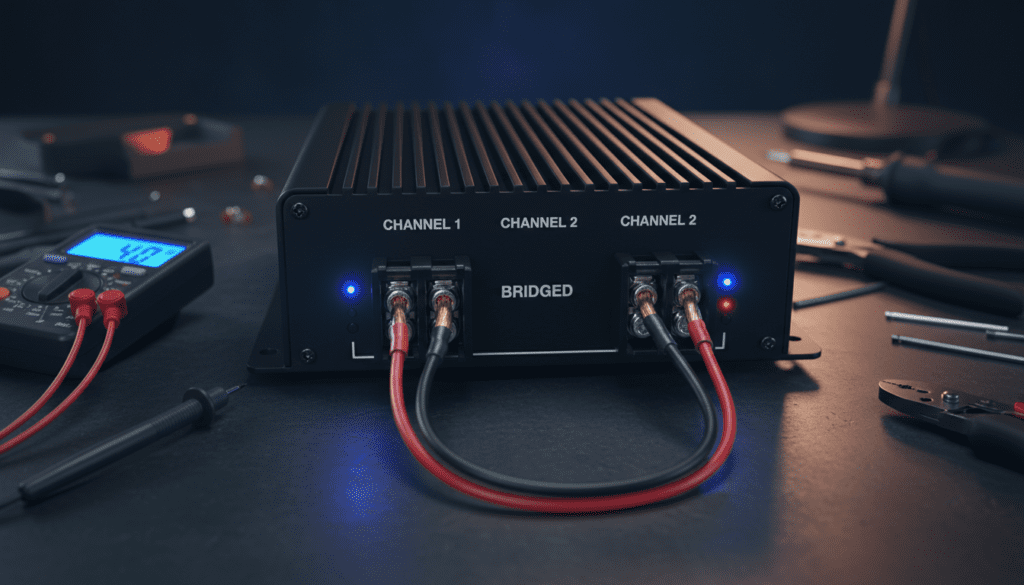
- The Golden Rule: Bridging an amp cuts the impedance load seen by each channel in half. A 3 ohm speaker looks like a 1.5 ohm load to the amplifier.
- Safety Risk: Most “bridgeable” 2-channel or 4-channel amps require a 4-ohm minimum in bridged mode. Running 3 ohms will likely trigger thermal protection.
- The “JBL/Infinity” Exception: Many JBL and Infinity speakers are rated at 3 ohms to compensate for high-resistance factory wiring.
- Optimal Setup: It is almost always safer to run 3 ohm speakers in standard stereo mode rather than bridging them.
- Required Gear: To test this safely, you need a Digital Multimeter to measure the actual DC resistance of your voice coils.
Understanding the Physics: Can I Bridge 3 Ohm Speakers?
When you ask, “can I bridge 3 ohm speakers?” you are really asking about current flow. Bridging involves combining two channels of an amplifier into one to get more power. However, this process forces each internal circuit of the amplifier to handle half of the speaker’s impedance.
In my years of installing aftermarket car audio, I’ve seen enthusiasts try to squeeze extra power out of Class AB amplifiers by bridging them into low-impedance loads. If you connect a 3 ohm speaker to a bridged pair of channels, each channel “sees” 1.5 ohms.
Most standard amplifiers (like those from Pioneer, Kenwood, or Sony) are designed to handle a minimum of 2 ohms in stereo and 4 ohms when bridged. By presenting a 1.5-ohm load to those internal circuits, you are demanding more current than the power supply and output transistors were designed to provide. This leads to excessive heat and clipping.
The Impedance Math Table
| Connection Type | Speaker Impedance | Load Seen Per Internal Channel | Safety Level (Most Amps) |
|---|---|---|---|
| Stereo | 4 Ohms | 4 Ohms | Safe |
| Stereo | 3 Ohms | 3 Ohms | Safe |
| Bridged | 4 Ohms | 2 Ohms | Standard/Safe |
| Bridged | 3 Ohms | 1.5 Ohms | Dangerous/Unstable |
| Bridged | 2 Ohms | 1 Ohm | Extreme/Expert Only |
Can I Run 3 Ohm Speakers on a Standard Amp?
Yes, you can run 3 ohm speakers on almost any modern amplifier in stereo mode. Most quality amplifiers are “2-ohm stable” in stereo. Since 3 ohms is higher than 2 ohms, the amplifier will operate comfortably within its thermal limits.
I frequently recommend 3 ohm drivers (like the JBL GTO Series) for users who are keeping their factory head unit wiring. Factory wires are often thin (20-22 gauge), which adds resistance. The 3 ohm impedance helps “pull” a bit more power from the amp to compensate for the loss in the thin wires, resulting in better volume and clarity.
Why 3 Ohms Exists
Manufacturers like Harman (JBL/Infinity) use 3-ohm voice coils strategically. They assume:
- Wire Resistance: Your car’s wiring adds roughly 0.5 to 1 ohm of resistance.
- System Total: The amplifier eventually “sees” a total load closer to 4 ohms at the output terminals.
- Efficiency: This allows the speaker to play louder on lower-voltage factory systems without overtaxing the circuit.
Risks of Bridging 3 Ohm Speakers on Incompatible Amps
If you ignore the warnings and decide to bridge a 3-ohm load on an amp only rated for 4-ohm bridging, you will encounter several “Real World” problems that I have documented in my shop:
Thermal Runaway
The lower the impedance, the more current flows. More current equals more heat. A 3 ohm bridged load will cause the heat sink to reach temperatures exceeding 150°F (65°C) very quickly. Eventually, the solder joints can weaken, or the transistors can melt.
Protecting Mode Activation
Modern amplifiers from brands like Rockford Fosgate or Alpine have sophisticated “Protection Circuits.” If the amp detects an impedance lower than its rated threshold, it will immediately shut down to prevent a fire. You will see a Red Protect Light on your amp’s side panel.
Increased Total Harmonic Distortion (THD)
Even if the amp doesn’t shut down, it will struggle to control the speaker cone. This results in clipping, where the smooth audio wave becomes “squared off.” This sounds like harsh distortion and is the #1 cause of blown tweeters.
How to Safely Bridge 3 Ohm Speakers (If Possible)
If you are determined to find out if can 3 ohm speakers be bridged in your specific setup, follow this professional testing workflow I use before every installation.
Step 1: Check the “Birth Sheet” or Manual
Look for the RMS Power Rating section in your amplifier manual. You are looking for a specific line:
“Bridged Power: X Watts @ 2 Ohms”*
- If your amp is 2-ohm stable bridged, you are 100% safe to bridge a 3-ohm speaker.
- If it only lists 4-ohm bridged, do not proceed.
Step 2: Measure DC Resistance
Use a Digital Multimeter (like a Fluke or Klein).
- Set the dial to Ohms (Ω).
- Touch the probes to the speaker terminals.
- Note that a “3 Ohm” speaker usually reads around 2.4 to 2.7 ohms on a DC meter. This makes bridging even riskier, as the load is even lower than the “nominal” label suggests.
Step 3: Improve Cooling
If you are running a borderline 3-ohm bridged load, you must maximize airflow.
- Mounting: Use “stand-offs” to raise the amp 1/2 inch off the floor or carpet.
- Fans: Install 12V PC cooling fans to move air across the heat sink.
- Gains: Set your gains conservatively using an Oscilloscope or a DD-1 Distortion Detector to ensure no clipping occurs.
Wiring Alternatives: Series vs. Parallel
If you have two 3-ohm speakers and want to bridge them to a single channel (like a subwoofer amp), you have two main wiring choices.
Option A: Series Wiring (The Safe Bet)
In series, you add the impedances together.
- Calculation: 3 ohms + 3 ohms = 6 ohms.
- Result: This is extremely safe for any bridged amplifier. However, you will get less total power because the impedance is higher.
Option B: Parallel Wiring (The Dangerous Bet)
In parallel, the impedance is halved.
- Calculation: (3 x 3) / (3 + 3) = 1.5 ohms.
- Result: Most amplifiers will fail or enter protect mode instantly. I strongly advise against this unless you are using a high-end monoblock sub amp rated for 1-ohm stability.
Expert Tips for 3 Ohm Speaker Management
Through years of testing AudioControl and JL Audio gear, I’ve developed a few “pro-rules” for dealing with non-standard impedances:
- Don’t Chase Watts: Bridging a 3-ohm speaker might give you “more power” on paper, but the sound quality (SQ) usually degrades. A stable 2-channel stereo connection sounds cleaner.
- Class D vs. Class AB: If you must bridge low-impedance loads, use a Class D amplifier. They are more efficient and generate significantly less heat than older Class AB designs.
- Check Your Ground: High-current draws (caused by low ohms) require a perfect ground. Ensure your ground wire is the same gauge as your power wire and is bolted to bare metal on the vehicle chassis.
Summary of Compatibility
| Component | Can I Bridge? | Recommended Action |
|---|---|---|
| Component Speakers (3 Ohm) | No | Run in Stereo Mode on a 2-ohm stable amp. |
| Coaxial Speakers (3 Ohm) | No | Use Head Unit power or Stereo Amp channels. |
| Subwoofers (3 Ohm) | Yes (Maybe) | Only if the amp is “1-ohm stable” or “2-ohm stable bridged.” |
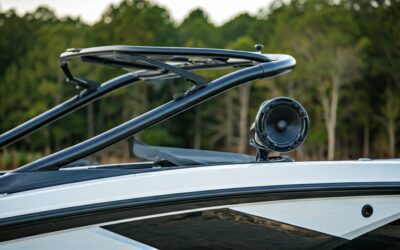
| Marine Speakers (3 Ohm) | No | Marine environments are hot; bridging increases failure risk. |
Frequently Asked Questions (FAQ)
Can I bridge 3 ohm speakers if I keep the volume low?
While keeping the volume low reduces current draw, it doesn’t change the electrical load. The amplifier’s output stage is still “seeing” a 1.5-ohm load. A sudden bass hit or a peak in the music could still trigger the protection circuit or cause a voltage spike that damages the internal components.
Why do JBL and Infinity make 3 ohm speakers if they are hard to bridge?
They are primarily designed as OEM replacements. Most people replacing factory speakers aren’t bridging them; they are connecting them to factory head units or small 4-channel amps. The 3-ohm design is a clever way to extract maximum performance from limited factory voltage.
Can I use a resistor to turn a 3 ohm speaker into a 4 ohm speaker?
You could technically add a 1-ohm power resistor in series, but this is a poor solution. The resistor will turn a large portion of your amplifier’s power into wasted heat. It is much more efficient to simply run the speaker in stereo or buy an amplifier rated for lower impedances.
What happens if my amp doesn’t have a protect mode?
In older or “budget” amplifiers without protection circuits, bridging a 3-ohm speaker will usually result in the internal fuse blowing or the output transistors smoking. In extreme cases, it can lead to a fire if the power wire is not properly fused at the battery.
Can I bridge 3 ohm speakers on a home theater receiver?
Absolutely not. Home theater receivers (like Denon, Onkyo, or Yamaha) are typically rated for 6 to 8 ohms. Many struggle even with 4-ohm loads. Connecting a 3-ohm bridged load (which looks like 1.5 ohms) will almost certainly destroy a home audio receiver’s power supply.