Understanding the Basics: Can I Have High Power and Low Volume Speakers?
Yes, you absolutely can have high power and low volume speakers, and in many cases, this is the preferred setup for high-fidelity audio. Using high-wattage speakers at lower volumes allows your amplifier to operate with significant headroom, which reduces distortion and ensures that peaks in your music are handled with precision.
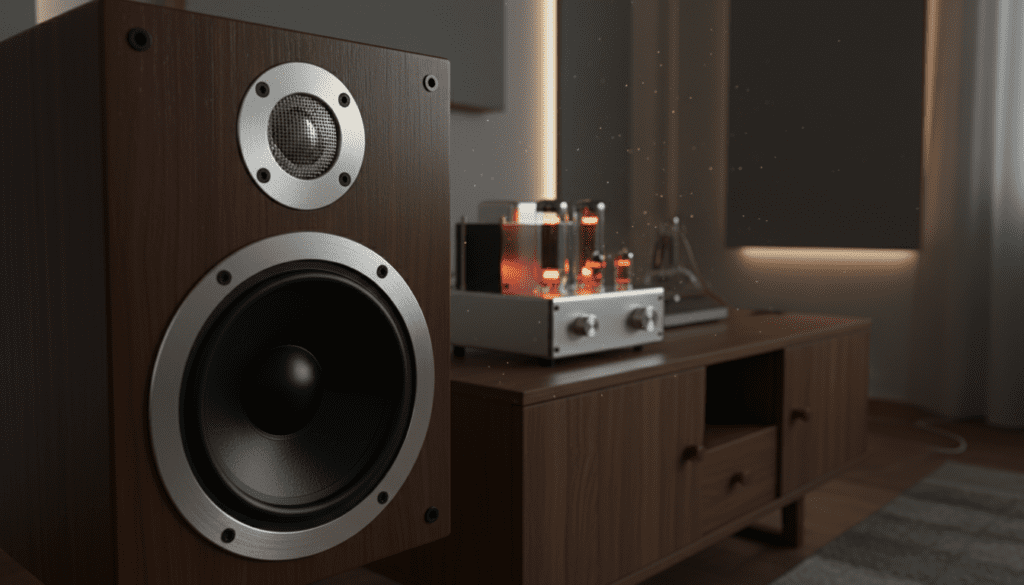
In my experience building home theater systems and studio environments, many beginners worry that “high power” implies “high volume” at all times. This is a common misconception. Power (Watts) represents the capacity of the speaker to handle energy, while Volume (Decibels) is the actual sound pressure level produced.
⚡ Key Takeaways for High Power Audio
- Safety First: High-power speakers are perfectly safe to run at low volumes; they do not require high levels of electricity to “activate.”
- Clarity Benefits: Running high-wattage systems at lower volumes provides dynamic range, meaning quiet sounds remain crisp and loud bursts don’t “clip.”
- The 3dB Rule: To hear a noticeable difference in volume, you need to double the power (Watts). High power doesn’t always mean ear-splitting noise.
- Equipment Health: High-power speakers are less likely to be damaged by an amplifier that is struggling to provide enough juice (clipping).
- Efficiency Matters: A speaker’s Sensitivity rating determines how loud it gets with 1 Watt of power, regardless of its maximum power handling.
Why High Power Does Not Equal High Volume
When you see a speaker rated for 200 Watts RMS, that is its thermal limit—the maximum amount of sustained power it can handle before the voice coil risks damage. It is not a requirement for operation. You can feed that same speaker 0.5 Watts, and it will play music at a comfortable, low conversational volume.
We often compare this to a high-performance sports car. A car capable of 200 mph can easily drive through a school zone at 15 mph. In fact, it will likely do so more smoothly and with less mechanical strain than a budget car pushed to its absolute limit.
Power vs. Sound Pressure Level (SPL)
The relationship between wattage and volume is logarithmic, not linear. This is the most critical concept to grasp if you are wondering, “can i have high power and low volume speakers?“
| Power Input (Watts) | Sound Level (dB) | Perception of Change |
|---|---|---|
| 1 Watt | 87 dB | Baseline (Loud conversation) |
| 2 Watts | 90 dB | Slightly louder (+3dB) |
| 10 Watts | 97 dB | Twice as loud (+10dB) |
| 100 Watts | 107 dB | Four times as loud (+20dB) |
| 200 Watts | 110 dB | Maximum capacity (Very Loud) |
As shown above, most of your listening happens at less than 5 Watts, even with “high power” speakers.
The Concept of “Headroom” and Why It Matters
When we use high-power speakers with a robust amplifier at low volumes, we are creating headroom. During my time testing Reference Grade floor-standing speakers, I found that even at low volumes, the “punch” of a kick drum or the pluck of a bass guitar felt more “real.”
This is because those short, sudden bursts of sound (transients) require a quick spike in power. If your system has high power capacity, it can provide that spike effortlessly. If your system is underpowered, it will “soften” those peaks, making the music sound flat or “muddy.”
Benefits of High Power at Low Volumes:
- Lower Distortion: High-power components usually have better Total Harmonic Distortion (THD) ratings at lower output levels.
- Detail Preservation: Low-level details, like the decay of a cymbal, are more audible when the amp isn’t struggling.
- Future Proofing: You have the capacity to turn the volume up for a party or movie night without worrying about blowing a driver.
Step-by-Step: How to Configure High Power Speakers for Low Volume Listening
If you want to ensure your high-power setup sounds its best at lower levels, follow these steps I use when calibrating high-end audiophile systems.
Step 1: Check the Sensitivity Rating
Look at your speaker’s spec sheet for Sensitivity. It is usually expressed as something like 88dB @ 1W/1m. If this number is high (90dB+), the speaker is efficient and will sound very loud even with tiny amounts of power. If you want to listen at low volumes, high-sensitivity speakers are excellent because they don’t need much “push” to reveal detail.
Step 2: Match Your Amplifier Correctly
Ensure your amplifier’s Continuous Power (RMS) matches or slightly exceeds the speaker’s recommended range. I always recommend an amplifier that provides about 10% to 20% more power than the speaker’s rating. This ensures the amp never enters “clipping” mode, which is the #1 killer of tweeters.
Step 3: Optimize Your Gain Staging
If you are using a PC or a streaming DAC, set your source volume to about 80-90% and use the physical knob on your Integrated Amplifier to control the final volume. This keeps the signal-to-noise ratio high, preventing “hiss” at low listening levels.
Step 4: Use “Loudness” Compensation if Available
Our ears are less sensitive to bass and treble at low volumes (a phenomenon known as the Fletcher-Munson Curve). Many modern receivers have a “Loudness” or “Dynamic EQ” setting. Enable this to boost the lows and highs slightly when you are listening at low volumes to maintain a full, rich sound.
Step 5: Room Placement
High-power speakers often have larger drivers (8-inch woofers or bigger). At low volumes, these can sometimes sound “thin” if they are too far from walls. I’ve found that moving large speakers roughly 12-18 inches from the back wall helps reinforce the bass frequencies during quiet sessions.
Common Myths About Speaker Power
Myth 1: “Underpowering” Speakers is Safe
This is actually the most dangerous mistake. If you use a very weak amplifier with high-power speakers and try to turn it up, the amp will “clip.” This sends a square-wave electrical signal to the speakers, which can melt the voice coils in seconds. Having “too much power” is almost always safer than having “too little.”
Myth 2: Large Speakers Need High Volume to “Wake Up”
While some older, inefficient speakers needed a certain amount of current to move the heavy cones, modern materials like Kevlar, Carbon Fiber, and Aluminum have made drivers much more responsive. A high-power modern speaker will sound fantastic even at “whisper” levels.
Myth 3: Watts equal Quality
Watts measure quantity, not quality. A 50-Watt Class A amplifier will often sound significantly better than a 500-Watt cheap receiver. When asking can i have high power and low volume speakers, remember that the quality of the first watt is more important than the quantity of the last watt.
Expert Tips for Low Volume High-Fidelity
- Bi-Amping: If your speakers have two sets of terminals, consider bi-amping. We have found this provides even more control over the woofer and tweeter, improving low-volume clarity.
- Vibration Isolation: Use isolation pads or spikes. Large speakers have a lot of mass; isolating them ensures that at low volumes, the energy goes into moving the air, not your floor.
- Subwoofer Integration: If you listen at low volumes, a powered subwoofer with its own volume control can “fill in” the bottom end that large speakers might lose when the volume dial is turned down.
FAQ: Frequently Asked Questions
Can I damage high-power speakers by playing them too quietly?
No. There is no physical mechanism that damages a speaker by playing it at a low volume. In fact, it extends the life of the components by reducing heat and mechanical stress on the surrounds and spiders.
What happens if my amp is 100W and my speakers are 300W?
This is perfectly fine for low-volume listening. However, you must be careful not to turn the volume knob past the point where the sound starts to distort. That distortion (clipping) is what will damage your 300W speakers, not the 100W limit.
Why do some speakers sound “thin” at low volumes?
This is usually due to human hearing biology (the Fletcher-Munson Curve), not the speakers themselves. Our ears become less sensitive to bass frequencies as volume drops. Using a Subwoofer or an Equalizer (EQ) can fix this easily.
Should I buy high-wattage speakers if I live in an apartment?
Yes, high-wattage speakers often have better build quality and larger cabinets, which provide a “fuller” sound even when the volume is kept low to avoid disturbing neighbors.
Does “Max Power” matter more than “RMS Power”?
No. Always look for the RMS (Root Mean Square) or Continuous Power rating. “Max” or “Peak” power is often a marketing number and doesn’t reflect real-world performance or safety for low-volume listening.