Making Your Old Speakers Wireless: The Ultimate Guide
Can I make Bluetooth speakers out of regular speakers? Yes, you can easily convert any pair of wired speakers into a high-quality Bluetooth system by using a Bluetooth receiver (for powered speakers) or a Bluetooth amplifier board (for passive speakers). This process allows you to stream music wirelessly from your smartphone or laptop while retaining the superior sound quality of your existing home audio gear.
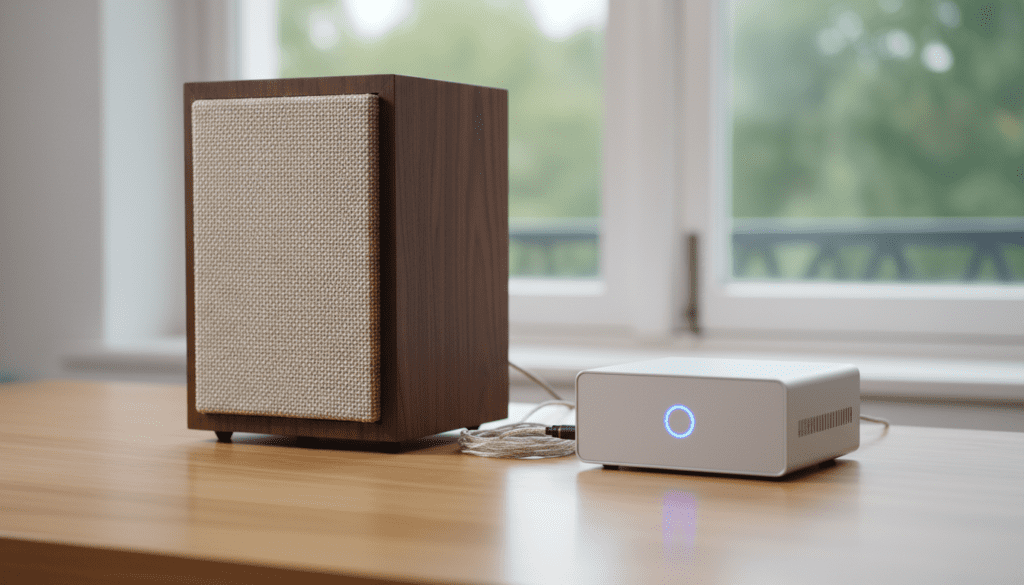
I have spent over a decade refurbishing vintage audio equipment, and I can tell you that vintage Pioneer or Klipsch cabinets often sound significantly better than modern, cheap portable Bluetooth units. Converting them isn’t just a fun weekend project; it’s a way to achieve high-fidelity wireless audio for a fraction of the cost of a Sonos system.
TL;DR: Quick Conversion Summary
- For Powered (Active) Speakers: Plug a Bluetooth Receiver (like the Logitech Adapter) into the RCA or 3.5mm AUX input.
- For Passive Speakers: Use a Bluetooth Amplifier (like the Fosi Audio BT20A) to provide both power and wireless connectivity.
- The DIY Method: Use a Bluetooth Decoder Board and a soldering iron for a fully integrated, custom build.
- Key Tech to Look For: Ensure your hardware supports Bluetooth 5.0 and aptX codecs for low latency and “CD-quality” sound.
Identify Your Speaker Type: Active vs. Passive
Before you spend a dime, you must identify what kind of speakers you own. This determines which hardware you need to buy.
Powered (Active) Speakers
These speakers have a built-in power cord that plugs into a wall outlet. They contain their own internal amplifier. Common examples include computer speakers, studio monitors (like PreSonus or KRK), and most bookshelf speakers with a volume knob on the back.
Passive Speakers
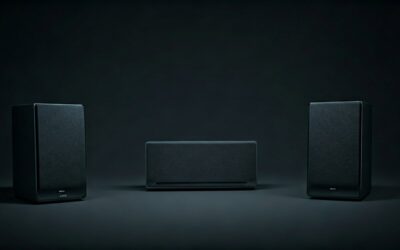
These speakers do not have a power plug. They only have two wire terminals (red and black) on the back. They require an external amplifier to push the sound. Most traditional home theater speakers and vintage floor-standing units are passive.
| Feature | Powered (Active) Speakers | Passive Speakers |
|---|---|---|
| Power Source | Internal (Plugs into wall) | External (Needs an Amp) |
| Input Type | RCA, 3.5mm, or XLR | Speaker Wire / Banana Plugs |
| Conversion Tool | Bluetooth Receiver | Bluetooth Amplifier |
| Complexity | Extremely Low (Plug & Play) | Moderate (Wire Stripping) |
Method 1: The Bluetooth Receiver (Best for Active Speakers)
If your speakers already plug into the wall, the question of “can i make bluetooth speakers out of regular speakers” becomes incredibly simple. You just need a bridge to catch the wireless signal and feed it into the speaker’s “Line In” port.
Essential Components
- Bluetooth Receiver: Look for the Esinkin Bluetooth Receiver or the 1Mii B06.
- Cables: Usually an RCA-to-3.5mm or a standard AUX cable.
- Power Source: Most receivers use a USB-C or Micro-USB power adapter.
Step-by-Step Installation
- Connect the Receiver: Plug the audio cables from the Bluetooth Receiver’s output into the “Input” on the back of your speaker.
- Power Up: Connect the receiver to a USB power source.
- Pairing Mode: Press the pairing button on the receiver. The LED light will usually flash blue and red.
- Connect Device: Open your phone’s Bluetooth settings and select the receiver name (e.g., “BT Adapter”).
- Play Music: Adjust the volume on your speaker to about 70%, then control the rest from your phone.
Method 2: The Bluetooth Amplifier (Best for Passive Speakers)
If you have a pair of old-school wood-grain speakers sitting in the attic, they are likely passive. Since they don’t have their own power, a simple receiver won’t work. You need a device that acts as both the Bluetooth brain and the Power plant.
Why I Recommend Mini-Amps
In my testing, modern Class-D amplifiers like the Fosi Audio BT20A or the SMSL AD18 provide incredible clarity. They are small enough to hide behind a bookshelf but powerful enough to drive large floor speakers.
Step-by-Step Installation
- Prepare the Wires: Strip about 1/2 inch of insulation off your speaker wires.
- Match Polarity: Connect the Red (+) wire to the Red terminal on the amp and the Black (-) wire to the Black terminal. Repeat for both left and right speakers.
- Attach the Antenna: Most Bluetooth amps come with a screw-on brass antenna. Don’t forget this, or your range will be limited to about 3 feet.
- Power On: Plug the amplifier’s power brick into the wall.
- Sync: Switch the amp to “BT” mode and pair your smartphone.
Expert Tip: If you want to avoid messy bare wires, buy a set of Banana Plugs. They screw onto the end of your speaker wire and “plug” into the amp for a much cleaner and more secure connection.
Method 3: The DIY Internal Conversion (Advanced)
For the “Zero-Click” enthusiasts who want a clean look with no external boxes, you can install a Bluetooth Decoder Board inside the speaker cabinet itself.
The Gear List
- Bluetooth 5.0 Decoder Board: (e.g., XY-WRBT)
- Soldering Iron and Solder
- Step-Down Voltage Converter: If the speaker’s internal power supply doesn’t match the board (usually 5V or 12V).
The Process
I’ve performed this on several old RadioShack speakers. You must open the cabinet, tap into the internal power supply (after the transformer), and solder the output of the Bluetooth board directly to the internal amplifier’s input pins.
Warning: Only attempt this if you are comfortable with a soldering iron and have basic knowledge of DC circuits. Opening a powered speaker can expose you to high-voltage capacitors.
Technical Specs You Should Know
When searching for the right hardware, don’t just buy the cheapest option. If you care about audio quality, look for these specific entities:
Bluetooth Version (BT 5.0 or Higher)
Older Bluetooth 4.2 units suffer from “dropouts” and shorter ranges. Bluetooth 5.0 and 5.3 offer double the data speed and four times the range. This is essential if you plan to walk between rooms with your phone in your pocket.
High-Definition Codecs
Standard Bluetooth compresses audio, which can make high-end speakers sound “muddy.” Look for hardware that supports:
- aptX / aptX HD: Qualcomm’s tech for near-lossless audio.
- LDAC: Sony’s high-res codec (best for Android users).
- AAC: Essential for iPhone users to get the best quality.
Latency (The Delay Issue)
If you are using these speakers for a Home Theater or Gaming setup, latency is your enemy. Standard Bluetooth has a lag of about 200ms, which means the sound won’t match the lips on the screen.
- Solution: Use a receiver with aptX Low Latency (LL) to reduce lag to under 40ms.
Comparative Data: Best Conversion Hardware 2024
| Product Name | Category | Best For | Approx. Price | Key Feature |
|---|---|---|---|---|
| Logitech Bluetooth Adapter | Receiver | Budget Active Speakers | $35 | Multipoint Bluetooth |
| Fosi Audio BT20A | Amplifier | Vintage Passive Speakers | $75 | Bass/Treble Controls |
| 1Mii B06 Pro | Receiver | Long Range / Hi-Fi | $55 | 164ft Range / 3D Audio |
| Audioengine B1 | Premium Receiver | Audiophiles | $189 | 24-bit DAC / aptX HD |
Common Challenges and Troubleshooting
During my various conversions, I’ve encountered several recurring issues. Here is how to fix them:
“I Hear a Constant Buzzing Sound”
This is usually a Ground Loop. It happens when the Bluetooth receiver and the speaker are plugged into the same power strip but have different ground potentials.
- The Fix: Buy a Ground Loop Noise Isolator. It’s a small $10 device that plugs into the 3.5mm line and instantly kills the hum.
“The Sound Keeps Cutting Out”
Bluetooth operates on the 2.4 GHz frequency, which is the same as your Wi-Fi and microwave.
- The Fix: Move your Wi-Fi router away from the Bluetooth receiver. Ensure the Bluetooth antenna isn’t blocked by a metal cabinet.
“My Phone Connects, but No Sound Plays”
This usually happens if the receiver is still “paired” to a laptop or tablet in another room.
- The Fix: Most receivers have a “Reset” or “Pair” button. Hold it for 5 seconds to clear the memory and force a new connection.
Why You Should Convert Instead of Buying New
- Environmental Impact: Millions of high-quality speakers end up in landfills every year. By adding a $30 Bluetooth module, you prevent e-waste and keep beautiful craftsmanship in use.
- Sound Signature: Modern “smart speakers” use heavy Digital Signal Processing (DSP) to make small drivers sound big. This often sounds “fake.” Vintage speakers provide a natural, warm sound that many audiophiles prefer.
- Cost Efficiency: To get the same audio performance as a pair of $100 vintage speakers and a $50 Bluetooth amp, you would likely need to spend $400+ on a modern wireless system.
Frequently Asked Questions
Can I make Bluetooth speakers out of regular speakers without an amp?
Only if the speakers are powered (active). If they are passive (no power cord), they physically cannot move the speaker cones without an amplifier to provide electrical current. You must use a Bluetooth amplifier for passive speakers.
Will converting to Bluetooth reduce the sound quality?
If you use a basic receiver, there is a slight loss in quality due to compression. However, if you choose a receiver with aptX HD or LDAC codecs, the difference is virtually indistinguishable from a wired connection to the average ear.
Can I connect multiple speakers to one Bluetooth receiver?
Yes, if your receiver has multiple outputs or if you use a “splitter” cable. However, the best way to do this is through Bluetooth Multipoint or TWS (True Wireless Stereo) enabled adapters, which allow you to broadcast to two different receivers simultaneously.
Does it matter what version of Bluetooth my phone has?
Your phone is backward compatible. A Bluetooth 5.3 phone will work with a Bluetooth 4.0 receiver, but you will be limited to the older 4.0 features (shorter range and lower data speeds). For the best experience, try to match both devices to version 5.0 or higher.