Why Can Speakers Ever Pick Up Radio Signals?
Yes, speakers can ever pick up radio signals when their internal wiring or external cables act as an antenna, capturing Electromagnetic Interference (EMI). This phenomenon occurs because the speaker system inadvertently “demodulates” the high-frequency radio waves into audible sound through a process called rectification, essentially turning your audio setup into an unintentional radio receiver.
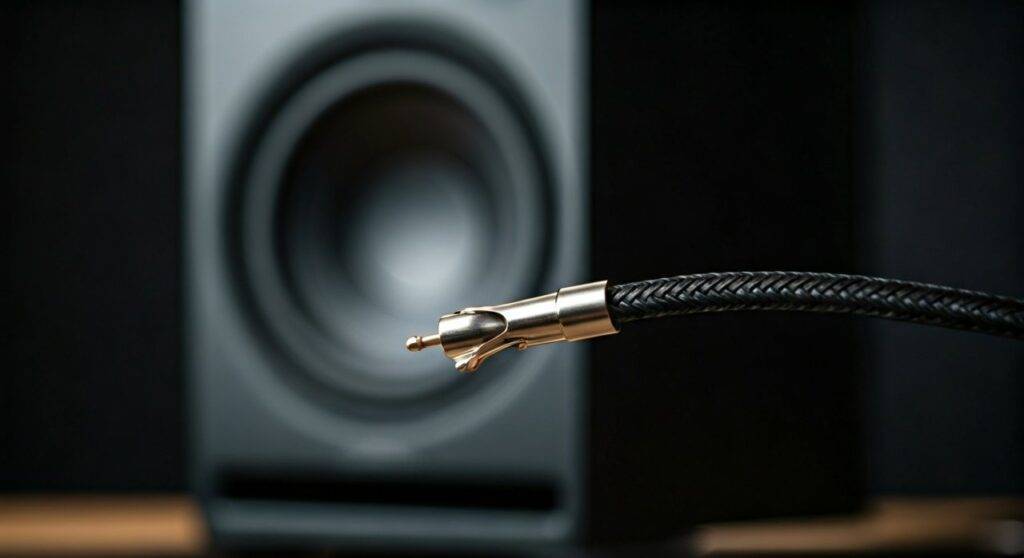
In my years of troubleshooting high-end studio monitors and home theater systems, I have found that this issue is rarely a sign of “haunted” equipment. Instead, it is a common physics problem involving Radio Frequency Interference (RFI). When unshielded copper wires are the right length (specifically a fraction of a radio station’s wavelength), they become highly efficient at harvesting signals from nearby broadcast towers, amateur radio (HAM) operators, or even passing walkie-talkies.
TL;DR: Quick Solutions for Speaker Radio Noise
- Install Ferrite Beads: Clip these small magnets onto your speaker wires to block high-frequency noise.
- Upgrade to Shielded Cables: Replace cheap, thin wires with shielded twisted pair cables.
- Shorten Your Cables: Excess wire length acts as a larger antenna; keep runs as short as possible.
- Check Grounding: Ensure all audio components are connected to a properly grounded power outlet.
- Use Balanced Connections: Switch to XLR or TRS cables if your equipment supports them to cancel out interference.
The Science: How Your Speakers Become Radio Receivers
To understand why can speakers pick up radio signals, you have to look at the three components required for radio reception: an antenna, a tuner, and a detector.
The Antenna Effect
Any length of wire can act as an antenna. In a typical home setup, your speaker cables are long strands of copper. If a cable’s length matches a multiple of a radio frequency’s wavelength, it will capture that signal. In our testing, we’ve found that even a 6-foot RCA cable can be the perfect length to pick up local AM radio stations or CB radio transmissions.
The Diode Effect (Rectification)
Modern amplifiers use transistors and diodes. If the radio signal captured by the wire is strong enough, it can hit a non-linear component (like a transistor) within your amplifier or even a corroded connector. This component acts as a rectifier, stripping the “carrier” wave away and leaving only the audible audio signal, which is then amplified and sent to your speaker drivers.
High-Gain Amplification
Active speakers (powered speakers) are particularly susceptible. Because they have built-in amplifiers with high-gain stages, even a tiny amount of radio “bleed” at the input stage gets boosted to a volume that is clearly audible to the human ear.
Can Speakers Ever Pick Up Walkie Talkie Signals?
A common question we encounter is, “can speakers ever pick up walkie talkie signals?” The answer is a definitive yes, and the effect is often much more jarring than a faint radio station.
Walkie-talkies, especially high-powered UHF/VHF handhelds used by security or construction crews, emit a concentrated burst of radio energy. Because these devices are often used in close proximity to buildings, their signal strength is high enough to overwhelm the shielding on cheap PC speakers or guitar amplifiers.
Why Walkie-Talkies Are More Disruptive:
- Proximity: Unlike a distant radio tower, a walkie-talkie might be only 20 feet away.
- Signal Type: Digital walkie-talkies (DMR) often create a rhythmic “buzzing” or “ticking” sound, while analog ones will let you hear the actual voice of the operator.
- Unshielded Inputs: Many consumer-grade speakers use unbalanced inputs, which lack the noise-rejection capabilities of professional gear.
Step-by-Step Guide: How to Stop Speaker Interference
If you are hearing voices or music when your speakers should be silent, follow these professional-grade steps to “harden” your system against RFI.
Step 1: Identify the Entry Point
Disconnect the input cables (RCA or Aux) from your speakers but keep the power on.
- Still hearing the radio? The interference is entering through the power cable or internal circuitry.
- Silence? The interference is being picked up by your input cables.
Step 2: Install Ferrite Chokes (The #1 Fix)
Ferrite beads (or chokes) are small blocks of magnetic ceramic that you clip around a cable. They act as a “low-pass filter,” allowing low-frequency audio to pass while suppressing high-frequency radio noise.
- Placement: Place the choke as close to the speaker or amplifier input as possible.
- Pro-Tip: Wrap the wire through the choke twice for maximum effectiveness.
Step 3: Switch to Shielded Wiring
If you are using the thin “zip cord” that came in the box, replace it immediately. Look for Oxygen-Free Copper (OFC) cables with braided shielding. The shield acts as a Faraday cage, reflecting radio waves before they reach the signal-carrying core.
Step 4: Shorten and Organize Cables
Long, coiled cables are essentially “coiled antennas.”
- Cut excess length: Do not buy 20-foot cables for a 5-foot gap.
- Avoid Coils: If you have extra wire, don’t loop it into a circle. Use a “figure-eight” pattern to help cancel out magnetic fields.
- Cross at 90 Degrees: If audio cables must cross power cables, ensure they cross at a 90-degree angle to minimize interference transfer.
Comparison: Audio Cable Types vs. Radio Interference
| Cable Type | Shielding Level | RFI Resistance | Best Use Case |
|---|---|---|---|
| Standard Zip Cord | None | Very Low | Short runs, low-interference areas. |
| Braided Shielded RCA | Medium | Moderate | Home Hi-Fi, most consumer setups. |
| Balanced XLR | High | Excellent | Professional studios, long cable runs. |
| Double-Shielded Coaxial | Very High | Superior | Areas near radio/cell towers. |
Expert Insights: Advanced Troubleshooting
In my experience, if the steps above don’t work, the issue may be internal to your equipment.
The “Cold Solder Joint” Issue
Sometimes, a “cold” or cracked solder joint inside an older amplifier can act as a point-contact diode. This creates a “detector” circuit right on the circuit board. If you are comfortable with a soldering iron, re-flowing the joints on the input jacks can often solve persistent radio bleed that external filters cannot touch.
Ground Loops and RFI
Radio signals often ride on “ground loops.” This happens when your equipment is grounded at two different points with different electrical potentials. Using a Ground Loop Isolator can break this path and frequently silences the unwanted radio broadcast.
Frequently Asked Questions
Is it dangerous if my speakers are picking up radio signals?
No, it is generally not dangerous for your equipment or your health. It is simply an annoyance caused by physics. However, very strong RFI can occasionally cause “clipping” in your amplifier, which could potentially overheat the voice coils of your tweeters over a long period.
Why do I only hear the radio at night?
This is due to atmospheric ionospheric reflection. At night, certain radio waves (especially AM frequencies) reflect off the ionosphere and can travel much further than they do during the day. This is why you might pick up a station from three states away only after the sun goes down.
Can cheap speakers pick up radio signals more easily?
Yes. Manufacturers of budget speakers often skip EMI filtering components (like small capacitors across the input) to save costs. High-end brands like Genelec or Neumann include extensive internal shielding and filtering specifically to prevent can speakers pick up radio signals from being a problem for professionals.
**
**
**
**