Can You Install Episode Speakers on a Floating Shelf?
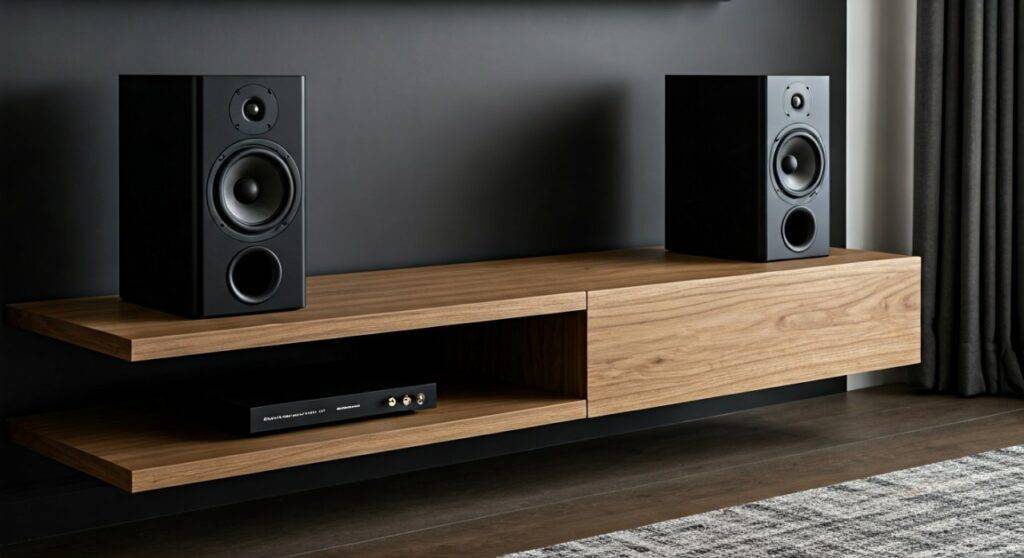
Yes, you can install Episode speakers on a floating shelf, provided the shelf is rated for the speaker’s weight and you use proper acoustic decoupling to prevent vibrations. For a successful setup, you must ensure the shelf is anchored into wall studs and that you have a clear plan for concealing speaker wires behind the drywall or within the shelf itself.
Quick Summary: Installing Episode Speakers on Floating Shelves
If you are looking for the “too long; didn’t read” version of this guide, here are the essential takeaways:
- Weight Capacity: Most Episode Bookshelf Speakers weigh between 10 and 25 pounds; ensure your shelf can support double the weight of the speaker to account for “leverage force.”
- Vibration Control: Use isolation pads or Sorbothane feet to prevent the floating shelf from becoming a “resonator” that muddies the sound.
- Wire Management: Use cl-3 rated in-wall speaker wire for a clean, professional look.
- Optimal Height: Aim for “Ear Level” (typically 38–42 inches from the floor) when seated in your primary listening area.
- Shelf Depth: Ensure the shelf is at least 2 inches deeper than the speaker to allow for rear-port air displacement.
Understanding the Challenges of Floating Shelf Installation
When we design high-end home theaters using Episode Speakers (a brand owned by Snap One), the first question isn’t “can we,” but “should we.” Floating shelves present unique acoustic and structural challenges that traditional floor stands or in-wall mounts do not.
Structural Integrity and Weight Distribution
Standard floating shelves often rely on a single metal bracket. While they look sleek, they are prone to “sagging” over time. Episode Signature Series bookshelf speakers, for instance, feature heavy magnets and robust cabinets that can put significant strain on cheap MDF shelves.
Acoustic Resonance
A floating shelf is essentially a hollow box or a cantilevered plank attached to a hollow wall. When the Episode speaker plays low frequencies, those vibrations transfer directly into the shelf. This can cause a “boomy” or “muddy” sound, effectively ruining the high-fidelity performance you paid for.
Cable Aesthetics
The beauty of a floating shelf is its minimalism. However, passive speakers like those from the Episode Core or Signature lines require physical wires connected to an amplifier or AVR. Without a plan to hide these wires, the aesthetic is ruined.
Comparing Episode Speaker Models for Shelf Mounting
Not all speakers are created equal. Depending on your specific Episode model, your installation requirements will change.
| Speaker Series | Model Type | Weight (Approx) | Recommended Shelf Depth | Best Use Case |
|---|---|---|---|---|
| Episode Core 1 | Bookshelf | 8.5 lbs | 10 Inches | Background Audio / Surround |
| Episode Signature 13 | Bookshelf | 14.2 lbs | 12 Inches | Critical Listening / Stereo |
| Episode Signature 17 | Bookshelf | 22.4 lbs | 14 Inches | Main Front L/R Channels |
| Episode Satellite | Small Form | 3.5 lbs | 6 Inches | Atmos / Discreet Audio |
Step-by-Step Guide: How to Install Episode Speakers on a Floating Shelf
Having installed hundreds of these systems, we have refined a process that ensures both safety and sound quality. Follow these steps to get the job done right the first time.
Step 1: Locate the Studs
Never rely on drywall anchors for a floating shelf holding high-end audio gear. Use a magnetic stud finder to locate the vertical wooden studs in your wall.
- Pro Tip: If your shelf bracket doesn’t align perfectly with your studs, mount a backer board to the studs first, then mount the shelf to the backer board.
Step 2: Install the Mounting Bracket
Level the bracket using a torpedo level. Ensure you are using heavy-duty lag bolts that penetrate at least 2 inches into the wood stud.
Step 3: Prepare the Wire Path
Before sliding the shelf onto the bracket, you need to handle the 16-gauge or 14-gauge speaker wire.
- Drill a small hole in the drywall just above where the shelf will sit.
- Fish the wire from your amplifier through the wall.
- If your shelf is hollow, you can drill a corresponding hole in the back of the shelf to hide the wire completely.
Step 4: Apply Vibration Dampening
To maximize Information Gain from your speakers, you must decouple them. Place Sorbothane hemispheres or Auralex MoPADs on the shelf surface.
- This prevents the “mechanical energy” of the speaker from vibrating the shelf.
- It improves mid-range clarity and tightens the bass response.
Step 5: Position and Connection
Place your Episode speaker on the shelf. Connect the wires to the gold-plated binding posts, ensuring correct polarity (Red to Red, Black to Black).
- Warning: If your Episode speaker is rear-ported, do not push it flush against the wall. Leave at least 2–3 inches of “breathing room” to allow the bass port to function correctly.
Expert Tips for Optimizing Sound Quality
In our experience, small adjustments make the biggest difference in the final listening experience.
The “Toe-In” Technique
Angle your Episode speakers slightly toward your favorite sitting spot. This creates a focused “sweet spot” and improves the stereo imaging. Since floating shelves are wide, you have the flexibility to move the speaker left or right to find the perfect angle.
Cable Dressing
Use Velcro ties (not zip ties) to manage the cables behind the speaker. This prevents strain on the binding posts and keeps the look clean. If you cannot go inside the wall, use paintable D-Line cable trunking to hide the wires against the wall surface.
Room Calibration
Once installed, run your AV Receiver’s room correction software (like Audyssey or Dirac Live). The software will detect that the speaker is on a shelf and adjust the crossover frequencies to compensate for any “boundary gain” (bass buildup caused by the nearby wall).
Safety Considerations and Warnings
We have seen many “DIY disasters” where shelves have ripped out of the wall. Please keep these safety rules in mind:
- Check the Lever Arm: A speaker sitting at the front edge of a 12-inch shelf exerts significantly more force on the wall than one sitting near the back. Always push the speaker as far back as the bass port allows.
- Heat Management: If you are also placing a small Episode Mini-Amp on the shelf, ensure there is airflow. Excessive heat can lead to “thermal shutdown” or permanent damage to the electronics.
- Tipping Hazard: In homes with children or pets, consider using a small amount of Blue Museum Putty on the bottom of the speaker. This prevents it from being easily knocked off the shelf.
FAQs: Frequently Asked Questions
Can I use any floating shelf for Episode speakers?
No. You should avoid “decorative” shelves from big-box retailers that use plastic anchors. Look for “Heavy Duty” shelves with a solid steel internal bracket. The Episode Signature series requires a shelf with a weight rating of at least 50 lbs to be safe.
Will putting speakers on a shelf ruin the bass?
It won’t ruin the bass, but it will change it. Placing a speaker close to a wall (boundary) typically increases bass output by about 3dB to 6dB. While this makes the speaker sound “bigger,” it can also make it sound “boomer.” Using your receiver’s EQ can fix this easily.
What is the best height for a floating shelf speaker?
The “tweeter” (the small top driver) of your Episode speaker should be at the same height as your ears when you are sitting down. For most couches, this is roughly 40 inches from the floor.
Is it better to use a floating shelf or an in-wall Episode speaker?
In-wall speakers (like the Episode 300 or 500 series) provide a cleaner look and are specifically engineered to work with the wall’s air cavity. However, floating shelves allow you to use higher-end bookshelf speakers which often provide better “depth” and “soundstage” than their in-wall counterparts.