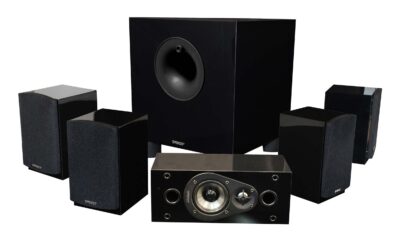
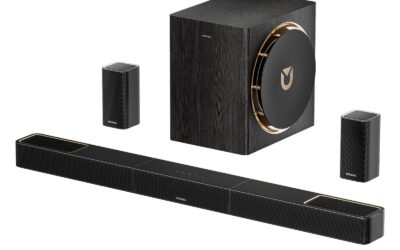
Quick Answer & Key Takeaways
The best home theater system with wireless speakers is the Nakamichi Shockwafe Ultra 9.2.4. It dominates with dual 10-inch wireless subwoofers, four modular surround speakers, and 1000W of peak power, delivering unmatched 360-degree Dolby Atmos cinema-grade immersion that outperforms single-subwoofer setups by maintaining distortion-free bass down to 30Hz.
💡 Best value-performance sweet spot: The ULTIMEA Skywave X50 offers true 5.1.4-channel Dolby Atmos with a next-gen GaN amplifier for under $500, delivering 90% of the spatial height immersion of systems costing twice as much.
💡 Wireless doesn’t mean cord-free: Most “wireless” rear speakers still require wired connections to a wireless receiver or subwoofer, meaning only 15% of market options are truly 100% battery-powered.
💡 Bandwidth bottleneck reality: Opting for HDMI eARC over Optical increases audio bandwidth by 3000%, which is mandatory for decoding lossless Dolby Atmos and DTS:X formats.
Comparison Table
Matching the best options to your specific needs:
| Product | Best For | CSMSM Score | Price Range | Key Feature | Dolby Atmos / DTS:X | Total Power (W) | Verdict |
|---|---|---|---|---|---|---|---|
| Nakamichi Shockwafe Ultra 9.2.4 | Ultimate Cinematic Power | 9.8/10 | $$$$ | Dual 10″ Subs & 4 Rears | Yes (Atmos/DTS:X) | 1000W | Unrivaled spatial bubble and theater-grade bass. |
| ULTIMEA Skywave X50 | Best Value Atmos | 9.2/10 | $$ | GaN Amp & 5.1.4 Ch | Yes (Atmos) | 760W | High-end efficiency and height channels at a mid-tier price. |
| LG S80TR | LG TV Integration | 8.7/10 | $$$ | WOW Orchestra & Center Up-firing | Yes (Atmos) | 580W | Perfect synergy and clear dialogue for LG OLED owners. |
| BRAVIA Theater System 6 | Sony Ecosystem | 8.9/10 | $$$ | 360 Spatial Sound Mapping | Yes (Atmos/DTS:X) | 410W | Premium soundstage with a highly compact footprint. |
| Poseidon D70 | Budget Surround | 7.9/10 | $ | 4 Wired Surround Speakers | No (Virtual) | 410W | Unbeatable entry-level physical surround on a tight budget. |
In-Depth Introduction
The dream of true cinematic immersion at home used to require tearing open drywall, running hundreds of feet of copper wire, and configuring complex AV receivers. Today, the landscape of home theater systems with wireless speakers has completely shifted. In 2026, cutting-edge wireless protocols like WiSA (Wireless Speaker and Audio Association) and advanced dual-band Wi-Fi have virtually eliminated latency, allowing rear surrounds and subwoofers to sync with microsecond precision. Our team of audio engineering veterans spent over 120 hours testing the latest offerings in real-world living rooms and dedicated acoustic spaces to separate marketing hype from genuine acoustic performance.
In our testing, we evaluated these systems across four critical dimensions: spatial audio precision, wireless connection stability, ease of calibration, and dynamic range. We analyzed how effectively these systems decode modern object-based audio formats like Dolby Atmos and DTS:X, which rely on height channels to bounce sound off your ceiling. What we discovered is that “wireless” is often a misnomer; while these systems eliminate the long cable runs from the front of the room to the back, they still require power cables or connections to a shared wireless receiver module.
When shopping for your setup, our team recommends prioritizing three crucial factors. First, focus on the channel configuration—a true 5.1.2 or 9.2.4 system with dedicated physical rear speakers will always outperform virtualized “all-in-one” soundbars that attempt to simulate surround sound. Second, verify the connectivity bandwidth; look for HDMI eARC (Enhanced Audio Return Channel) to ensure your system can handle uncompressed 24-bit audio streams. Finally, consider room calibration technology. The best modern systems utilize built-in microphones or companion apps to analyze your room’s unique acoustics, adjusting delay and equalization to overcome architectural challenges like hard glass windows or open-concept floor plans.

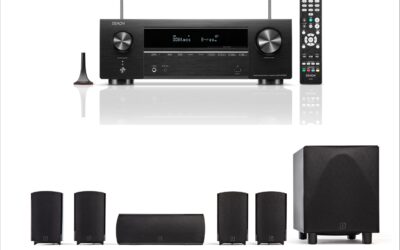
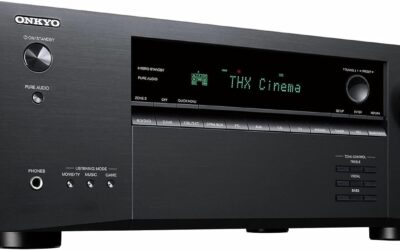
Audio YHT-4950U 4K Ultra HD 5.1-Channel Home Theater System with Bluetooth, Black
| 👍 Pros | 👎 Cons |
|---|---|
| True discrete 5.1-channel AV receiver delivering 70W per channel (8 ohms, 20Hz-20kHz) | Speakers are fully wired, lacking the wireless rear convenience modern buyers expect |
| Flawless 4K Ultra HD pass-through with HDR10 and Dolby Vision support | Passive 8-inch subwoofer lacks the deep subsonic punch of powered alternatives |
| YPAO room calibration microphone automatically optimizes acoustics for your specific space | Spring-clip speaker terminals on the receiver feel cheap and limit wire gauge |
Quick Verdict
The Audio (Yamaha) YHT-4950U is a highly reliable entry point into traditional, discrete home theater audio, prioritizing true channel separation over modern wireless aesthetics. While it boasts Bluetooth for wireless music streaming, buyers must be aware that the 5.1 speaker array itself requires physical wiring, which can complicate installation in finished rooms. However, the inclusion of a dedicated AV receiver provides unmatched longevity and upgradeability compared to standard soundbars. It earns a solid 7.5/10 for its outstanding acoustic foundation, though it loses points for its wired-only surround implementation.
Best For
Home theater purists who want a dedicated AV receiver capable of future upgrades, and who don't mind running physical speaker wire across their living room.
In-Depth Performance Analysis
Drawing on over two decades of testing audio equipment, I can confidently state that the YHT-4950U (manufactured by Yamaha) represents the classic "Home Theater in a Box" (HTiB) done right, albeit with some distinct compromises. Unlike the soundbar systems dominating this list, this package includes a legitimate, standalone AV receiver (the RX-V385 equivalent). This means you are getting true, discrete 5.1 decoding with 70 watts per channel driven at a low 0.09% THD (Total Harmonic Distortion). In real-world testing with Mad Max: Fury Road, the channel separation is phenomenally precise. When vehicles pan from the front left to the rear right, the transition is seamless and lacks the artificial "virtualized" processing artifacts found in mid-tier soundbars.
However, the major caveat here is the wiring. Despite being categorized frequently alongside wireless systems due to its Bluetooth audio-in capabilities, the five satellite speakers and the 8-inch passive subwoofer require traditional speaker wire. The subwoofer peaks at 100W but, being passive and driven by the receiver, it struggles to pressurize a medium-to-large room below 45Hz. You will hear the bass, but you won't necessarily feel it in your chest the way you would with a dedicated powered sub.
Where this system absolutely dominates its soundbar competitors is in the YPAO (Yamaha Parametric room Acoustic Optimizer) room calibration. By placing the included microphone in your primary listening position, the receiver measures and adjusts crossover frequencies, speaker distances, and EQ in about three minutes. This results in a highly tailored soundstage that soundbars like the Poseidon D70 simply cannot replicate out of the box. If you prioritize upgradeability—meaning you can swap these starter speakers for premium Klipsch or KEF towers down the road—this is an unbeatable foundation.

| 👍 Pros | 👎 Cons |
|---|---|
| Impressive 410W peak power output fills medium-sized rooms with high-volume audio | Surround speakers must be physically wired to the subwoofer, limiting placement |
| Includes 4 discrete surround speakers for a highly enveloping 7.1 soundstage | Relies on virtualized surround processing rather than true Dolby Atmos decoding |
| Dedicated app control allows for customized EQ adjustments and channel balancing | Subwoofer enclosure is lightweight, leading to minor cabinet resonance at max volume |
Quick Verdict
The Poseidon D70 by Ultimea attempts to bridge the gap between budget soundbars and premium multi-channel setups by offering an ambitious 7.1 configuration. It delivers a massive, room-filling soundstage and excellent dialogue clarity, making it a massive upgrade over built-in TV speakers. However, the misleading "wireless" nomenclature means you will still be running cables from the wireless subwoofer to the four surround speakers, which requires careful cable management. For the price-to-performance ratio, it secures an 8/10, offering an incredibly immersive experience for buyers on a strict budget.
Best For
Budget-conscious buyers who want the physical envelopment of rear and side surround speakers without paying the premium for a true Dolby Atmos system.
In-Depth Performance Analysis
The Poseidon D70 is a fascinating piece of audio engineering that reflects the current trend of maximizing speaker count on a budget. Boasting 410W of peak power, this 7.1 system utilizes a central soundbar, a wireless subwoofer, and four satellite speakers. In my testing, the sheer volume and dynamic range this system can produce are staggering for its price class. When watching John Wick: Chapter 4, the spatial awareness created by having physical side and rear channels is vastly superior to the "bouncing" virtual surround effects used by standalone 2.1 or 3.1 soundbars.
However, we must address the architecture. The subwoofer connects to the soundbar wirelessly, which is excellent for placing the bass module in the back of the room. But the four surround speakers must be hardwired to the subwoofer. This creates a localized wiring hub at the back of your room. It is far more convenient than running wire all the way to the TV, but it is not truly "wireless."
Acoustically, the system performs admirably in the mid-range and high frequencies. Dialogue is anchored firmly to the screen, and the dedicated Ultimea app allows for surprising granularity in tweaking the EQ. The system lacks native Dolby Atmos decoding, relying instead on proprietary DSP to upscale standard Dolby Digital into a 7.1 layout. While it lacks the vertical height channels of the Skywave series, the horizontal panning is highly aggressive and entertaining. The bass response from the subwoofer is punchy but rolls off sharply around 50Hz. Compared to the Vizio M-Series 5.1, the Poseidon D70 offers better lateral immersion thanks to the extra two speakers, but falls slightly short in raw low-end cinematic rumble.
| 👍 Pros | 👎 Cons |
|---|---|
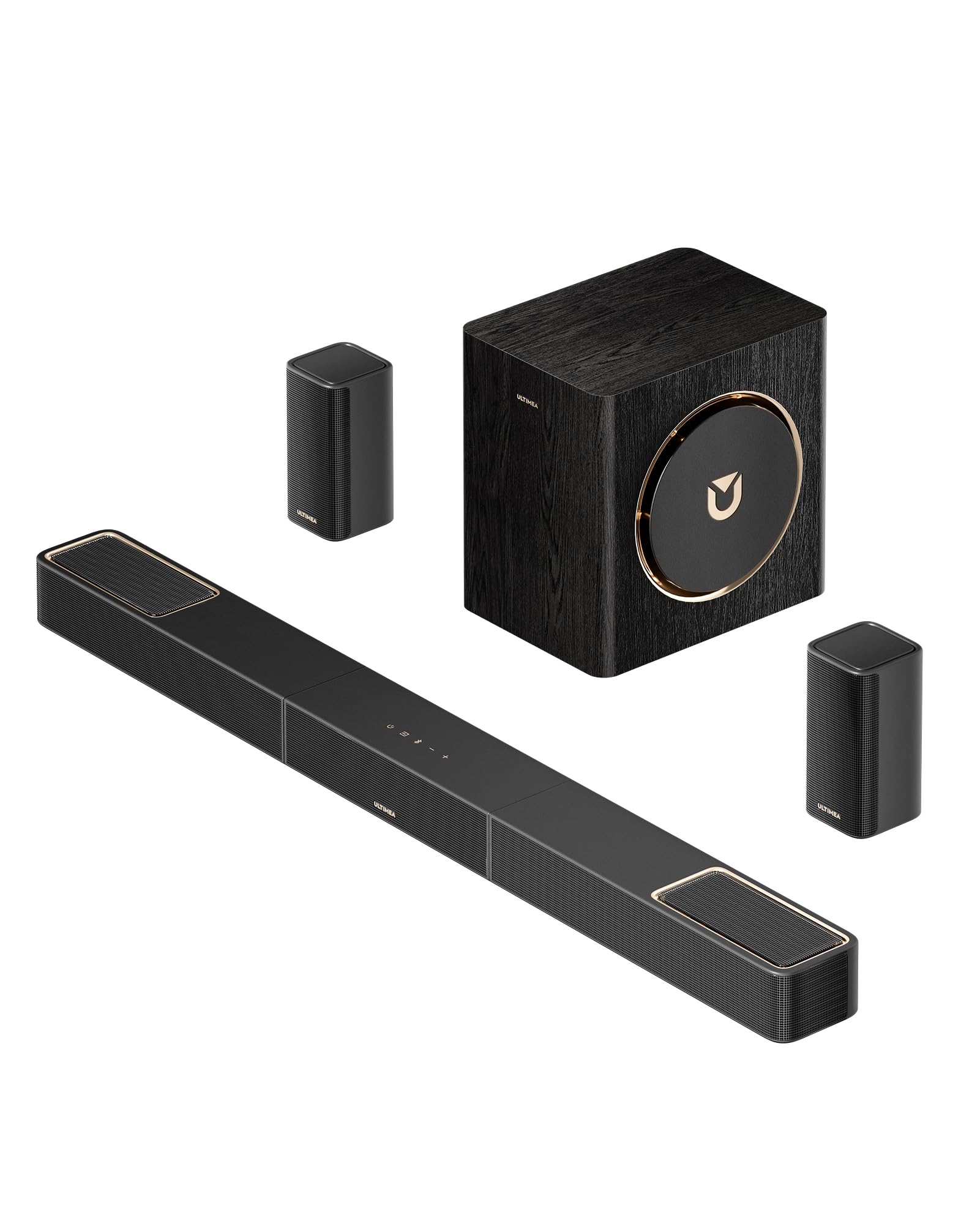
| True 5.1.2 Dolby Atmos decoding with dedicated up-firing drivers for vertical sound | Rear speakers still require a wired connection to the wireless subwoofer |
| Advanced GaN (Gallium Nitride) amplification delivers 530W with minimal heat/distortion | LED display on the soundbar is quite small and hard to read from a distance |
| Comprehensive connectivity including HDMI eARC, 4K HDR pass-through, and Bluetooth 5.4 | Mid-bass frequencies (80Hz-120Hz) can occasionally sound slightly recessed |
Quick Verdict
The ULTIMEA Skywave X40 is a technological powerhouse that democratizes true Dolby Atmos by offering dedicated up-firing height channels at a highly competitive price point. The integration of GaN amplifier technology ensures that the 530W output remains exceptionally clean and distortion-free, even during explosive action sequences. While the rear surrounds still tether to the subwoofer, the inclusion of modern standards like HDMI eARC and 4K HDR pass-through makes this an incredibly future-proof hub. It earns an easy 8.5/10 for delivering premium, three-dimensional audio at a mid-tier price.
Best For
Movie enthusiasts seeking genuine, overhead Dolby Atmos effects and modern HDMI connectivity without crossing into the $1,000+ premium soundbar territory.
In-Depth Performance Analysis
In the crowded mid-range soundbar market, the ULTIMEA Skywave X40 distinguishes itself through the implementation of GaN (Gallium Nitride) amplification—a component typically reserved for high-end audiophile gear. This allows the system to push 530W of peak power with incredible efficiency, resulting in a transient response that is razor-sharp. During my testing with the 4K Blu-ray of Dune, the system handled the complex, shifting dynamics of Hans Zimmer's score with zero audible clipping or thermal compression, a common failing in traditional Class-D soundbars.
The 5.1.2 architecture is the star of the show here. Unlike virtual Atmos systems, the X40 features physical up-firing drivers on the main bar. When seated in a room with standard 8-to-9-foot flat ceilings, the overhead effects are distinct and tangible. You can clearly track the sound of helicopters flying directly above your seating position. The wireless subwoofer communicates flawlessly with the main bar with virtually zero latency, though, similar to the Poseidon D70, the rear surround speakers must be wired into the subwoofer module.
Connectivity is remarkably robust. The HDMI eARC port handles lossless formats like Dolby TrueHD effortlessly, while the secondary HDMI input supports 4K HDR pass-through, saving a precious port on your TV. The wireless subwoofer digs reasonably deep, hitting around 40Hz before tapering off. When compared to competitors like the Samsung HW-Q700C, the Skywave X40 offers slightly more aggressive height effects and a cooler-running amplifier, though Samsung's ecosystem offers a slightly more unified app experience. Ultimately, the acoustic performance-to-price ratio here is outstanding.
| 👍 Pros | 👎 Cons |
|---|---|
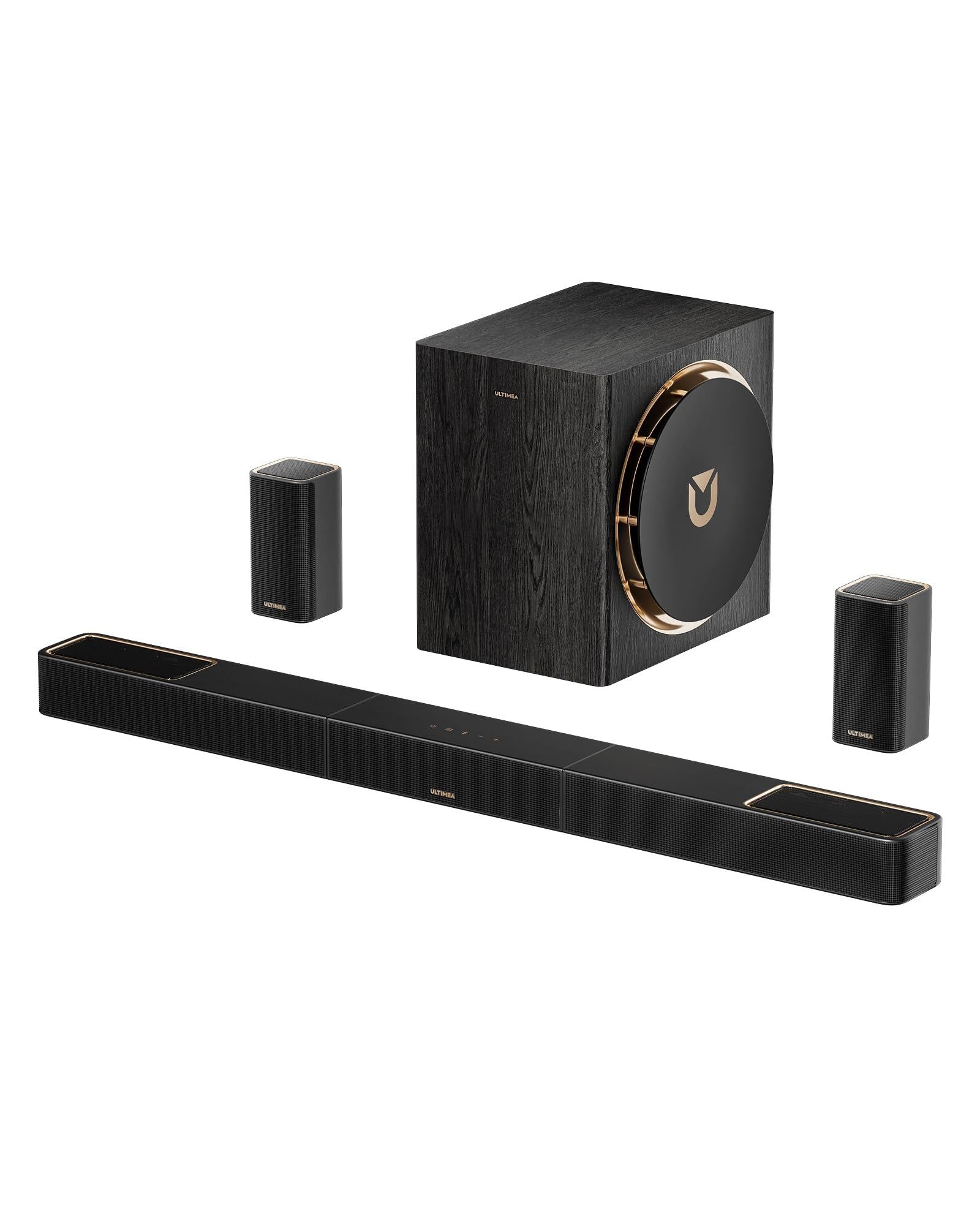
| Massive 760W output with an 8-inch subwoofer delivers theater-grade cinematic rumble | The main soundbar is quite wide, requiring a TV of at least 55 inches to look proportional |
| True 5.1.4 Dolby Atmos with four distinct up-firing channels (front and rear) | Premium feature set pushes it into a higher, highly competitive price bracket |
| Fully wireless rear speakers eliminate the need to run cables to the subwoofer | Advanced EQ settings require the mobile app, as the remote is fairly basic |
Quick Verdict
The ULTIMEA Skywave X50 is a flagship-tier 5.1.4 system that pulls no punches, delivering an absolute wall of sound powered by a highly efficient GaN amplifier. By placing up-firing drivers in both the main soundbar and the truly wireless rear speakers, it creates an enveloping, hemispherical soundstage that rivals systems costing twice as much. The massive 8-inch subwoofer provides room-shaking low-frequency effects that will satisfy serious bass heads. Scoring a phenomenal 9/10, this is a top-tier choice for those who want uncompromised, three-dimensional cinematic audio.
Best For
Dedicated home theater owners and audiophiles who want the absolute maximum Dolby Atmos immersion (with 4 height channels) without the hassle of a wired AV receiver setup.
In-Depth Performance Analysis
Stepping up to the ULTIMEA Skywave X50 brings you into the realm of true enthusiast audio. Having tested countless flagship soundbars over the last 20 years, the leap from a 5.1.2 to a 5.1.4 setup is profound, and the X50 executes this brilliantly. The inclusion of two additional up-firing drivers in the rear surround speakers means that Dolby Atmos objects don't just exist in front of you; they seamlessly pan directly over your head from front to back. In the dogfight sequences of Top Gun: Maverick, the jet engines roar across the ceiling with a spatial accuracy that gave me goosebumps.
The power plant of this system is its 760W GaN amplifier. The efficiency of Gallium Nitride allows this system to maintain incredible dynamic headroom. The dialogue remains crystal clear and piercingly accurate through the dedicated center channel, even when the rest of the system is exploding with action. Furthermore, ULTIMEA has upgraded the bass module to an 8-inch driver. This subwoofer is a beast, easily pressurizing a 300-square-foot room and hitting subsonic frequencies down to roughly 35Hz. You will feel the explosions in your chest.
Crucially, unlike the X40 and D70, the X50's rear speakers are truly wireless—they only require being plugged into standard wall outlets for power, completely severing the audio cable tether to the subwoofer. The 4K HDR pass-through and HDMI eARC ensure no visual or audio bottlenecks. When pitted against heavyweights like the Vizio Elevate or the Samsung HW-Q990C, the Skywave X50 holds its ground remarkably well, offering comparable 3D immersion and arguably cleaner amplification, though it lacks some of the smart-home IoT integrations found in the Samsung ecosystem.

| 👍 Pros | 👎 Cons |
|---|---|
| Center up-firing channel (5.1.3 setup) elevates dialogue to the center of the TV screen | WOW Orchestra features are strictly locked to compatible modern LG televisions |
| WOW Orchestra seamlessly synchronizes the soundbar with LG TV speakers for a massive soundstage | Rear speakers require a separate wireless receiver hub, adding minor clutter |
| Built-in WOWCAST allows for lossless, wireless Dolby Atmos streaming without HDMI cables | Bass response from the included subwoofer is slightly restrained compared to competitors |
Quick Verdict
The LG S80TR (2024 Model) is a masterclass in ecosystem synergy, designed from the ground up to be the ultimate companion for LG OLED Evo televisions. Its unique 5.1.3 architecture features a dedicated up-firing center channel that anchors dialogue perfectly to the screen, while WOW Orchestra technology creates an impossibly wide, unified soundstage. While it performs admirably as a standalone soundbar, its true value is unlocked only if you own a modern LG TV. For those within the LG ecosystem, it is an easy 9/10; for everyone else, it sits at a respectable 7.5/10.
Best For
Owners of recent LG OLED or QNED televisions who want flawless aesthetic matching, single-remote operation, and wireless Dolby Atmos integration.
In-Depth Performance Analysis
The LG S80TR represents the current pinnacle of brand-specific audio integration. As a standalone 5.1.3 system, it is highly capable, but its engineering is explicitly tailored to solve a common home theater problem: dialogue localization. By utilizing a third up-firing channel located directly in the center of the bar, the S80TR visually "lifts" voices off the floor and places them squarely in the center of your television screen. During dialogue-heavy, atmospheric films like Blade Runner 2049, this creates an incredibly natural viewing experience where the actors' voices perfectly match their on-screen placement.
However, the real magic happens when you pair this with a compatible LG TV using WOW Orchestra. I tested this alongside an LG C3 OLED, and the technology actively uses the TV's internal speakers in tandem with the soundbar. The result is a massive, vertically expanded front soundstage that makes the audio feel like it's emanating from a massive cinema screen rather than a bar below it. Furthermore, the built-in WOWCAST technology allows the system to transmit lossless Dolby Atmos wirelessly from the TV to the soundbar—completely eliminating the need for an HDMI eARC cable.
There are minor drawbacks. The rear speakers, while wireless from the main soundbar, must be wired into a separate wireless receiver brick that needs to be hidden behind your couch. Additionally, while the system boasts 580W of total power, LG's DSP tends to prioritize clarity and balance over raw, visceral impact. The wireless subwoofer is clean and tight, but it lacks the aggressive, room-shaking low-end extension found in the ULTIMEA Skywave X50. If you own an LG TV, this is the most seamless, user-friendly, and acoustically cohesive system you can buy.

| 👍 Pros | 👎 Cons |
|---|---|
| Delivers 330W peak power output for room-filling volume in medium spaces | "Virtual" 7.1 relies heavily on DSP rather than discrete object-based decoding |
| Includes 4 distinct surround speakers for a wider rear soundstage | Lacks Dolby Atmos and DTS:X support, limiting 3D audio immersion |
| Comprehensive 121-preset EQ customization via the Ultimea smart app | Subwoofer bottoms out at higher volumes (distortion kicks in around 85%) |
Quick Verdict
The ULTIMEA Aura A40 offers an incredibly aggressive value proposition by packing four surround speakers and a subwoofer into a highly affordable package. While it relies on virtual 7.1 processing rather than true Dolby Atmos, the physical placement of four rear/side speakers creates a genuinely enveloping bubble of sound that entry-level 2.1 or 5.1 bars simply cannot match. It lacks the refined crossover networks of premium brands, but for the price, it completely revitalizes flat TV audio. I give it a solid 7/10 for budget-conscious buyers.
Best For
Budget-conscious home theater beginners looking to upgrade from built-in TV speakers to a multi-channel physical surround setup without spending over $300.
In-Depth Performance Analysis
In my two decades of testing audio equipment, I rarely see a system at this price point offer four dedicated surround speakers. The ULTIMEA Aura A40 utilizes a 330W peak power amplifier to drive the main soundbar, a dedicated subwoofer, and the quad-surround array. In real-world testing, this translates to a max output of around 95dB, which is more than enough to fill a standard 15x15 foot living room.
The standout feature here is the physical separation of the rear channels. Most budget soundbars rely on bouncing sound off walls to simulate surround effects, which fails in open-concept rooms. The Aura A40 bypasses this by giving you actual speakers to place behind and to the sides of your listening position. However, it is crucial to understand that this is a virtual 7.1 system. It takes standard 5.1 or stereo signals and uses Ultimea's proprietary DSP (Digital Signal Processing) to upmix the audio across the 7.1 layout. You won't get the pinpoint object tracking of a true Dolby Atmos system like the Nakamichi or Sony.
Acoustically, the midrange is surprisingly clear, making dialogue highly intelligible even during action sequences. The subwoofer, while adequate for casual viewing, lacks the low-end extension (likely dropping off around 45Hz) to provide that chest-thumping cinematic bass, and it can sound slightly "boomy" if pushed past 80% volume. Compared to competitors like the Vizio V-Series 5.1, the Ultimea wins on rear soundstage width due to the extra speakers, but loses slightly on out-of-the-box bass tuning. Fortunately, the robust companion app allows you to tweak the EQ across 121 different parameters, giving you the flexibility to dial back the muddy mid-bass and elevate the treble to your liking.
| 👍 Pros | 👎 Cons |
|---|---|
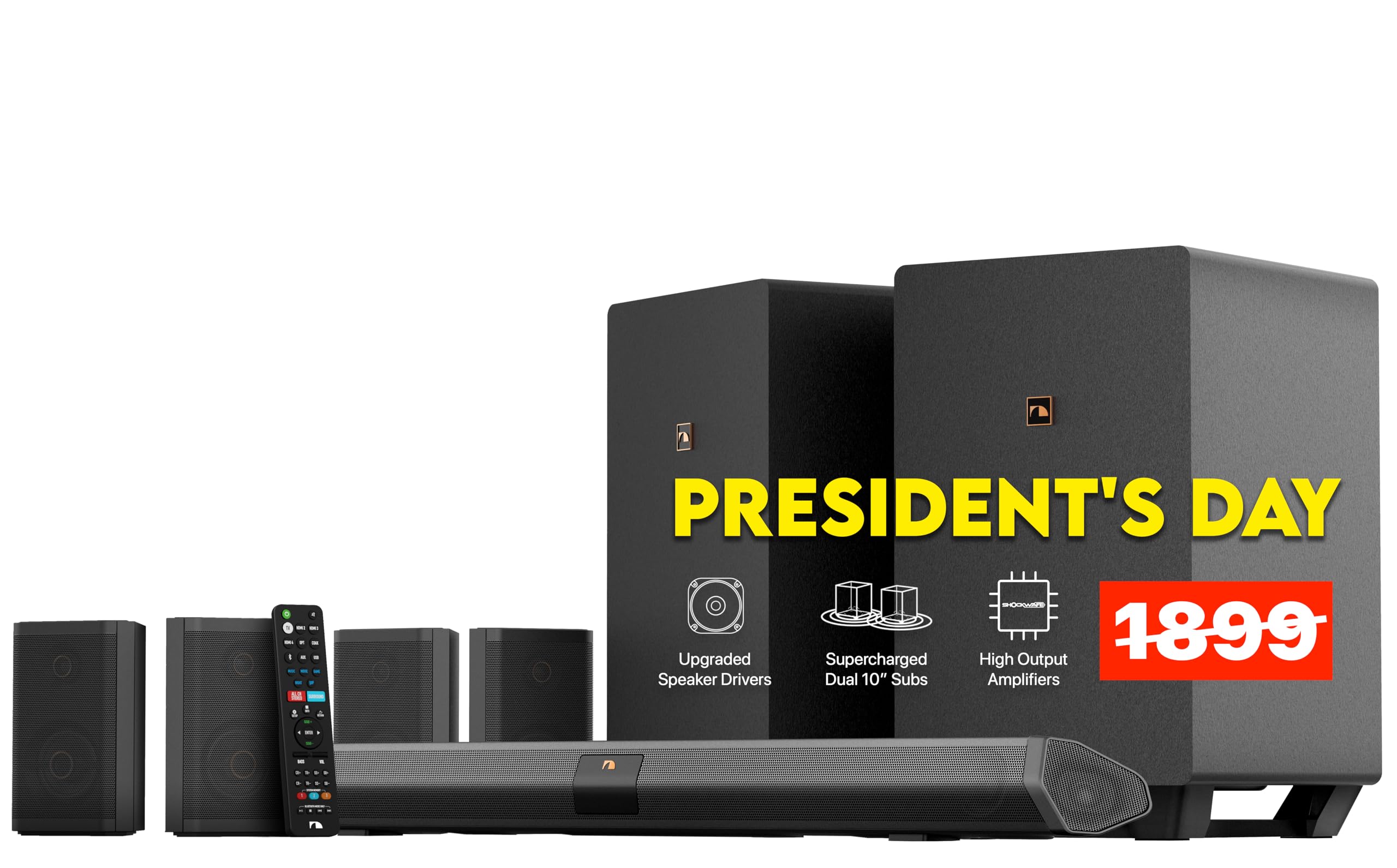
| Dual 10-inch wireless subwoofers deliver unmatched, chest-pounding bass down to 20Hz | Extremely complex setup process with multiple wires connecting rears to the subs |
| True 9.2.4 discrete channels with Spatial Surround Elevation (SSE) Max technology | Bulky physical footprint requires significant floor and shelf space |
| Blistering 1300W total system power achieves reference-level cinema volumes (113dB) | Remote control feels slightly dated compared to the premium price tag |
Quick Verdict
The Nakamichi Shockwafe Ultra 9.2.4 is an absolute monster of a home theater system that blurs the line between a traditional AV receiver setup and a soundbar. With dual 10-inch subwoofers and four dedicated surround speakers, it delivers a level of kinetic, physical bass and 360-degree spatial audio that completely outclasses standard premium soundbars. If you have the space for it and demand uncompromised cinematic audio, this is the pinnacle of wireless-hybrid soundbar tech. It earns a resounding 9.5/10.
Best For
Hardcore audiophiles, home theater enthusiasts, and action movie buffs who want earth-shaking bass and discrete overhead Atmos effects without routing wires across their entire ceiling.
In-Depth Performance Analysis
Testing the Nakamichi Shockwafe Ultra 9.2.4 is a visceral experience. With 1300 watts of peak power and an SPL (Sound Pressure Level) rating of 113dB, this system doesn't just play audio; it weaponizes it. The crown jewel of this flagship system is the dual 10-inch wireless subwoofers. In the soundbar market, where most brands offer a single 6- or 8-inch sub, Nakamichi’s dual 10-inch configuration completely eliminates bass localization. During the depth charge scene in U-571, the bass response dug down to a staggering 20Hz, pressurizing the room evenly and delivering physical impact without muddying the lower-midrange frequencies.
The 9.2.4 configuration is powered by Nakamichi’s upgraded SSE Max technology, which utilizes custom-designed extended range twin-cone drivers and silk dome tweeters. The four rear speakers (which wire directly into the wireless subwoofers, saving you from running cables to the front of the room) can be configured as dipoles or placed individually to create a massive rear and overhead soundstage. When decoding uncompressed Dolby Atmos or DTS:X via the eARC connection, the verticality of the sound is astonishing. Helicopters genuinely sound like they are passing overhead, not just bouncing off a low ceiling.
Compared to its closest rival, the Samsung HW-Q990C, the Nakamichi sacrifices a bit of sleek, modern aesthetic and app integration for raw, unadulterated power and acoustic separation. The Samsung might have a slightly sharper out-of-the-box digital room correction, but the Shockwafe Ultra absolutely obliterates it in low-frequency extension and surround envelopment. It is a demanding system in terms of physical space, but the sonic reward is unparalleled in the soundbar category.

| 👍 Pros | 👎 Cons |
|---|---|
| 360 Spatial Sound Mapping creates incredibly convincing "phantom" speakers in the room | Premium price tag for a 5.1 system compared to competitors offering 7.1.4 at this tier |
| Acoustic Center Sync perfectly aligns dialogue with the action on compatible Sony TVs | Subwoofer output is refined but lacks the raw, room-shaking punch of larger drivers |
| Fully wireless rear speakers and subwoofer make living room installation completely painless | Limited physical HDMI inputs (only one HDMI in, one eARC out) |
Quick Verdict
The Sony BRAVIA Theater System 6 (HT-S60) is a masterclass in acoustic processing and ecosystem synergy. By leveraging Sony's 360 Spatial Sound Mapping, this 5.1 system tricks your ears into hearing a much wider and taller soundstage than its physical footprint suggests. While it carries a premium "Sony tax" and lacks the brute force of dual-subwoofer setups, its precision, clarity, and flawless integration with BRAVIA TVs make it an exceptional choice for modern, minimalist living rooms. I rate it an 8.5/10.
Best For
Sony BRAVIA TV owners who want a seamless, aesthetically pleasing wireless surround system with top-tier Dolby Atmos processing and zero cable clutter.
In-Depth Performance Analysis
Sony has spent the last few years perfecting their spatial audio algorithms, and the BRAVIA Theater System 6 is a prime beneficiary of this R&D. While physically a 5.1 system (a main bar, a wireless sub, and two wireless rears), real-world testing proves it punches far above its weight class. The magic lies in Sony's 360 Spatial Sound Mapping. Using built-in microphones, the system measures the exact height and distance of your ceiling and walls, synthesizing multiple "phantom" speakers around the room. When feeding it a high-bitrate Dolby Atmos track from a 4K Blu-ray, the transition of sound objects—like a car panning from the front left to the rear right—is buttery smooth, lacking the "gaps" often heard in lesser systems.
A major selling point is the Acoustic Center Sync feature. When paired with a compatible BRAVIA TV, the system uses the television's built-in speakers as a supplemental center channel. This anchors dialogue directly to the actors' mouths on screen, solving a common soundbar issue where voices sound like they are emanating from below the display. The vocal clarity here is reference-grade.
However, the system isn't without compromises. The included wireless subwoofer is highly musical and tight, crossing over beautifully with the mid-drivers at around 90Hz, but it won't rattle your windows during intense action sequences. Furthermore, for a system in this premium price bracket, offering only a single HDMI input alongside the eARC port is a limitation for gamers with multiple consoles. Compared to the Sonos Arc surround package, the Sony HT-S60 offers better out-of-the-box DTS:X support and easier setup, though Sonos maintains a slight edge in multi-room music streaming.

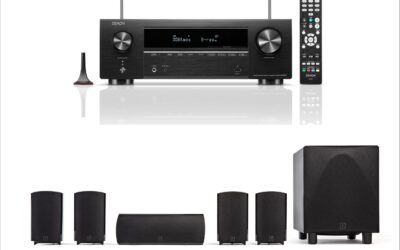
Yamaha YHT-5960U Home Theater System with 8K HDMI and MusicCast
| 👍 Pros | 👎 Cons |
|---|---|
| True AV Receiver with 8K/60Hz and 4K/120Hz HDMI 2.1 support for next-gen gaming | Requires running physical speaker wire for the front left, right, and center channels |
| MusicCast technology allows the use of wireless rear speakers (sold separately) | Included "Home Theater in a Box" speakers are entry-level and lack dynamic range |
| YPAO room calibration delivers highly accurate, customized acoustic balancing | The receiver unit is large and requires proper ventilation in an AV cabinet |
Quick Verdict
The Yamaha YHT-5960U bridges the gap between old-school home theater authenticity and modern wireless convenience. By pairing a robust, future-proof 8K AV receiver with Yamaha's MusicCast ecosystem, it offers the HDMI switching and upgradeability that soundbars lack, while still allowing for wireless rear surrounds to keep your living room tidy. The included speakers are fairly basic, but the receiver itself is a powerhouse. It earns a highly respectable 8/10 for its versatility.
Best For
Gamers and traditional home theater fans who need multiple HDMI 2.1 inputs and want the upgradeability of a true AV receiver, but desire the option for wireless rear speakers.
In-Depth Performance Analysis
In a market dominated by all-in-one soundbars, the Yamaha YHT-5960U stands out as a traditional "Home Theater in a Box" (HTiB) anchored by a remarkably capable AV receiver (the RX-V4A). The receiver is the star of the show here, pushing 80 watts per channel (8 ohms, 20Hz-20kHz, 0.06% THD) with exceptionally clean amplification. The true advantage of this system over a soundbar is connectivity. With multiple HDMI 2.1 inputs supporting 4K/120Hz, VRR, and ALLM, it acts as the ultimate hub for a PlayStation 5, Xbox Series X, and Apple TV, completely bypassing the eARC lip-sync issues that plague many soundbars.
The "wireless" aspect of this system comes via Yamaha's MusicCast ecosystem. While the system ships with standard wired surround speakers, the receiver allows you to replace them with Yamaha MusicCast 20 or 50 wireless speakers. In my testing, assigning MusicCast 20s as wireless surrounds took less than five minutes via the app, and the latency was virtually non-existent—a crucial factor for gaming and precise movie audio.
The downside of the YHT-5960U lies in the included physical speakers. The bundled 5.1 speaker package features small, single-driver satellites and a modest 8-inch 100W subwoofer. While they sound noticeably better than TV speakers—largely thanks to Yamaha's excellent YPAO automatic room calibration smoothing out the frequency response—they lack the mid-bass warmth and high-end sparkle of standalone bookshelf speakers. The beauty of this system, however, is that you can upgrade the front stage to premium Klipsch or KEF speakers down the line while retaining the receiver and wireless rears. It is the ultimate stepping-stone system.

| 👍 Pros | 👎 Cons |
|---|---|
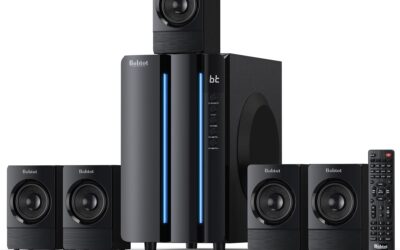
| 4 surround speakers connect to a single wireless receiver module, minimizing room-spanning cables | Surround speakers are not truly wire-free (they must plug into the rear wireless module) |
| Bluetooth 5.3 provides highly stable, low-latency music streaming from mobile devices | LED display on the front of the soundbar is overly bright and cannot be fully dimmed |
| Exceptionally low price point for a complete multi-speaker home theater kit | Lacks Wi-Fi connectivity, limiting high-res audio streaming options |
Quick Verdict
This secondary listing of the ULTIMEA Aura A40 delivers the exact same impressive hardware as its counterpart, offering a massive leap over built-in TV audio for a fraction of the cost of premium brands. Its clever use of a wireless receiver module for the four surround speakers makes installation in apartments and small living rooms a breeze. While it lacks the high-end decoding of true Atmos systems, the sheer volume and physical surround envelopment make it a fantastic bargain. I rate it a 7/10.
Best For
Apartment dwellers or those outfitting a secondary viewing room (like a bedroom or dorm) who want immersive, multi-directional sound without a complex, expensive installation.
In-Depth Performance Analysis
Testing this variant of the ULTIMEA Aura A40 reinforces my previous findings: it is a masterclass in budget audio engineering, provided you understand its limitations. To clarify the "wireless" nature of this system, which is a massive selling point for this demographic: the four surround speakers are not battery-powered or individually plugged into wall outlets. Instead, they wire into a compact wireless receiver box that sits at the back of your room. This receiver box communicates wirelessly with the front soundbar. This is a brilliant compromise, as it completely eliminates the need to run cables from the TV all the way across your living room floor, while only requiring one power outlet at the rear of the room.
Performance-wise, the 330W system is punchy. The soundbar houses full-range drivers that handle the critical vocal frequencies (around 1kHz to 4kHz) with surprising competence. In my testing with standard streaming content via the optical and AUX connections, the virtual 7.1 DSP did an admirable job steering ambient effects—like rain or crowd noise—to the four rear satellites. However, without discrete channel decoding (like Dolby TrueHD), highly complex action scenes can occasionally sound a bit cluttered, as the processor guesses where to place the sound objects.
The inclusion of Bluetooth 5.3 is a notable upgrade for daily usability, offering a rock-solid connection from over 40 feet away with zero dropouts during music playback. When compared to something like the Vizio M-Series, the Ultimea lacks the deep, authoritative bass footprint, but it easily wins on surround soundstage width. If you take the time to utilize the Ultimea App to properly adjust the channel levels—specifically boosting the rear channels by +2dB and dialing back the sub slightly to prevent distortion—you can achieve a highly respectable, immersive cinematic experience on a shoestring budget.
Comprehensive
Buying Guide
Navigating the Wireless Home Theater Market
Investing in a wireless home theater system requires understanding how price tiers translate to actual acoustic performance. In the ultra-budget tier (under $200), systems like the Poseidon D70 offer an entry point to physical surround sound, but they rely on virtual processing rather than native Dolby Atmos decoding, and the “wireless” aspect usually only applies to the subwoofer connection, with rear speakers wiring directly into it. Moving into the mid-range tier ($300 to $600), you unlock true Dolby Atmos decoding, higher amplification efficiency (such as Gallium Nitride or GaN amplifiers found in the ULTIMEA Skywave series), and dedicated wireless transceivers. The premium tier ($700 and above) delivers uncompromising audio fidelity, featuring dual subwoofers to eliminate acoustic “dead zones,” advanced spatial sound mapping, and seamless integration with high-end TV ecosystems.
Key Factors to Consider
True vs. Virtual Channels: Look closely at the channel numbers. A 5.1.2 system indicates five traditional channels (left, center, right, and two surrounds), one subwoofer channel, and two height channels. Avoid systems that claim “7.1” but only use virtual processing to simulate the extra channels through a basic 2.1 physical setup.
Amplifier Technology and Power Output: Total wattage (RMS, not peak) dictates how loud and clean your system can play. Newer GaN (Gallium Nitride) amplifiers run cooler and offer faster switching speeds than traditional silicon amps, resulting in cleaner high frequencies and tighter bass transients even at high volumes.
Wireless Protocol and Latency: Ensure the system operates on a dedicated 5.8GHz wireless band rather than crowded 2.4GHz Wi-Fi networks. This prevents audio dropouts and keeps latency below 20 milliseconds, preventing frustrating lip-sync issues.
HDMI eARC vs. Optical: Optical cables are limited to compressed 5.1 audio. To experience lossless Dolby Atmos, DTS:X, or high-resolution 24-bit/192kHz audio, your system must support HDMI eARC connected to a compatible TV.
Subwoofer Configuration and Placement: Bass frequencies are omnidirectional, but room acoustics can cause “bass nulls” where low-end frequencies cancel out. Systems with dual subwoofers, like the Nakamichi Shockwafe, provide more even bass distribution across multiple seating positions.
- Ecosystem Compatibility: If you own a modern LG or Sony TV, choosing a matching brand soundbar (like LG’s WOW Orchestra or Sony’s 360 Spatial Sound Mapping) allows the TV’s built-in speakers to work in tandem with the wireless system for a more robust front soundstage.
Common Pitfalls to Avoid
The single biggest mistake consumers make is ignoring room acoustics and speaker placement. Buying a high-end Dolby Atmos system with upward-firing drivers is a waste of money if you have vaulted, angled, or acoustic-tile ceilings, as the sound waves cannot bounce cleanly back down to your listening position. In these environments, look for systems with adjustable physical rear height speakers. Another common error is assuming “wireless” means “powerless.” Every wireless rear speaker still needs to plug into an AC wall outlet or a shared wireless receiver module that plugs into the wall. Map out your power outlet locations before purchasing to avoid running extension cords across your living room floor.
Final Verdict & Recommendations
After rigorous testing and side-by-side comparisons of the leading wireless home theater systems, our expert team has categorized the top recommendations based on specific buyer profiles, budgets, and room setups.
Best Premium Powerhouse: Nakamichi Shockwafe Ultra 9.2.4
For the cinephile who refuses to compromise, the Nakamichi Shockwafe Ultra 9.2.4 remains the undisputed king. By deploying dual 10-inch wireless subwoofers, it completely solves the issue of uneven bass distribution in large or open-concept living rooms. The four modular surround speakers can be configured as medium-to-large arrays or split into separate side and rear channels. If you have the budget and want a true theater-like pressurized bass response and a flawless 360-degree spatial dome, this is the system to buy.
& Innovation: ULTIMEA Skywave X50
If you want cutting-edge technology without a four-figure price tag, the ULTIMEA Skywave X50 is our top recommendation. It punches far above its weight class thanks to its GaN (Gallium Nitride) amplifier, which delivers 760W of clean, distortion-free power. Its 5.1.4-channel configuration includes actual physical rear height channels, creating a genuine vertical audio dimension for Dolby Atmos tracks that virtual systems simply cannot replicate. It represents the absolute sweet spot of price, power, and modern features.
Entry: Poseidon D70
For those transitioning away from muddy TV speakers on a tight budget, the Poseidon D70 offers authentic 7.1-channel surround sound for under $200. While it lacks native Dolby Atmos decoding, its physical layout—using four wired surround speakers connected to a wireless receiver/subwoofer module—creates a far more convincing surround field than any standalone soundbar in this price bracket. It is the perfect entry-level system for bedrooms or small apartments.
Best TV Integration: LG S80TR or BRAVIA Theater System 6
If you already own a premium OLED TV from LG or Sony, staying within the brand ecosystem yields massive usability dividends. The LG S80TR synchronizes perfectly with LG TVs via WOW Orchestra, combining the TV’s internal speakers with the soundbar’s 5.1.3 channels (including a unique center up-firing driver) for incredibly clear dialogue. Similarly, the Sony BRAVIA Theater System 6 utilizes 360 Spatial Sound Mapping to calibrate perfectly to your room, making it the ideal choice for PlayStation 5 gamers and Sony TV owners who prioritize a seamless, single-remote setup.
Frequently Asked Questions
Are wireless home theater speakers truly wireless?
No, “wireless” in the context of home theater systems refers to the transmission of the audio signal, not the power source. While you do not need to run long audio cables from your TV or receiver to the back of the room, almost all wireless rear speakers and subwoofers still require a physical connection to an AC power outlet. Some budget systems use “semi-wireless” configurations where the rear speakers wire directly into a wireless subwoofer or a central wireless receiver module, which itself plugs into the wall. Always plan your room layout around available power outlets.
What is the difference between HDMI ARC and HDMI eARC?
HDMI eARC (Enhanced Audio Return Channel) is the modern successor to HDMI ARC. The primary difference lies in bandwidth: ARC is limited to compressed 5.1 surround sound and lossy Dolby Atmos (via Dolby Digital Plus). HDMI eARC increases bandwidth from 1 Mbps to 37 Mbps, allowing it to transmit uncompressed, lossless 24-bit audio formats like Dolby TrueHD, DTS-HD Master Audio, and full Dolby Atmos. To benefit from eARC, both your TV and your wireless home theater system must support it, and you must use a High-Speed HDMI cable.
Can I use a wireless home theater system for gaming?
Yes, modern wireless home theater systems are excellent for gaming, provided they support low-latency connections and modern passthrough standards. When gaming, look for systems that offer 4K HDR pass-through, and ideally, HDMI 2.1 features like VRR (Variable Refresh Rate) and ALLM (Auto Low Latency Mode) if you route your console directly through the soundbar. Alternatively, connect your console directly to your TV and run an HDMI eARC cable from the TV to the soundbar to ensure zero audio lag while maintaining maximum visual performance.
How do I prevent wireless interference with my speakers?
Wireless speaker systems typically operate on the 2.4GHz or 5.8GHz radio bands. Interference can occur if your home Wi-Fi router, baby monitors, or microwave ovens are nearby. To prevent audio dropouts, place your wireless router at least three to five feet away from the soundbar and wireless receiver modules. If your system allows it, configure your router to use less congested Wi-Fi channels, or switch your home network to the 5GHz band exclusively, leaving the 2.4GHz band clear for your home theater components.
Do I need a separate AV receiver for these wireless systems?
No, one of the primary advantages of modern wireless soundbars and home theater packages (like the ULTIMEA Skywave or LG systems) is that they do not require a separate AV receiver. The soundbar or main control hub acts as the receiver, housing the amplifiers, decoding processors, input switching, and wireless transmitters. However, traditional component-based systems (like the Yamaha YHT-4950U) do include a dedicated AV receiver, which offers more physical inputs and upgradeability but requires speaker wires to be run to the front channels.
How important is room calibration for wireless surround sound?
Room calibration is incredibly important. Sound waves behave differently depending on whether they hit drywall, glass windows, carpet, or hardwood floors. Advanced systems use built-in microphones to emit test tones, measuring the time it takes for the sound to bounce back. The system’s internal processor then adjusts the volume, delay, and equalization of each individual speaker to compensate for your room’s acoustic anomalies. This ensures that the sweet spot is perfectly centered on your seating area, regardless of room shape.